

A vitamin A number and a mixed-carotenoid number describe different things. Vitamin A is declared as a nutrient amount; a separately listed carotenoid mixture is an ingredient quantity. You cannot add the two numbers or assume that every milligram of the mixture becomes vitamin A.


Explore the capsule products
These are separate capsule formulas. Comparing their labels is not a recommendation to take both together. Each button opens the named capsule product at the manufacturer’s store.
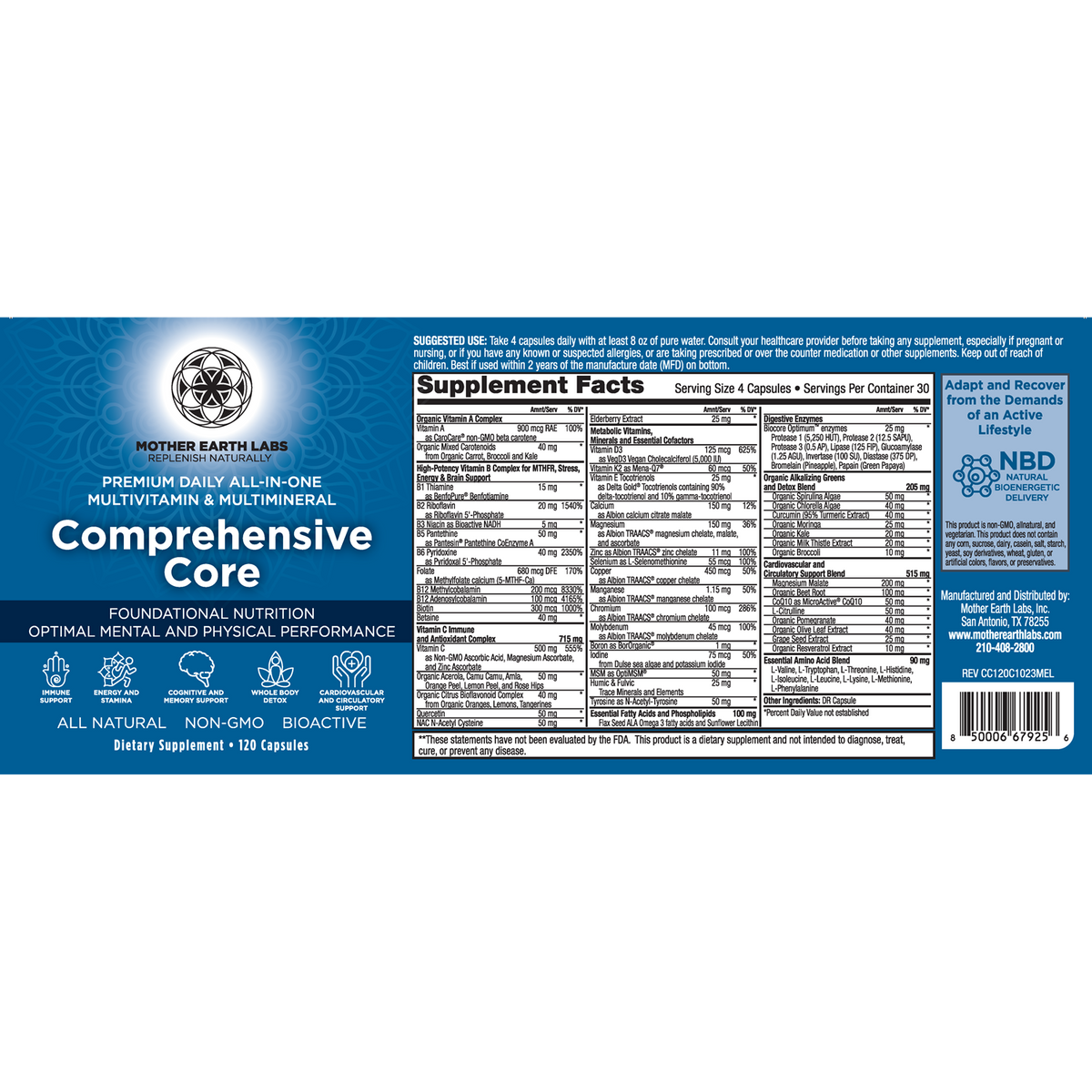
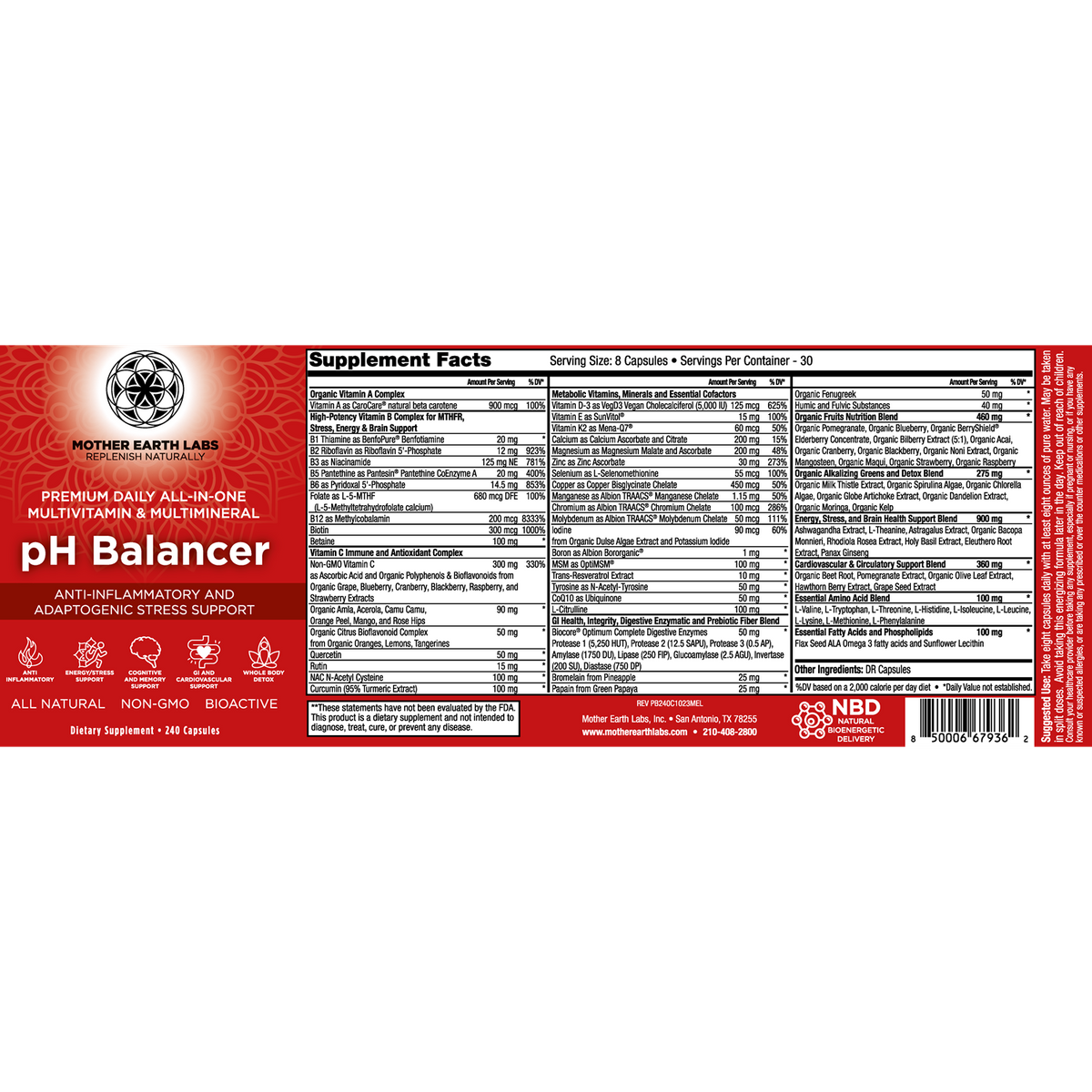
Two Mother Earth Labs capsule labels make the distinction concrete. Comprehensive Core lists vitamin A and a separate mixed-carotenoid ingredient. pH Balancer lists vitamin A but does not have Core’s separate mixed-carotenoid row. That difference does not, by itself, tell you which finished formula produces better health outcomes.
What the two labels actually say
- Comprehensive Core capsules — serving: four capsules
- Vitamin A: 900 mcg RAE, 100% Daily Value, as CaroCare non-GMO beta-carotene. A separate entry lists Organic Mixed Carotenoids: 40 mg, from organic carrot, broccoli and kale.
- pH Balancer capsules — serving: eight capsules
- Vitamin A: 900 mcg, 100% Daily Value, as CaroCare natural beta-carotene. The manufacturer image prints “mcg” beside that number, without “RAE.” It does not list Core’s separate 40 mg mixed-carotenoid entry.
Those are label transcriptions, not laboratory measurements made by this site. Preserve the units when comparing them: silently changing the pH label’s wording would conceal a detail readers should be able to check themselves. Both labels declare 100% Daily Value for vitamin A; the different numbers of capsules are essential context.
RAE measures vitamin A activity, not the weight of every plant pigment
RAE means retinol activity equivalents. It accounts for differences between preformed vitamin A and provitamin A carotenoids. Beta-carotene can supply vitamin A; some other carotenoids do not. NIH’s vitamin A fact sheet explains that the conversion also depends on the source. A conversion for supplemental beta-carotene cannot simply be applied to an unidentified mixed plant ingredient. [1]
Think of two separate questions: “How much vitamin A activity does the label declare?” and “How much of this ingredient mixture is present?” The vitamin A row answers the first. The mixed-carotenoid row answers the second. They are useful for different comparisons.
Why 40 mg does not mean 40 mg of vitamin A
Forty milligrams equals 40,000 micrograms of material. That arithmetic changes the unit; it does not identify the material’s composition or vitamin A activity. Core’s row does not give the amount of each carotenoid, establish that all 40 mg is beta-carotene, or state a separate RAE contribution for that row.
Consequently, neither “40,900 mcg of vitamin A” nor a calculated extra dose based on an assumed beta-carotene percentage is justified. If you need to know whether a particular contribution is already included in the vitamin A declaration, ask the manufacturer for clarification. Counting the row again risks double counting something the label does not fully describe.
Likewise, the absence of that separate ingredient row on pH Balancer does not prove it contains no carotenoids: its vitamin A source is explicitly beta-carotene. The defensible observation is narrower — the two labels disclose different ingredient entries.
Check the actual bottles and panels
These are the capsule products discussed here. Liquid formulas have different serving instructions; do not transfer these figures to them. Manufacturer images and labels were checked October 27, 2026. Compare them with the bottle you actually use, because formulas can change.
Use the distinction to make a better comparison
- Match the format. Compare capsules with capsules before using any number from this example.
- Match the serving. Here the vitamin A figures describe four Core capsules versus eight pH Balancer capsules, not one capsule of each.
- Keep nutrient activity separate from blend weight. Record the vitamin A amount and source on one line, and the mixed-carotenoid ingredient on another.
- Read the rest of the panel. A shared vitamin A Daily Value does not make the formulas interchangeable. Other nutrients, doses and your existing routine still matter.
More beta-carotene is not automatically better. NIH distinguishes the upper limit for preformed vitamin A from the evidence concerning beta-carotene; high-dose beta-carotene supplements have raised concerns in smokers and some other high-risk groups. “Plant-derived” does not establish that a particular combination is appropriate for you. Discuss supplementation with a clinician when your health history or other products make the choice uncertain. [1]
One primary trial illustrates why form and population matter: the ATBC randomized trial used 20 mg of beta-carotene daily in male smokers aged 50–69 and found increased lung cancer incidence in the beta-carotene groups. This was not a trial of either product discussed here, and its dose cannot be inferred from a mixed-carotenoid row. The original study abstract, rather than a finished-product claim, is the basis for that example. [2]
For the larger comparison, start with our Supplement Facts reading guide and Comprehensive Core ingredient overview. To check the exact products, see Comprehensive Core capsules or pH Balancer capsules. Neither this row comparison nor research on an individual nutrient establishes a treatment effect for either finished product.
Sources and scope
- NIH Office of Dietary Supplements: Vitamin A and Carotenoids, health professional fact sheet — forms, RAE and safety context.
- ATBC Study Group (1994), The effect of vitamin E and beta carotene on the incidence of lung cancer and other cancers in male smokers, DOI: 10.1056/NEJM199404143301501 — abstract reviewed; full journal text was unavailable.
- Mother Earth Labs: Comprehensive Core capsules and linked Supplement Facts.
- Mother Earth Labs: pH Balancer capsules and linked Supplement Facts.
Educational information; not an individualized supplement prescription. Labels checked October 27, 2026.