
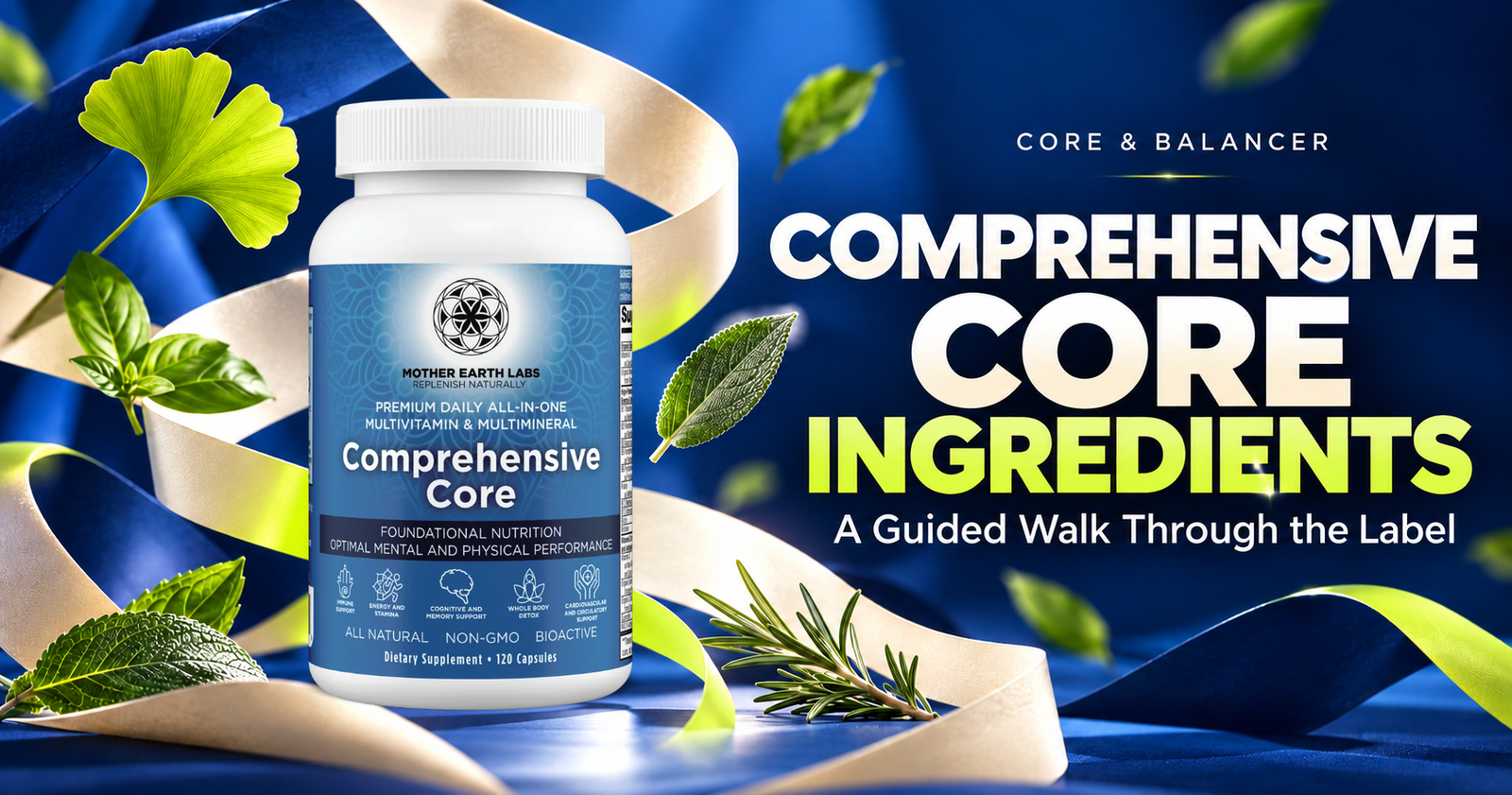
Comprehensive Core combines vitamins, minerals, plant ingredients, digestive enzymes and other specialty compounds. Read those as separate ingredient groups, each with a different job on the label. The liquid and capsule formulas differ, so use the panel for the exact format you are considering.
What a blend total can—and cannot—tell you
If a label names several plants under one combined blend weight, that number describes the group. It does not mean every plant supplies that amount. Individually declared nutrients can be compared directly; an undisclosed ingredient inside a blend needs more information before you can compare its dose with a study.
This article explains those categories and the questions they help you ask. Our complete Comprehensive Core guide remains the detailed reference for original panels, quantities, and individual ingredient research. Here, the goal is to make that reference more approachable.
To follow along with a specific format, explore Affiliate DisclosureComprehensive Core capsules Affiliate Disclosure or Comprehensive Core liquid quart Affiliate Disclosure. Use the panel for that exact product throughout your comparison.
Vitamins: distinguish the nutrient, its form, and its amount
A vitamin name identifies the nutrient; a source name tells you the form used in the formula. Core’s reviewed panels name methylcobalamin and adenosylcobalamin for vitamin B12, and L-5-methyltetrahydrofolate-calcium for folate. These names help you compare formulations more precisely than a general phrase such as “B vitamins.”
Vitamin B12 illustrates why form and amount belong together. Both reviewed Core panels list methylcobalamin at 200 mcg and adenosylcobalamin at 100 mcg per full serving. Those are two declared B12 entries, not two different vitamins. Read the complete panel rather than choosing from a form name alone.
The reviewed panels also list vitamin A sources, the broader B complex, vitamin C, vitamin D3 and vitamin K2. The capsule panel separately declares 25 mg tocotrienols; the liquid panel does not declare a matching vitamin E or tocotrienol entry. Keeping that detail attached to its format makes the comparison more useful.
Those vitamin names have a practical nutritional meaning. Vitamin B12 supports normal nerve function, red blood cell formation and DNA synthesis. Folate helps cells make genetic material and divide. Understanding these roles gives the ingredient list context before you compare forms and amounts. NIH: vitamin B12; NIH: folate.
Minerals: compare the mineral amount and its named source
Core includes major minerals such as calcium and magnesium as well as nutrients listed in smaller units, including zinc, selenium, iodine, and other trace minerals. The declared amount and the source description answer different questions: how much mineral is provided, and which ingredient supplies it?
For a concrete example, reviewed Core liquid lists calcium and magnesium at 200 mg each per 1 fl oz serving; capsules list 150 mg each per four-capsule serving. This is a useful formulation difference to discuss alongside food intake and any separate mineral products you already use.
Names such as citrate, malate, bisglycinate, or chelate identify chemical forms or ingredient relationships. They help define the comparison, but the presence of a named form alone does not establish how the entire supplement will perform for an individual.
Greens, fruits, and botanical components: read the grouping
Core’s panels also describe plant-derived groupings. Examples include fruit ingredients, mixed carotenoid sources, greens, and botanical extracts. Depending on format, the lists include ingredients such as spirulina, chlorella, moringa, beet root, and fruit extracts. Use the original panel to establish which ingredients belong to the version you are considering.
These ingredients are presented in several different ways: some are individually quantified, while others appear inside a blend with a combined weight. A blend total is the total for that grouping, not the amount of every ingredient in it. That distinction helps you compare a formula thoughtfully without guessing quantities.
These are supplement ingredients, rather than a serving of vegetables or fruit. Their presence can be an interesting part of formula selection while a varied eating pattern remains the foundation of nutrition.
| Category | Examples to recognize | Useful comparison question |
|---|---|---|
| Vitamins | B12 forms, folate, D3, K2 | Which form and amount does this full serving declare? |
| Minerals | Calcium, magnesium, zinc, selenium | What does it add to my existing sources? |
| Plant ingredients | Greens, fruit ingredients, botanical extracts | Is this entry individually quantified or part of a blend? |
| Other declared components | Enzymes, amino acids, phospholipids | Which preparation and format does the listing describe? |
| Other Ingredients | Capsule materials or the liquid preparation’s additional ingredients | Does anything affect my preferences or sensitivities? |
Enzymes, amino acids, and additional declared components
Beyond vitamins, minerals, and botanicals, the panels name enzyme preparations and amino acid groupings. Liquid Core also declares a resistant prebiotic fiber entry and L-glutamine within its digestive grouping. These are useful identifying details when comparing formulas, rather than reasons to assume all digestive products are interchangeable.
Enzyme activity can be expressed in activity units as well as by the weight of a preparation. An amino acid blend may provide a combined weight. Read those descriptions as written; a milligram total does not necessarily communicate the same information as an enzyme activity measure.
Core also declares components such as CoQ10 and humic and fulvic extracts. Ingredient research can explain why a reader might be interested in an entry. It does not, by itself, demonstrate a particular outcome from the finished Comprehensive Core formula. A useful comparison considers the preparation, amount, total formula, and the person’s context.
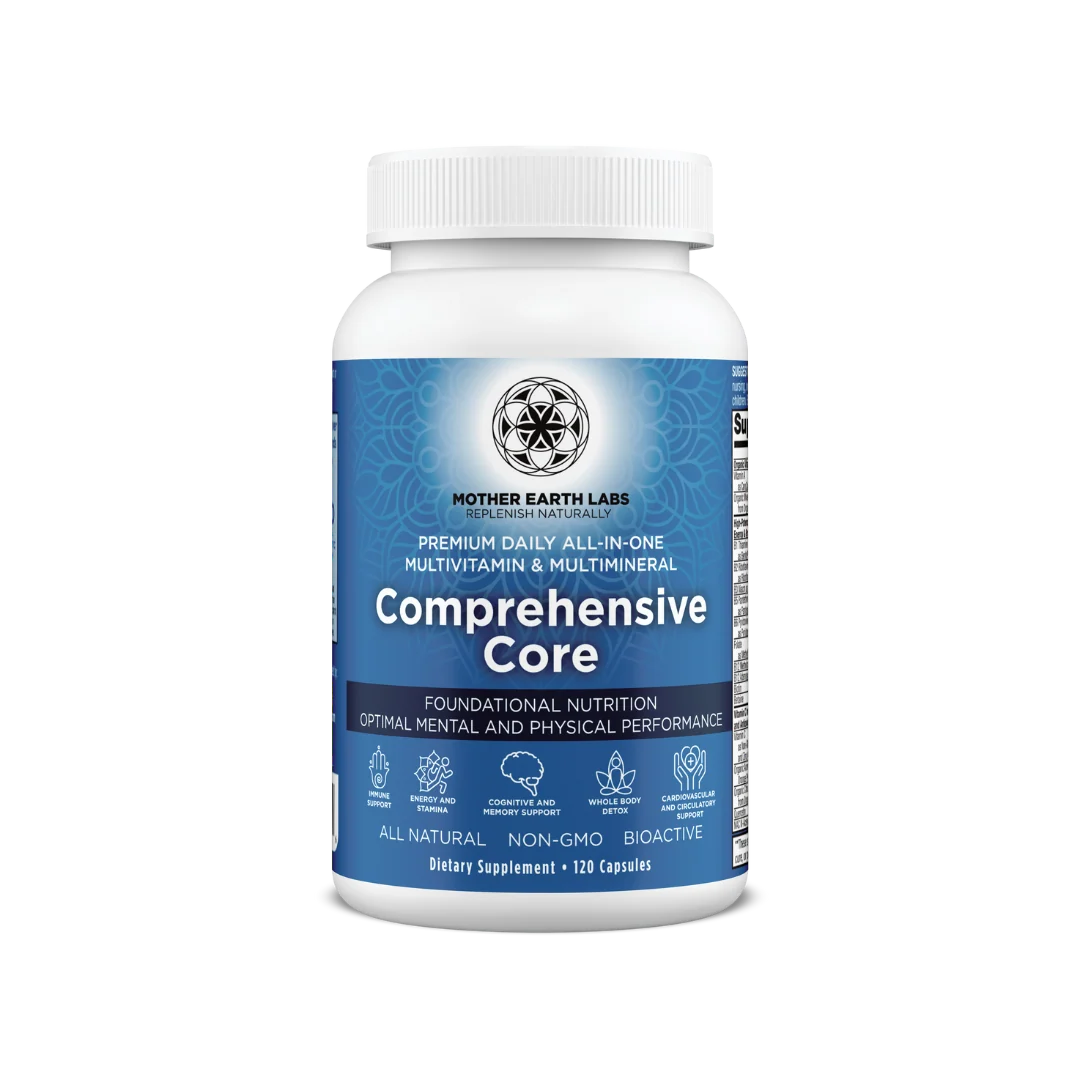 Affiliate Disclosure
View this format at Mother Earth Labs.
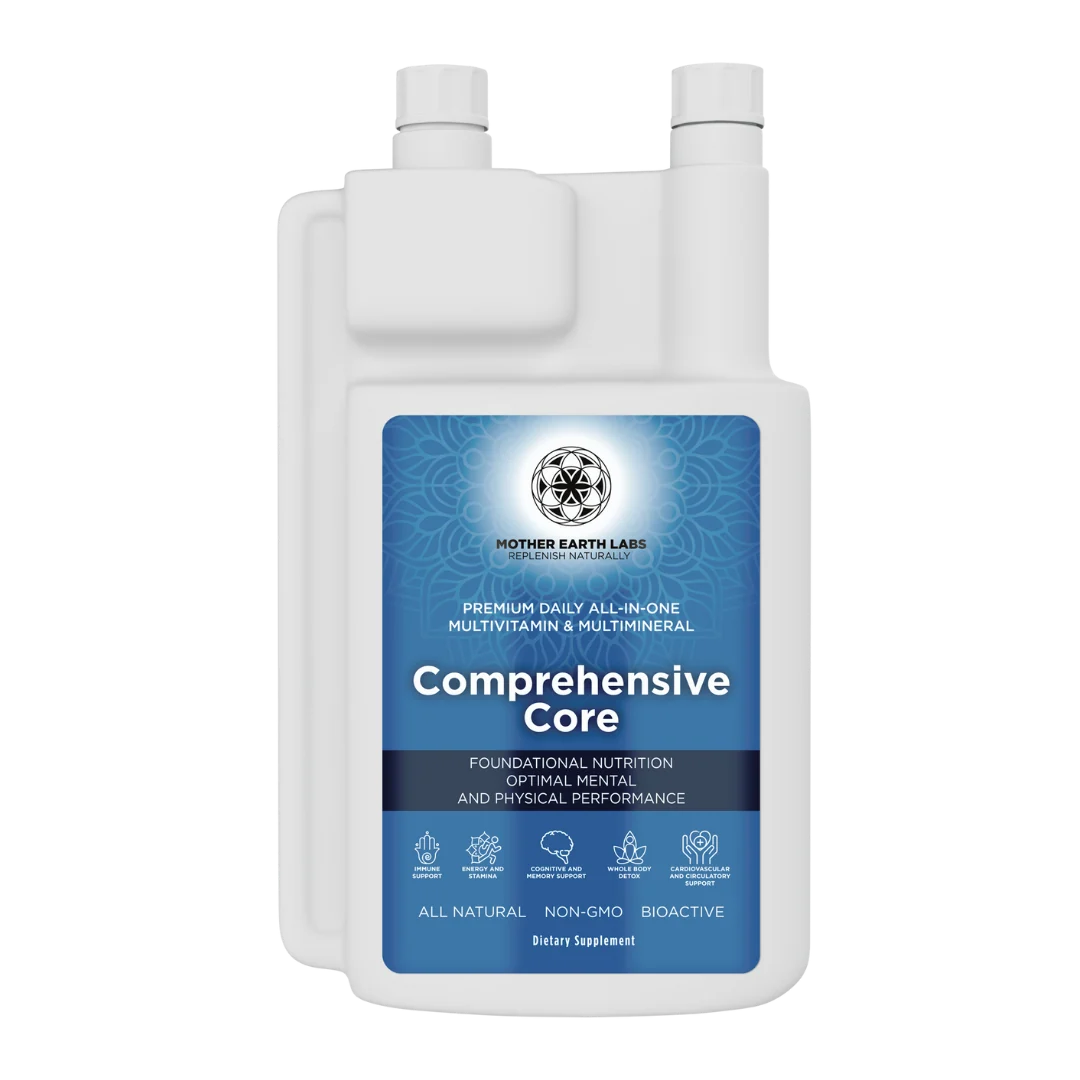 Affiliate Disclosure
View this format at Mother Earth Labs.
Compare the exact current panels through Core capsule product details Affiliate Disclosure and Core liquid-quart product details Affiliate Disclosure. The original photographs above link to their corresponding formats.
“Other Ingredients” deserves a separate look
This section describes additional materials used in preparing the product. The reviewed capsule panel lists DR Capsule. The liquid panel lists water and additional ingredients associated with the liquid preparation, including juices, glycerin, flavors, acids, and preservatives.
Read that list when comparing taste preferences, capsule materials, and ingredient sensitivities. Avoid transferring the capsule list to the liquid or treating the liquid’s complete ingredient list as if every entry were separately quantified on Supplement Facts.
Choose the level of detail that helps your decision
Start with the category you want to understand, then check the exact serving and amount in the full guide. Reviewed Core capsules use a four-capsule serving; liquid uses 1 fl oz. Both reviewed panels list vitamin D at 125 mcg (5,000 IU), a detail to include in an individualized total-intake discussion rather than overlooking it among the blends.
Use the foundational Core guide for the ingredient directory. If your question is about differences from pH Balancer, move to the detailed formula comparison or the practical decision guide. You now have a category map that makes those next steps easier.
Sources and educational scope
- Comprehensive Core original labels and ingredient directory
- NIH: Multivitamin/mineral Supplements—Health Professional
Product-label examples refer to the original panels preserved in our guides and reviewed October 18, 2026. Formulations and packaging may change; use the current container and manufacturer information. By Dr. Rich Prather, D.C. · Published by Grateful Lab Services. Educational information does not replace individualized medical advice. These products are not intended to diagnose, treat, cure, or prevent disease. Privacy Policy · Articles & Research.