

Add the milligrams of vitamin B6 from every product you take in a day, using the amount you actually take. A multivitamin, magnesium blend and other supplement can each contain B6. A familiar product name or “active” form does not tell you the combined amount is suitable for you.


Explore the capsule products
These are separate capsule formulas. Comparing their labels is not a recommendation to take both together. Each button opens the named capsule product at the manufacturer’s store.
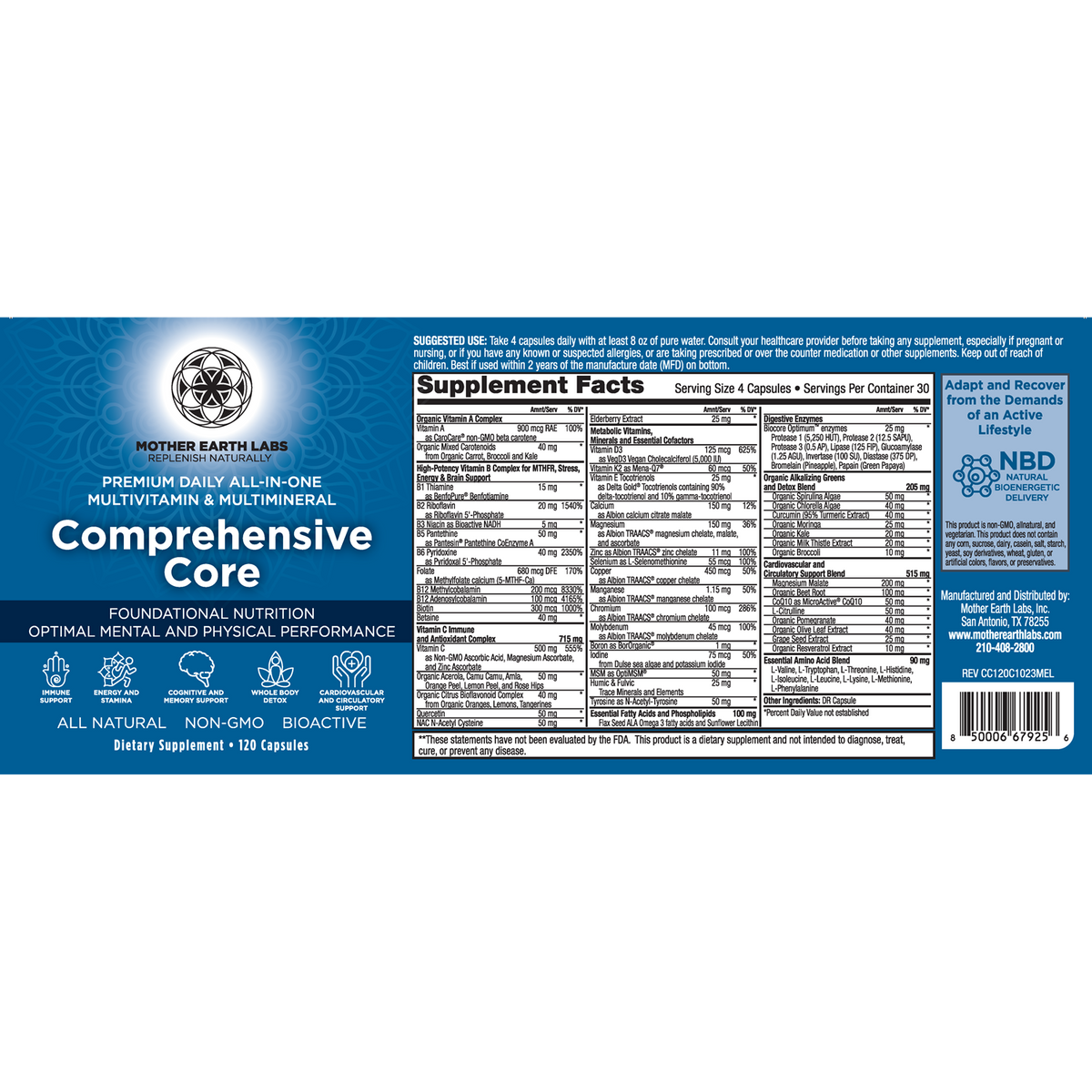
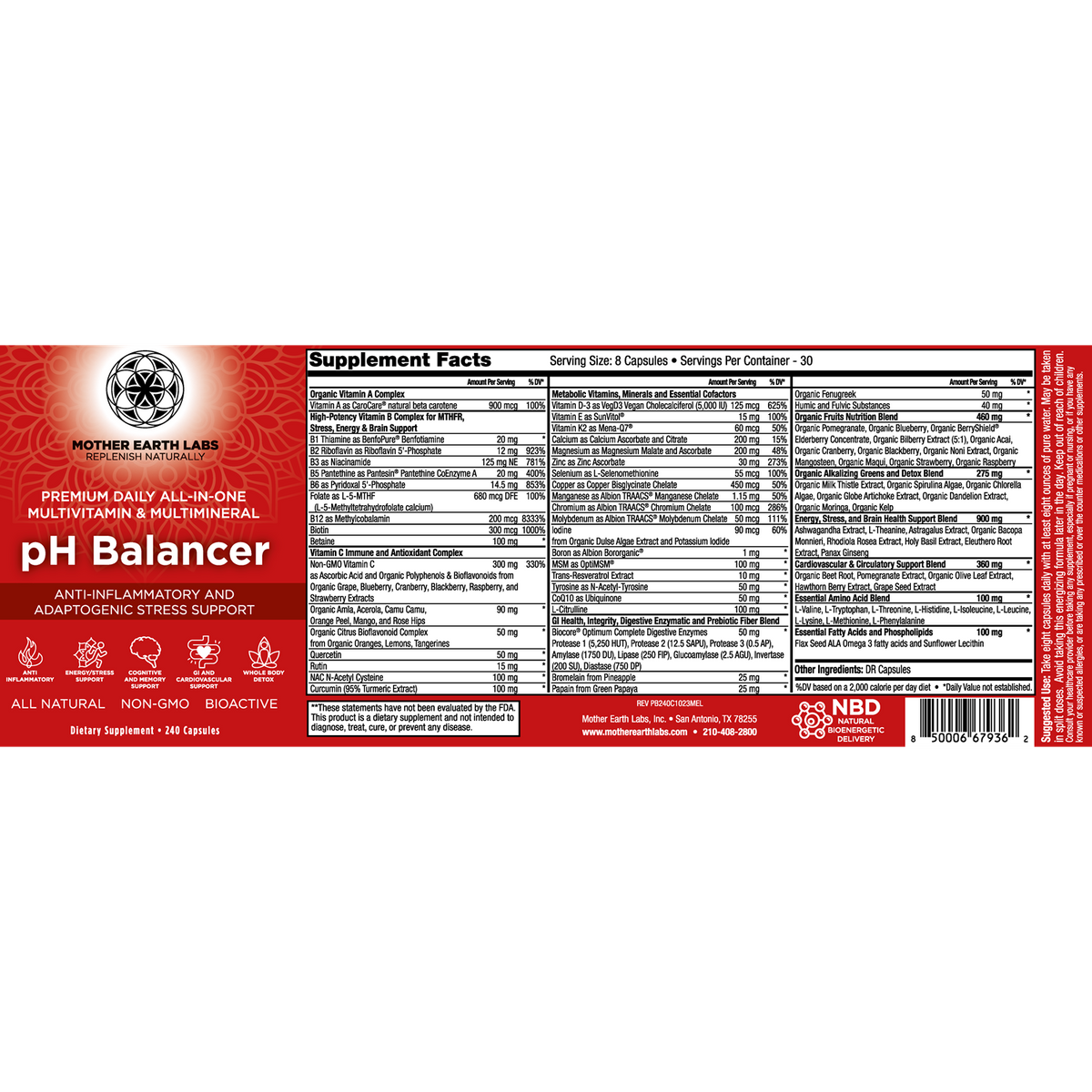
The current Comprehensive Core capsule label declares 40 mg per four-capsule serving. The pH Balancer capsule label declares 14.5 mg per eight-capsule serving. Both name pyridoxal 5′-phosphate as the source. These amounts deserve a deliberate review of the whole routine, rather than an assumption that water-soluble vitamins cannot cause problems.
Make a daily total before comparing percentages
Use the bottle’s Supplement Facts, not a front-label slogan. For each product, write down its labeled serving, B6 per serving, and the fraction or number of servings you actually use. Multiply the B6 amount by that serving fraction, then add the products. Include fortified drinks or foods when assessing total intake; a supplement subtotal is not your complete dietary intake.
- Example A: one labeled serving of Core
- 40 mg × 1 serving = 40 mg from that supplement.
- Example B: one labeled serving of pH Balancer
- 14.5 mg × 1 serving = 14.5 mg from that supplement.
- A hypothetical second product containing 5 mg
- With example A, the supplement subtotal would be 45 mg. With example B, it would be 19.5 mg. These are arithmetic examples, not suggested combinations.
Taking full servings of both named formulas would supply 54.5 mg of B6 before food or anything else. This article does not recommend combining them. They overlap in more than B6. A lower capsule count should not be adopted solely from this calculation either: it changes other nutrient amounts at the same time.
A useful note for your clinician is: “Product / labeled serving / B6 per serving / actual daily amount / days used each week.” Photograph every panel. If use varies by day, show that pattern rather than averaging away a high-intake day.
Daily Value is a reference, not a personal safety limit
The U.S. label Daily Value for B6 is 1.7 mg. The Core panel prints 2,350% DV and the pH Balancer panel 853% DV. Those percentages help explain why adding overlapping products matters, but they are not a score for effectiveness and do not establish a safe dose.
NIH lists the U.S. adult tolerable upper intake level as 100 mg daily. The European Food Safety Authority’s original 2023 scientific opinion establishes an adult upper limit of 12 mg daily. [3] Those are different authorities’ risk assessments, not interchangeable targets. Both named products’ full-serving B6 amounts exceed the European adult figure. Being below the U.S. figure does not guarantee that an individual will avoid adverse effects. [1]
A source detail matters here: EFSA’s general dietary-reference webpage says 12.5 mg, but the linked scientific opinion explicitly gives 12 mg as its final rounded adult limit. This article uses the final figure in the opinion, consistent with NIH’s account. Neither figure is a personal intake target.
The practical response to that difference is to review dose, duration and all sources with a qualified clinician, especially before adding another product. It is not to choose whichever number permits the largest intake.
Does pyridoxal 5′-phosphate change the calculation?
No. Pyridoxal 5′-phosphate, often shortened to P5P or PLP, is a form of vitamin B6. Count the B6 amount the label declares. Do not erase it from the worksheet because it is described as active. The Australian Therapeutic Goods Administration includes pyridoxal 5-phosphate among B6 ingredient names consumers should check when assessing supplement exposure. [2]
The TGA reports peripheral neuropathy with B6 supplements, including reports at less than 50 mg daily and with multiple products. An adverse-event report is not a prediction that every person taking that amount will develop neuropathy. It is a reason not to treat a low-looking number or a form name as a guarantee. Australian warnings should not be presented as U.S. labeling law.
Check the actual bottles and panels
These are the capsule products discussed here. Liquid formulas have different serving instructions; do not transfer these figures to them. Manufacturer images and labels were checked October 27, 2026. Compare them with the bottle you actually use, because formulas can change.
What to do with the result
If your total is unexpectedly high, bring the worksheet and bottles to your clinician or pharmacist before adding more. Ask which products are needed, whether their nutrients overlap, and what dose and duration fit your situation. This label calculation is not evidence that either finished formula treats a disease.
New tingling, burning or numbness warrants prompt medical advice. The TGA advises stopping a B6-containing supplement and seeking medical advice if these symptoms occur. If B6 was prescribed for a medical condition, contact the prescriber promptly about the next dose and assessment. Symptoms can have other causes; do not diagnose B6 toxicity from a web article.
Continue with our serving-size and Supplement Facts guide or the separate folate and B12 label explanation. Current product panels are available with Core capsules and pH Balancer capsules; use them to check your bottle, not as a prompt to stack formulas.
Sources
- NIH Office of Dietary Supplements: Vitamin B6 — Daily Value, forms and upper-limit context.
- Therapeutic Goods Administration: Health supplements containing vitamin B6 can cause peripheral neuropathy.
- EFSA NDA Panel (2023): Scientific opinion on the tolerable upper intake level for vitamin B6, DOI: 10.2903/j.efsa.2023.8006.
- Mother Earth Labs: Comprehensive Core capsules and linked Supplement Facts.
- Mother Earth Labs: pH Balancer capsules and linked Supplement Facts.
Labels checked October 27, 2026. Educational information, not individualized medical advice.