
An extract ratio describes the relationship between starting plant material and an extract. A standardized percentage describes a named constituent within a stated amount. They answer different questions: a 10:1 extract is not automatically a 10% extract, and neither number alone establishes a clinical benefit. [1] [2]
Keep the two calculations in separate boxes
For a fictional 200 mg extract standardized to 5% of a named marker, 200 × 0.05 gives 10 mg of that marker on the stated basis. A 10:1 starting-material ratio does not supply that 5%. You need the actual marker specification before calculating its amount. Neither calculation proves that the finished formula matches a clinical trial.
Both can appear on the same label. To understand them, give each number its own calculation.
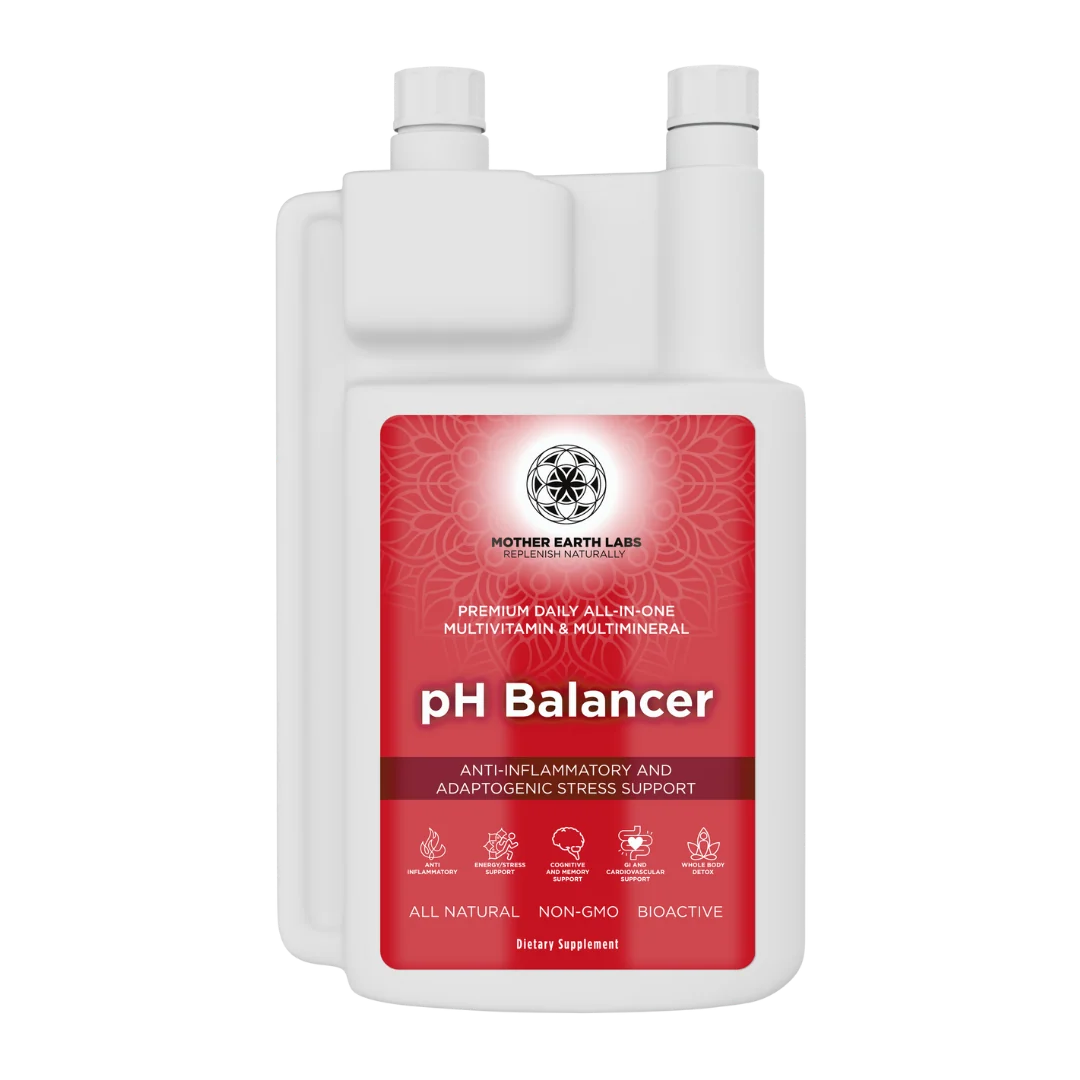
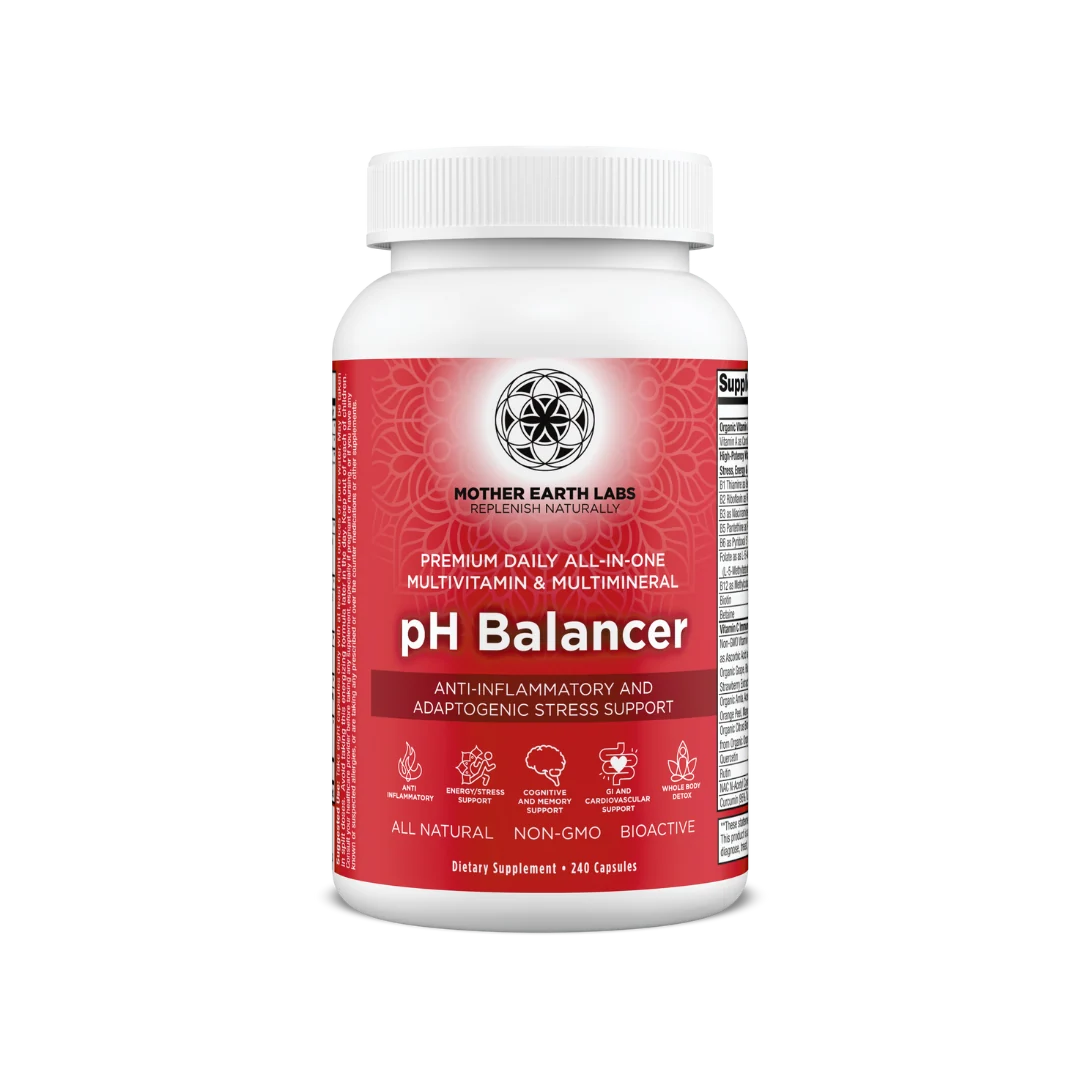
pH Balancer liquid and capsule packaging, shown as examples of a botanical-containing supplement. The hypothetical extract calculations in this article are not specifications for these products.
Begin with the material behind the ratio
Imagine a dry root extract made from 10 kilograms of dried root, yielding 1 kilogram of native extract. Its starting-material-to-native-extract ratio is 10:1. Here, native extract means the extracted material before added inert carriers or diluents. The plant species, root as the plant part, and dried starting condition are part of this hypothetical example. [1][3]
If a serving contains 200 mg of that native extract, the starting-material equivalent is 200 mg × 10 = 2,000 mg of dried root. The serving contains 200 mg of extract. It does not contain 2,000 mg of root powder.
Extraction separates some constituents from the starting plant material. The ratio alone does not tell you which compounds were retained, how much of each is present, or whether the extract produces the same effects as eating the starting material. [3]
Now calculate a declared marker percentage
A separate hypothetical label says “200 mg root extract, standardized to 5% constituent X.” If that percentage applies to the full 200 mg extract entry, the calculation is 200 mg × 0.05 = 10 mg of constituent X.
The calculation requires a named constituent and a clear basis. “5%” without saying 5% of what leaves the question unfinished. A marker may help characterize or control a botanical preparation; it is not necessarily the constituent responsible for a clinical effect. Standardization also involves more than one marker result. [2]
| Label statement | What you can calculate | What remains unknown |
|---|---|---|
| 200 mg native dry extract with a defined 10:1 ratio | 2,000 mg dry starting-material equivalent | Amount of a particular marker |
| 200 mg extract standardized to 5% X | 10 mg X on that stated basis | Starting-material ratio |
| Both statements, each clearly defined | Both quantities separately | Clinical effectiveness for a particular use |
Check whether the weight includes a carrier
A finished extract ingredient can include a carrier added for handling or consistency. That changes which weight belongs in the ratio calculation. USP distinguishes native extracts from preparations with added inert materials, and Australian regulator guidance explains why the native proportion matters when describing equivalent starting material. [1][3]
Consider 250 mg of a finished ingredient that is 80% native extract and 20% carrier. If its 10:1 ratio specifically refers to the native fraction, calculate 250 mg × 0.80 = 200 mg native extract first. Then calculate 200 mg × 10 = 2,000 mg starting-material equivalent. Applying the ratio directly to all 250 mg would instead give 2,500 mg and overstate that equivalent.
This example works because the native proportion and the ratio basis are both supplied. When a label omits them, do not invent a carrier percentage or assume the headline ratio applies to every gram of the finished ingredient.
Why a bigger ratio is not automatically a better extract
A higher ratio can reflect differences in extraction yield or the constituents a process selects. It is not a universal effectiveness scale. Two extracts can also share a ratio while differing in plant part, solvent or composition. Technical work on plant-to-extract ratios emphasizes the need for these additional descriptors. [4]
For a useful comparison, first match the botanical identity and plant part. Then ask what the extract weighs, what the ratio refers to, and whether any marker percentage uses that same weight. If you are checking a study, its actual preparation and outcome matter more than finding the largest number on a shelf.
The practical distinction is simple: an extract ratio describes a manufacturing relationship; a declared marker percentage describes composition. Keep those jobs separate, and the arithmetic becomes much easier to follow.
If a supplier provides a certificate of analysis, check which product, lot and test result it covers before using it to interpret a marker claim. Our guide to matching a supplement lab report to your bottle walks through those checks.
Sources
- United States Pharmacopeia. General Chapter 565 Botanical Extracts. Public preview defining native extracts, carriers and processing.
- American Herbal Products Association. White Paper on the Standardization of Botanical Products. Marker quantification and broader quality controls.
- Therapeutic Goods Administration, Australia. Substituting equivalent herbal extract ingredients in listed medicines. Native extract ratios and added materials; terminology used here, not U.S. legal advice.
- Understanding plant to extract ratios in botanical extracts. Frontiers in Pharmacology, 2022. DOI 10.3389/fphar.2022.981978.
Pingback: Supplement Facts: Per Serving vs. Per Capsule Explained
Pingback: Supplement COA: Does the Lab Report Match Your Bottle?
Pingback: pH Balancer vs. CogniActive: Reading the Bacopa Entries