
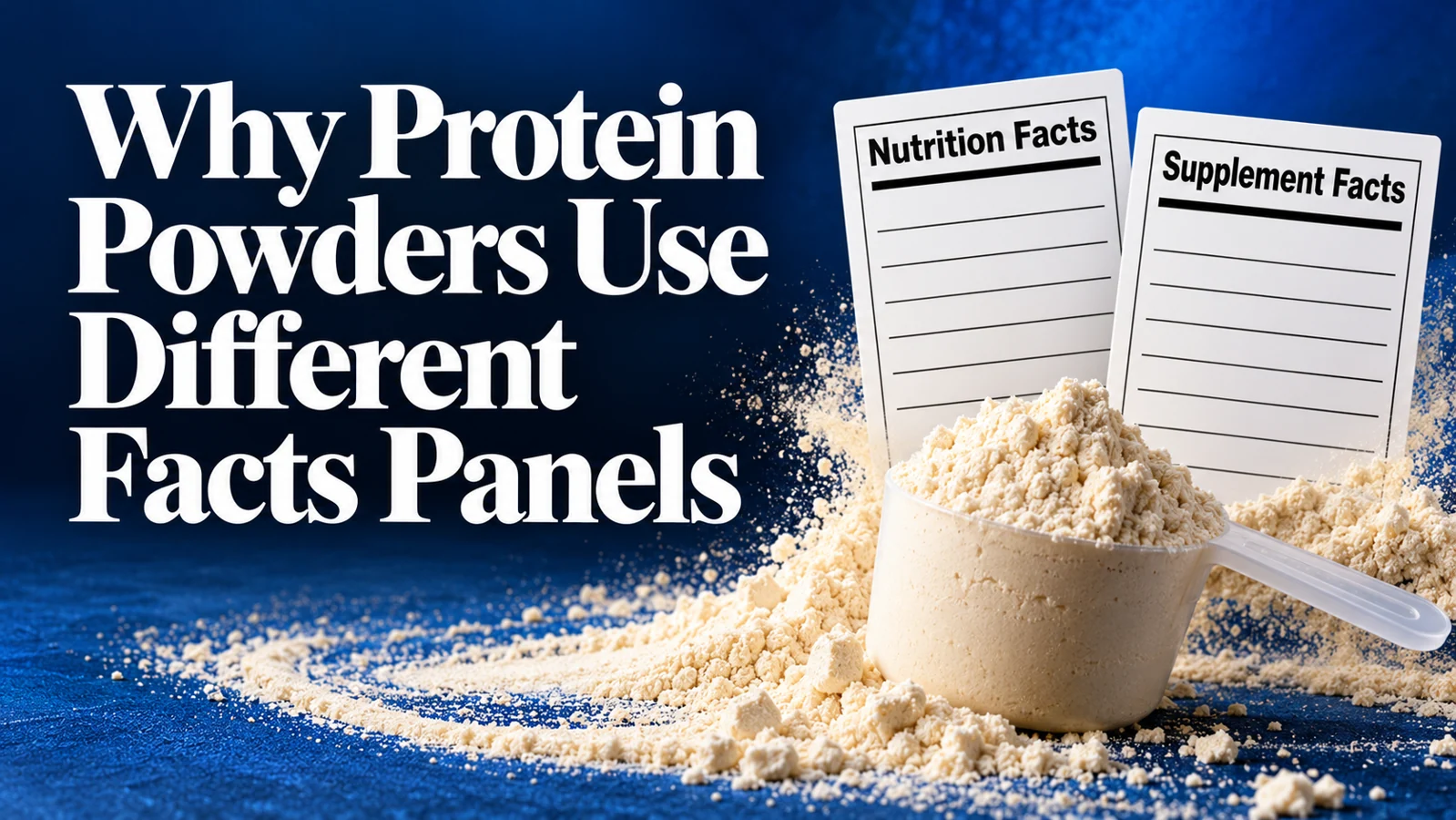
Nutrition Facts and Supplement Facts identify different U.S. product-labeling categories. Either can appear on a protein powder depending on how the product is represented. To compare the nutrition, read the serving weight, protein, calories and other relevant entries beneath the heading; the heading itself is not a quality score. [1] [2]
Put equivalent servings beside each other
If one tub uses a one-scoop serving and another uses two scoops, first identify the powder weight behind each serving. Then compare the protein and other nutrients on a clearly stated basis. A food-versus-supplement label heading does not make those different serving sizes nutritionally equivalent.
Two tubs can both mix into a protein drink while presenting their labels differently. Reading the product category first helps you understand the layout; the serving and nutrient entries then give you the figures to compare.
Powder is a physical form, not a regulatory category
FDA describes dietary supplements as products intended to add to the diet. They can take many forms, including powders. The definition also distinguishes supplements from products represented as conventional foods or as the sole item of a meal or the diet. [1][2]
A scoop, tub or shaker bottle cannot make that decision for you. Read the product name, statement of identity, directions and claims alongside the Facts panel. “Protein powder” describes a type of product, but does not replace those details.
Compare the information beneath the heading
Consider two fictional powders. Both declare 20 g of protein per serving. One is labeled as a food; the other is labeled as a supplement. The following selected fields illustrate the distinction. They are not complete labels or templates for regulatory compliance.
| Selected field | Powder A | Powder B |
|---|---|---|
| Panel heading | Nutrition Facts | Supplement Facts |
| Product representation in this example | Conventional food | Dietary supplement |
| Serving size | 1 scoop (30 g) | 1 scoop (30 g) |
| Declared protein per serving | 20 g | 20 g |
| What the heading establishes | Food nutrition-label format | Supplement nutrition-label format |
For the separate question of protein processing, read whether whey can be both isolated and hydrolyzed.
The headings differ, but the declared protein amount in this example does not. Likewise, neither heading reveals an amino-acid profile, verifies a laboratory report or establishes suitability for a milk allergy. Those questions require their own information.
Why the ingredient layout may look different
Supplement Facts can identify dietary ingredients and their sources within the panel, while ingredients not declared there appear in the separate ingredient statement, often headed “Other Ingredients.” A food’s ingredient list and Nutrition Facts panel have their own roles. This can make two packages look quite different even when some ingredients overlap. [2][3]
Read both the panel and the full ingredient statement. Finding a protein source inside one panel and in a separate list on another package is not, by itself, evidence that one manufacturer omitted it.
Serving size remains essential whichever heading you see. The amount declared per serving is not automatically the amount in the whole tub or in the shake you make with several ingredients. FDA’s consumer guide explains that Nutrition Facts information is generally based on one serving, unless another basis is shown. [4]
Use the panel heading as a reading guide
Use the heading to orient yourself, then ask the question that brought you to the shelf. For protein quantity, read grams per serving and the serving size. For allergens, read the applicable ingredient and allergen information. For a testing claim, look for the actual evidence behind that claim.
“Supplement Facts” also does not mean FDA approved the finished supplement before sale. FDA explains that it does not approve dietary supplements for safety and effectiveness before they reach the market. That is a separate issue from whether the panel uses the appropriate format. [1]
If the product’s name and directions seem inconsistent with the panel category, ask the manufacturer how it is marketed in your country. Avoid diagnosing compliance from a cropped shopping photo that leaves out the rest of the package.
The practical reading order is simple: identify the product category, locate the serving, then compare the particular nutrient or ingredient you care about. Let the panel heading tell you how the label is organized; use the actual entries to answer your nutrition question.
Pingback: Supplement Facts: Per Serving vs. Per Capsule Explained
Pingback: Protein Powder Scoop Weight vs. Protein Grams
Pingback: Hydrolyzed Whey Protein Isolate: Can It Be Both?
Pingback: Why Zero-Sugar Protein Shakes Can Taste So Sweet