
An organic claim can describe a particular ingredient, a certified made-with category or the finished product. Read the exact wording and certifier information to identify which applies. That gives you a clear way to compare ingredient sourcing alongside the supplement’s nutrient amounts and intended use. [1]
What does the organic claim cover?
Look for the certifier’s name and the finished product’s actual claim. A statement about one organic herb should stay a statement about that herb. If a seller’s wording makes the whole bottle sound certified but the packaging does not, ask for clarification rather than filling in the gap yourself.
The useful first question is simple: which part of the product does this statement describe? Once that is clear, you can read the ingredient list, Supplement Facts and use directions on their own terms.
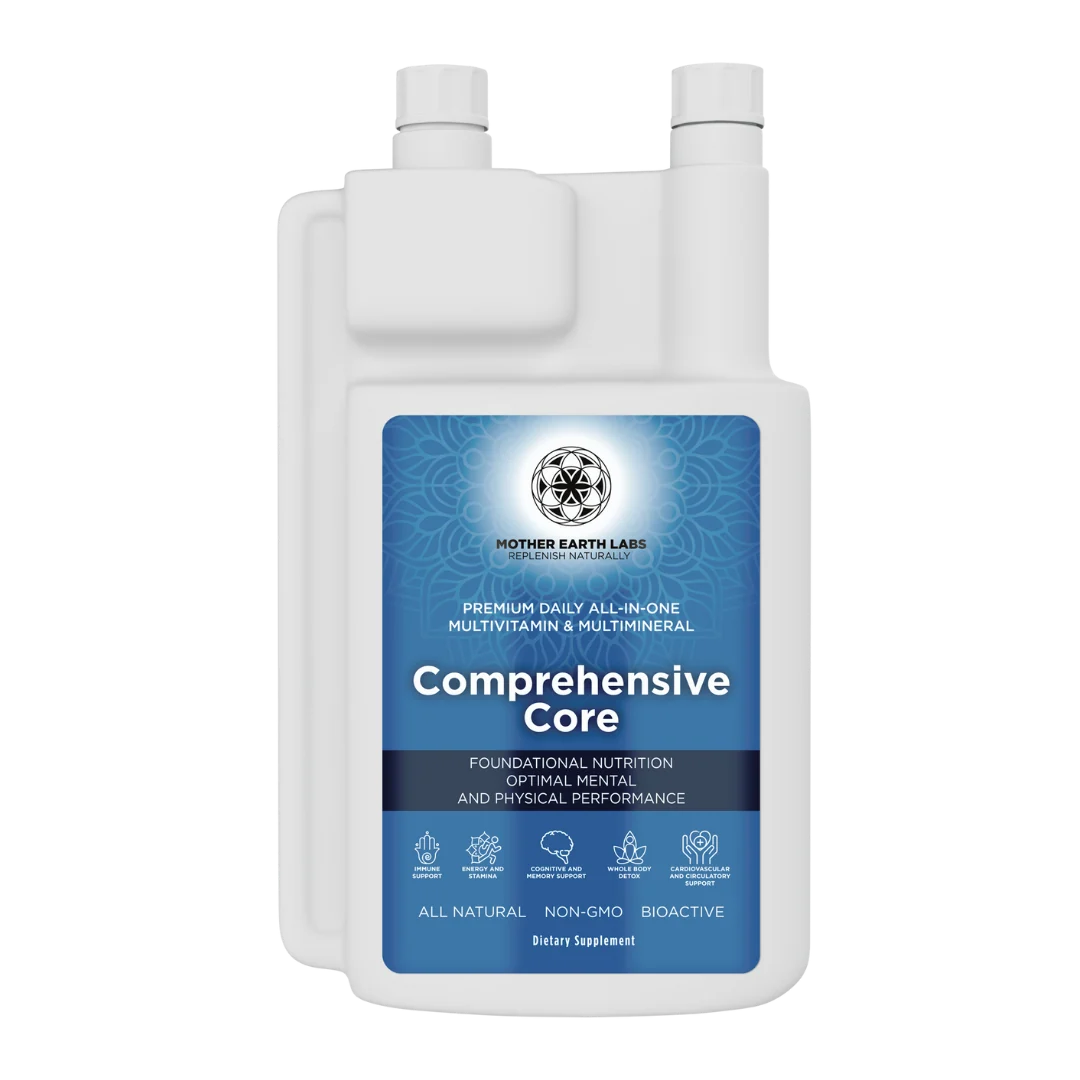
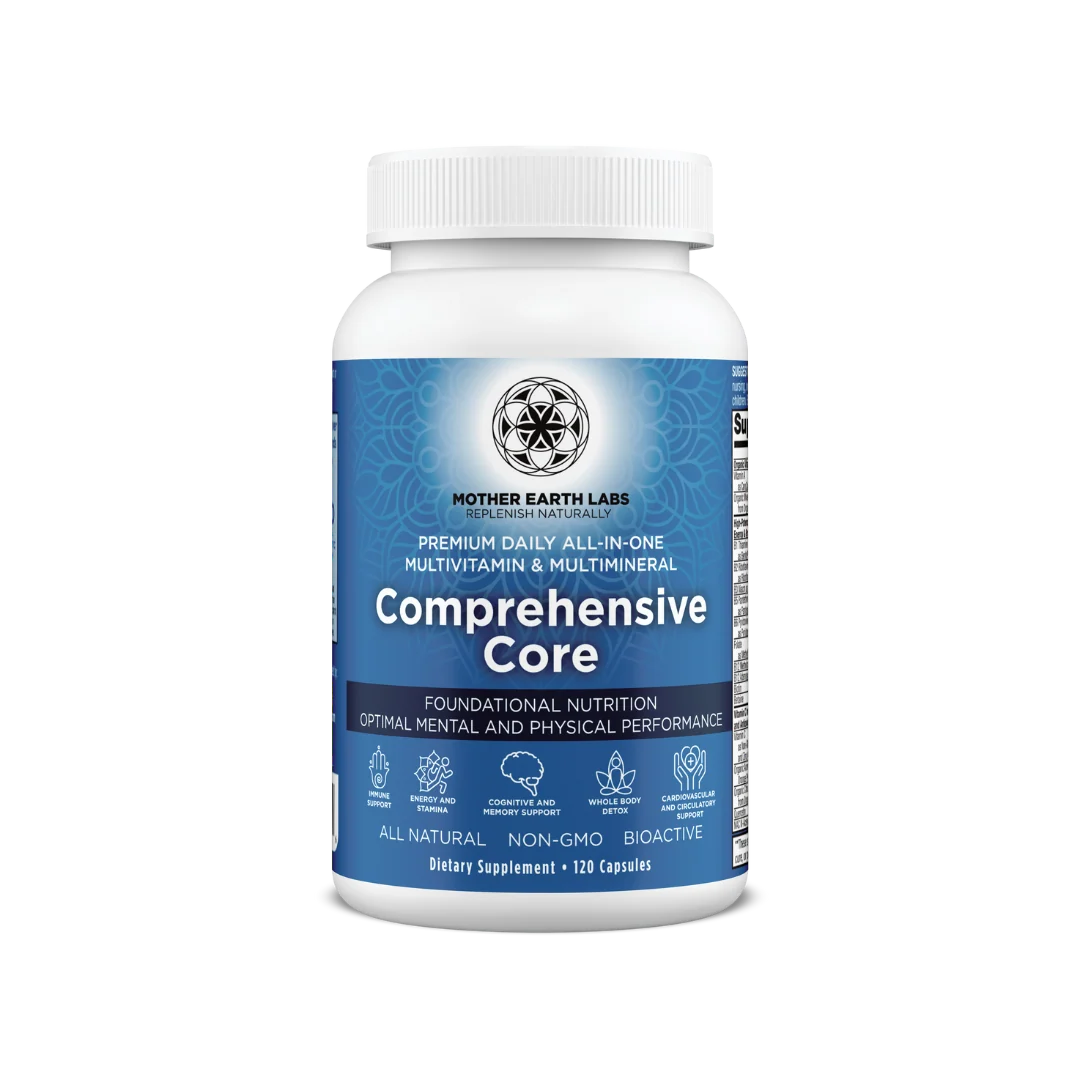
Comprehensive Core packaging, shown as a product-label example. The fictional certification examples in this article do not establish certification for this product.
Three claims that sound similar
Imagine three fictional supplement labels. These are educational examples, not approved label designs or claims that particular retail products are certified.
| Statement | What to investigate | What not to assume |
|---|---|---|
| “Contains organic ginger” | Whether the specified ingredient is organic and correctly identified in the ingredient statement | That every ingredient or the finished formula is certified organic |
| “Made with organic ginger, turmeric and cinnamon” | Whether the product meets the certified made-with category and its composition rules | That it may display the USDA organic seal |
| “Organic,” with a USDA seal and certifier identification | Whether the finished product and operation have the relevant certification | That certification is an efficacy test or nutrient-dose recommendation |
The wording around the ingredients matters. A phrase naming an organic botanical is narrower than a whole-product organic claim. Looking only at the largest front-label word can hide that distinction.
The percentages have a defined basis
USDA’s “organic” category requires at least 95% organic ingredients, excluding salt and water, with restrictions on the remainder. The certified “made with organic” category requires at least 70% organic ingredients on that basis and cannot use the USDA organic seal. “100 percent organic” is a separate category. These thresholds are not the only requirements for compliant labeling. [1][2]
Consider a simplified fictional formulation with 80 g of organic agricultural ingredients and 20 g of other countable ingredients. Its organic proportion would be 80 ÷ 100 × 100 = 80%, before evaluating whether the actual ingredients and handling meet all applicable rules.
Adding 100 g of water would not turn that calculation into 80 ÷ 200 = 40% for USDA’s stated organic-percentage basis: salt and water are excluded. Conversely, reaching 80% does not automatically certify the product or authorize any particular claim.
Check what the certification actually covers
For a finished-product claim, look for the certifier identification and supporting certification details. USDA’s Organic Integrity Database helps readers find certified operations and related product information. The legal operator’s name may differ from the consumer brand, so a search that finds nothing under one marketing name is not, by itself, proof that certification does not exist. [3]
Ask the company for the certificate, the certified operator’s name and confirmation that the particular product is within scope. An ingredient supplier’s certificate can be relevant to that ingredient without establishing that every later blending or handling step is covered.
Keep the product format in view too. A capsule shell, flavor system, excipient and agricultural extract do not all become organic because one botanical is organic. Which components are permitted depends on the category and the applicable rules.
Organic does not answer every supplement question
Organic certification addresses production and handling standards within the certification system. It does not tell you the clinically appropriate amount, prove a finished formula’s health benefit or replace the Supplement Facts panel. Those remain separate questions.
Likewise, “natural,” “non-GMO” and “made with organic ingredients” should not be treated as interchangeable expressions. Read the actual claim rather than translating one favorable term into all the others.
A fair way to resolve an unclear statement
Ask: “Is this claim about specific ingredients, the made-with category or the finished product’s organic certification? Which certifier and certificate cover it?” That request is more precise than asking whether an entire brand is “organic.”
For U.S. products, use the current USDA categories and documentation. Other countries may use different rules. Match the claim to its scope first, then evaluate the supplement’s ingredients, quantities and usefulness on their own merits.
Pingback: Supplement Facts: Per Serving vs. Per Capsule Explained