
By Dr. Rich Prather, D.C. · Educational information, not individualized medical advice.
Direct answer: Magnesium glycinate and magnesium citrate both provide magnesium, but differ in the compound attached to it and in how they are tolerated. Magnesium citrate is relatively soluble and may loosen stools; glycinate is often marketed as gentler, although strong head-to-head clinical evidence for broad superiority is limited. The most useful comparison starts with elemental magnesium per serving, not the total compound weight.
What is magnesium glycinate?
Magnesium glycinate (sometimes labeled bisglycinate) combines magnesium with glycine. It is often chosen by people concerned about digestive tolerance. Product formulations vary, and a label may contain buffered blends, so the precise ingredient list matters.
What is magnesium citrate?
Magnesium citrate is a magnesium salt of citric acid. Citrate forms generally dissolve well and can be absorbed. In higher or medically formulated doses, magnesium citrate also has laxative uses. A nutritional supplement serving is not interchangeable with a bowel-preparation product.
Which one absorbs better?
The NIH notes that some more soluble magnesium forms, including citrate, tend to have greater bioavailability than oxide and sulfate in small studies. It does not establish that one form is always clinically superior for sleep, muscle cramps, or every other goal. Be skeptical of simple rankings that assign universal absorption percentages without comparable clinical evidence.
The number on the label that matters
If a product lists Magnesium 200 mg (as magnesium citrate), the Supplement Facts figure is normally 200 mg elemental magnesium, not 200 mg of the whole citrate compound. Two products can have very different capsule sizes or compound weights while supplying the same elemental magnesium. Check the serving size: a ‘200 mg’ listing may refer to two or four capsules rather than one.
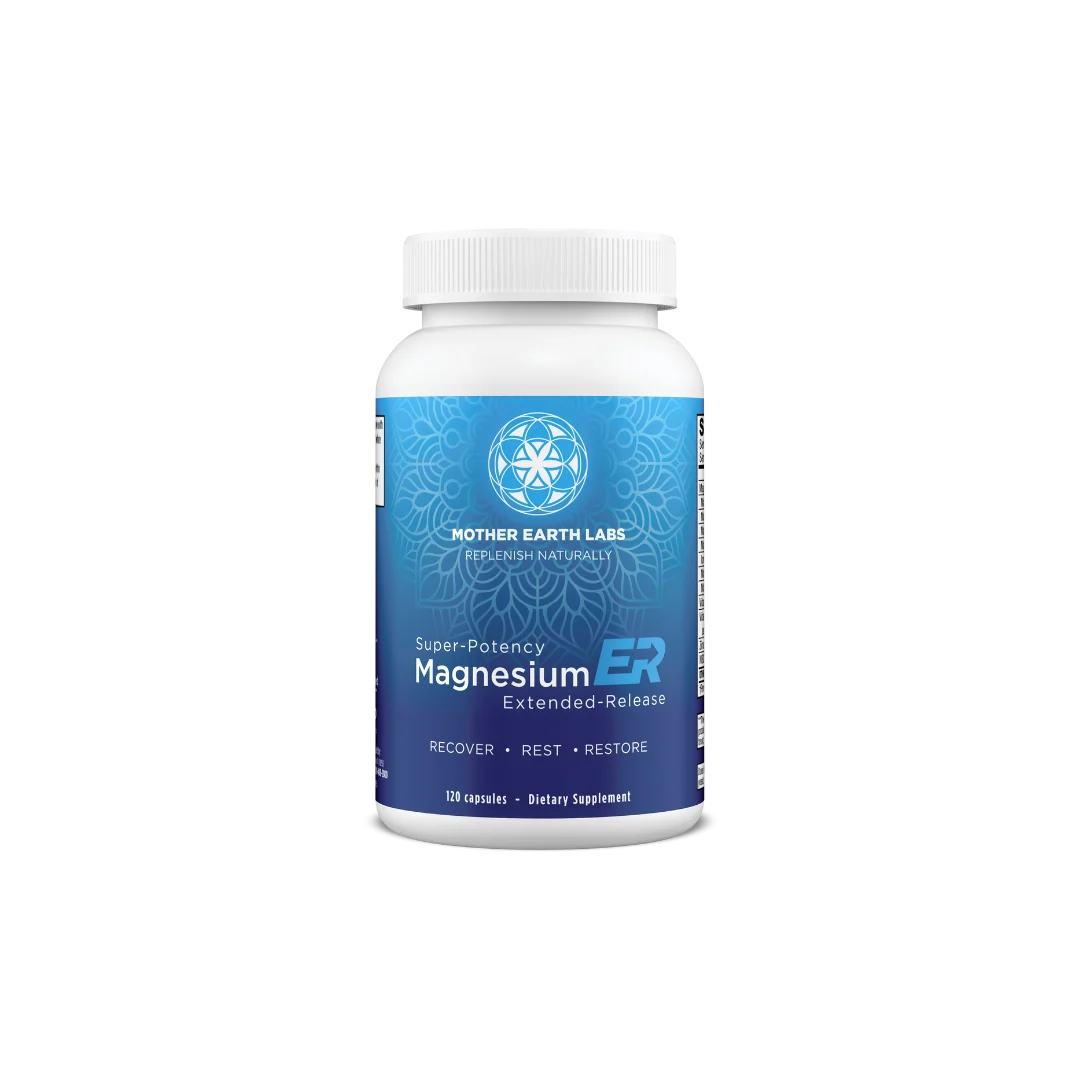
Original manufacturer bottle photograph supplied for this article.
Official Mother Earth Labs Magnesium ER label and Supplement Facts
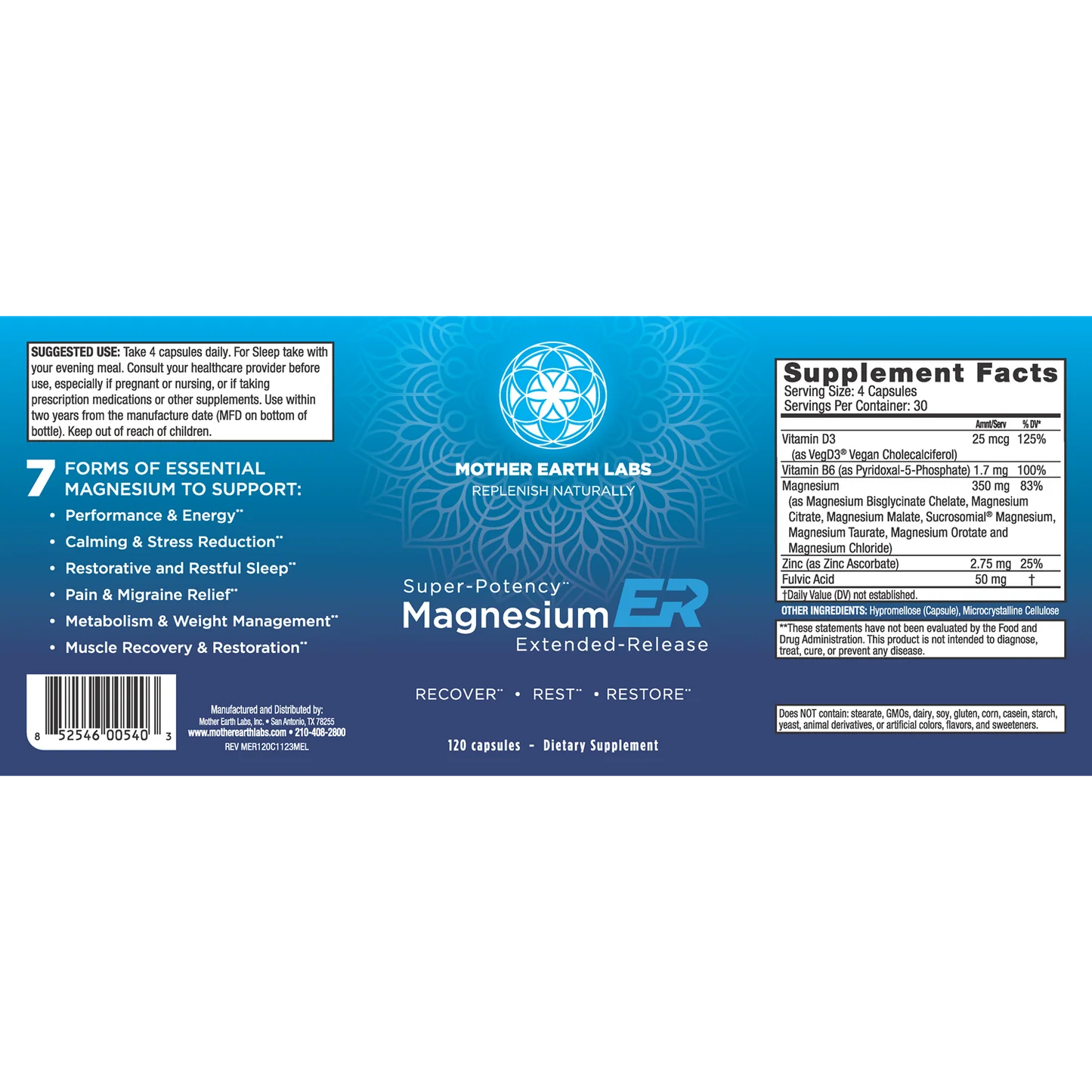
Original manufacturer label supplied for this article. Read the full-size image for complete ingredients and cautions; check your bottle for formulation updates.
What the supplied label actually says (per 4 capsules): Magnesium 350 mg (83% DV) from magnesium bisglycinate chelate, citrate, malate, Sucrosomial® magnesium, taurate, orotate and chloride. It also lists vitamin D3 25 mcg (125% DV), vitamin B6 as P5P 1.7 mg (100% DV), zinc 2.75 mg (25% DV) and fulvic acid 50 mg. The label gives a combined 350 mg of elemental magnesium; it does not disclose how much comes from each of the seven forms. This is a multi-form formula, not a pure glycinate-versus-citrate comparison.
Label directions: Take 4 capsules daily; for sleep, the label suggests taking them with an evening meal. The manufacturer’s claims about sleep, recovery or other outcomes are marketing claims, not proof of clinical benefit.
Safety: 350 mg per serving equals the U.S. adult tolerable upper intake level for magnesium from supplements/medications; combining with other magnesium products can exceed that amount. People with kidney disease or taking interacting medicines should obtain individualized advice.
Product example: Mother Earth Labs Magnesium ER
Mother Earth Labs Magnesium ER combines seven magnesium forms, including bisglycinate and citrate. It is a mixed-form example, not a direct head-to-head test or proof that extended-release magnesium works better for a particular symptom.
View Magnesium ER at Mother Earth Labs ↗
The purchase button opens the named product at Mother Earth Labs. Confirm the exact formula, serving size, availability, and checkout price there before ordering.
What about sleep, constipation and muscle cramps?
Constipation: Citrate can have a stool-loosening effect, but chronic constipation deserves assessment, and magnesium laxatives should not be used indiscriminately.
Sleep: Marketing frequently favors glycinate, yet evidence does not support a universal promise that it will improve sleep for everyone.
Muscle cramps: Cramps have many causes; supplementation is most defensible when low magnesium intake or deficiency is plausible, rather than as a guaranteed remedy.
Safety and interactions
Magnesium supplements can cause diarrhea, nausea and cramping. People with impaired kidney function should seek medical advice because magnesium can accumulate. Magnesium can interact with certain antibiotics and bisphosphonates, which may require dose separation. The U.S. adult tolerable upper intake level of 350 mg/day refers to magnesium from supplements and medications, not naturally occurring magnesium in foods; clinicians may prescribe higher amounts for specific reasons.
A practical decision checklist
- Compare elemental magnesium per full serving.
- Review glycinate/bisglycinate, citrate, and any additional forms or buffered blends.
- Consider digestive tolerance and whether loose stools are already an issue.
- Check other supplements, antacids and laxatives for additional magnesium.
- Ask a clinician about kidney disease, pregnancy, medications or persistent symptoms.
A comparison that separates evidence from marketing
Magnesium citrate is a magnesium salt of citric acid. It has been studied for absorption and is also used in some products for its osmotic laxative effects, with effects dependent on dose and formulation. Magnesium glycinate (sometimes labeled bisglycinate) is magnesium associated with glycine. It is commonly marketed for gentler digestion and sleep, but comparative clinical outcome evidence is less extensive than promotional claims suggest. A particular person’s tolerance is not proof of a universally superior form.
The NIH Office of Dietary Supplements reports that forms such as citrate generally show better bioavailability than poorly soluble magnesium oxide in small studies. That is not the same as proving citrate is superior to every glycinate formulation or that glycinate reliably treats insomnia. The strongest choice depends on the actual product, elemental dose, reason for use, tolerability, and health circumstances.
Read the Supplement Facts panel in three passes
First, find serving size: one capsule, two capsules, or a scoop can radically change comparisons. Second, find the elemental magnesium listed under Supplement Facts, rather than relying on a front-label number such as “1,000 mg magnesium glycinate complex.” Third, identify the form or blend and any other active ingredients. If a product combines forms, the total magnesium figure alone may not reveal the proportion contributed by each.
For example, a hypothetical product labeled Magnesium 200 mg (as magnesium citrate), serving size 2 capsules provides 200 mg elemental magnesium per two capsules, not 200 mg per capsule. A second product saying Magnesium 120 mg (as magnesium bisglycinate), serving size 1 capsule provides 120 mg per capsule. These examples are teaching tools, not actual product labels.
Important safety considerations
The NIH adult upper limit for magnesium from supplements and medications is generally 350 mg/day unless supervised by a clinician; magnesium naturally present in food is not counted toward this limit. Excess supplemental magnesium can cause diarrhea, nausea, and cramping. Severe toxicity risk rises with impaired kidney function. Magnesium may interfere with absorption of certain antibiotics and osteoporosis medications, so dosing separation may be required. Kidney disease, pregnancy, chronic illness, and complex medication regimens warrant individualized advice.
Which form fits which question?
For constipation, discuss appropriate treatment with a clinician or pharmacist; citrate’s laxative use does not make every supplement a safe constipation remedy. For sleep, neither form should be described as a proven cure; address sleep habits and underlying causes. For general low intake, compare food sources, actual elemental magnesium, price per usable serving, and tolerability. For leg cramps, evidence is mixed, and symptoms may have causes unrelated to magnesium. If a product causes diarrhea or discomfort, do not keep escalating the dose in pursuit of an advertised benefit.
Side-by-side: what the evidence actually supports
| Question | Magnesium citrate | Magnesium glycinate / bisglycinate |
|---|---|---|
| Does it supply magnesium? | Yes | Yes |
| Evidence on absorption | NIH discusses citrate among soluble forms with relatively favorable absorption compared with oxide in small studies | Frequently promoted as highly absorbed, but robust direct comparative outcome evidence is limited |
| Digestive effect | May loosen stools; concentrated medical formulations are used as laxatives | Often chosen for tolerance, but tolerance varies by dose and person |
| Proven superior for sleep? | No universal evidence | No universal evidence |
| What to compare on the label | Elemental magnesium per full serving | Elemental magnesium per full serving; check for buffered blends |
A worked Supplement Facts comparison
Imagine Bottle A declares Magnesium 120 mg (as magnesium citrate), serving size two capsules. Bottle B declares Magnesium 120 mg (as magnesium bisglycinate), serving size one capsule. Both provide 120 mg of elemental magnesium per labeled serving, even though the compounds and capsule counts differ. Comparing one capsule from Bottle A with one capsule from Bottle B would be misleading. These are hypothetical labels, not actual Mother Earth Labs product claims.
Four buying mistakes to avoid
- Treating “500 mg magnesium glycinate” on the front label as 500 mg elemental magnesium without reading Supplement Facts.
- Assuming a form marketed for sleep has been proven to treat insomnia.
- Assuming a citrate supplement and a magnesium-citrate laxative have interchangeable directions.
- Ignoring medication interactions, kidney disease, and magnesium from antacids or other products.
Frequently asked questions
Is magnesium glycinate always better than citrate?
No. The answer depends on the formulation, reason for use, tolerance and clinical context.
Can I take both forms?
Some products combine forms, but the total elemental magnesium and interactions still matter.
Is ionic magnesium the same thing?
‘Ionic’ is a marketing or formulation description, not a reliable stand-alone indicator of dose or superiority. Read the exact Supplement Facts panel.
Does a larger capsule mean more magnesium?
Not necessarily. Compound weight and excipients affect capsule size; compare the declared elemental amount.
Related reading
Use the Core & Balancer ingredient dictionary to check ingredient terminology, and the Supplement Facts guide for label-reading context.
How to compare two real labels
Make a small record of elemental magnesium per serving, capsules per serving, other active ingredients, and the total daily amount you would actually take. A label that says “Magnesium (as magnesium glycinate) 100 mg” reports 100 mg of magnesium, not 100 mg of the entire glycinate compound. A separate front-label statement about the compound may use different units. If a label is ambiguous, ask the manufacturer rather than guessing.
For someone using magnesium for constipation, the choice should also consider hydration, bowel symptoms, kidney health, and other medicines. Persistent constipation, severe pain, blood in stool, or vomiting warrants clinical evaluation instead of escalating supplements.
A magnesium ER label question worth asking
The supplied Magnesium ER label reports 350 mg elemental magnesium per four-capsule serving, sourced from seven listed forms. It does not disclose how many milligrams come from glycinate versus citrate. Therefore, it would be inaccurate to claim this blend provides a specific dose of either form or to use the blend as a head-to-head absorption trial. The manufacturer calls it extended-release, but that label wording alone does not establish superior clinical outcomes. NIH notes that Supplement Facts declares elemental magnesium, not the mass of the entire compound. NIH magnesium fact sheet.
For format differences, see Magnesium Capsules or Liquid: Which One Is Right for Me?. For product-specific context, see Mother Earth Labs Magnesium ER Capsules.
Sources
- NIH Office of Dietary Supplements, Magnesium — Health Professional Fact Sheet
- NIH Office of Dietary Supplements, Magnesium — Consumer Fact Sheet
Educational information; not a substitute for individualized medical advice.