

By Dr. Rich Prather, D.C. • Updated October 25, 2026
Probiotics supply live microorganisms; prebiotics are used by selected microorganisms in ways that benefit health; digestive blends may contain enzymes and other ingredients with different roles. Choose the question before the category. Bloating after a shake, constipation and a clinician-guided probiotic plan are different situations, even if the shop groups them under gut health.
In this guide
Write down the pattern before choosing the category
Note what happens, when it happens, how long it has been going on and which foods, medicines or products changed. That gives a clinician or dietitian something useful to work with and helps you avoid adding three new supplements at once. The categories explain ingredients; they do not diagnose the cause of symptoms.
Start with your actual experience
Begin with the pattern you want to understand: hard stools and straining, loose stools during antibiotics, or bloating after a shake. Each points to a different question about food, medicines, ingredients or an appropriate clinical assessment.
Write down when symptoms happen, what changed recently and what you want to improve. A short note is enough. Those observations help you and your clinician choose a relevant ingredient category and a practical next step.
If constipation is the problem, do I need a probiotic?
Possibly, but it is worth looking at the everyday basics first. Has your eating changed? Are you drinking less? Have you been sitting through long workdays or started a medicine that affects bowel movements? A probiotic does not automatically address those factors.
NIDDK recommends considering fiber, fluids, and physical activity in constipation care. Add fiber gradually and drink enough to help it work. More is not always comfortable when added abruptly. Persistent symptoms deserve a discussion about their cause and appropriate treatment.
Some probiotic studies in adults with constipation show benefit, but results vary by organism and study. NCCIH reviews that evidence. A bottle containing a familiar species name is not automatically the same as the preparation used in a successful trial.
If I am taking antibiotics, what changes?
Certain probiotics can reduce the risk of antibiotic-associated diarrhea in some people. That is a more specific research question than whether a probiotic improves everyone’s digestion. The NIH evidence summary explains that the strain, antibiotic, age, and treatment setting affect the result.
Ask your pharmacist or prescriber whether an evidence-matched product makes sense and when to take it alongside your particular medicine. Do not stop the antibiotic or assume all loose stools are harmless. Significant diarrhea during or after antibiotics, especially with fever or abdominal pain, needs medical advice.
Keep the distinction clear: preventing a particular side effect and treating ongoing unexplained diarrhea are different jobs. A product suitable for one purpose is not automatically a good choice for the other.
What if I am mostly bloated after eating?
Adding a prebiotic is not always the most comfortable first move. Fermentable ingredients can produce gas, especially when intake changes quickly. Imagine adding a fiber powder to breakfast on the same day you introduce a high-fiber bar and a larger bean salad. If your belly protests, it is difficult to know which change mattered.
Look at timing and ingredients first. Does it happen after milk, a large shake, fizzy drinks, or a particular meal? Our protein-bloating guide shows how to examine one recipe without changing everything at once. Repeated symptoms deserve more than a guess that your microbiome is “out of balance.”
How are probiotics and prebiotics different?
A helpful shorthand is adding organisms versus feeding selected organisms. A probiotic contains live microorganisms with a demonstrated health benefit when given appropriately. A prebiotic is a substance selectively used by microorganisms that confers a health benefit. Those definitions require more than simply being a bacterium or a fiber.
FOS and inulin are names you may encounter in prebiotic products. Some foods also supply fermentable fibers. A product can include both probiotic organisms and a prebiotic ingredient, so the categories do not always arrive in separate bottles. The amount and your tolerance still matter.
What do the strain code and CFU number tell me?
CFU describes the number of viable microorganisms under the measurement used. It is not a score for how well the product will work for you. The name identifies the organism; the strain code helps distinguish one studied strain from another.
Think of the code as the detail that lets you check whether the research and the bottle actually match. A study of one strain does not establish the same benefit for every member of that species or every mixture containing it. Our strain-code guide explains the comparison.
Also check storage and whether the viable count is guaranteed through expiration rather than only at manufacture. Mother Earth Labs describes its probiotic capsules as a nine-strain preparation with 20 billion CFU guaranteed through expiration and a prebiotic component. Those are useful product details; suitability still depends on your intended use.
What does a digestive blend add?
A blend may contain enzymes, fiber, glutamine, colostrum, or other ingredients. Enzymes help break down particular food components; they do not all do the same thing. Lactase, for example, targets lactose. That does not make a broad enzyme blend an answer to every uncomfortable meal.
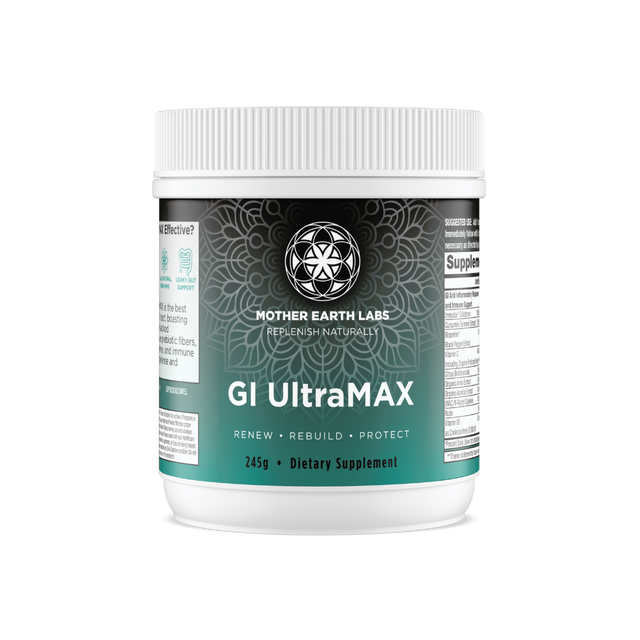
Mother Earth Labs GI UltraMAX combines prebiotic fiber, glutamine, colostrum, and digestive enzymes. Someone considering it for broad digestive support is comparing a different preparation from a probiotic alone. Colostrum is milk-derived, which matters for milk allergy. The complete ingredient list and intended purpose deserve attention before adding a scoop.
Can I take all three, and how will I know if anything helped?
Some formulas already combine categories. Taking several separately may repeat ingredients and make the effects difficult to interpret. First choose one clear goal and review the complete combination with your pharmacist or clinician when needed.
For an agreed trial, record something meaningful: comfortable bowel movements, straining, or how often bloating interrupts your day. Ask when to reassess; there is no universal deadline for every organism and every concern. Worsening symptoms are a reason to stop and seek guidance, not proof the product is working.
People who are seriously ill or immunocompromised need clinical guidance before probiotics. Seek prompt assessment for severe pain, blood in stool, persistent diarrhea, fever with bowel symptoms, or unexplained weight loss.
Your next step: finish the sentence “I want help with…” in plain language. Then match that concern to the evidence and ingredients. You should leave the comparison understanding what each product is meant to do and why it might—or might not—fit your day.
See the products discussed here

Sources and further reading
- NIH: Probiotics
- Mother Earth Labs: Probiotic capsules
- Mother Earth Labs: GI UltraMax
- NIH: Probiotic research and strain-specific evidence
- NCCIH: Probiotics—usefulness and safety
- NIDDK: Treatment for constipation
General educational information. For individual needs, medicines, and product directions, use your own label and appropriate professional guidance.