
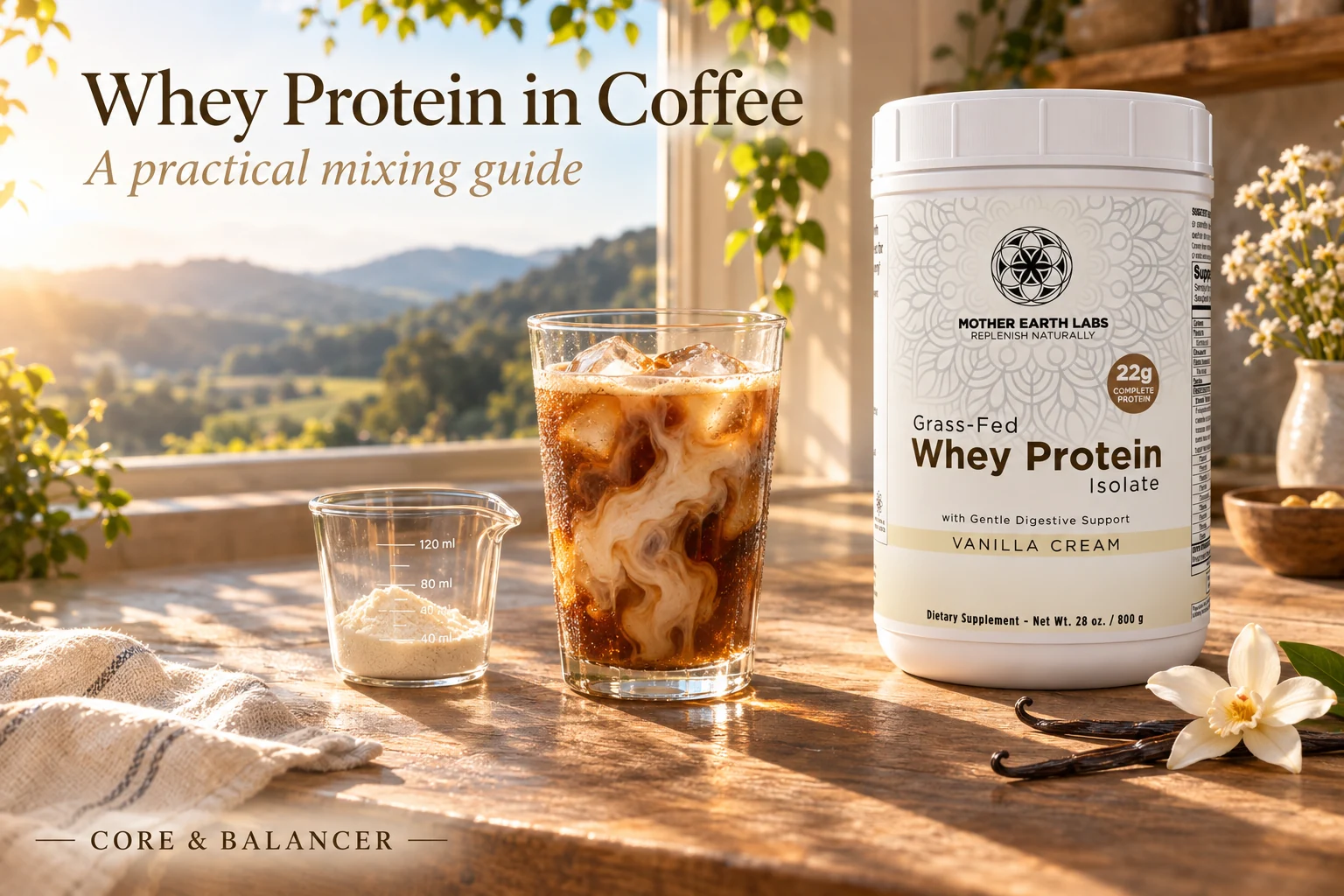
Mother Earth Labs Vanilla Cream whey can be used in a beverage, but a cool or iced coffee is the simplest starting point. Mix the powder into a small amount of cool liquid before adding the coffee. The product’s label permits beverage use; it does not provide a verified coffee temperature that preserves its added enzyme activity.
This guide concerns the exact Grass-Fed Whey Protein Isolate, Vanilla Cream formula. It is a label-based preparation guide, not a report of a kitchen test or a clinical trial of the finished drink.
Start with what this scoop contains
The current official Vanilla Cream label lists one scoop per serving and 30 servings per container. Its whey protein isolate is milk-derived.
| Entry | Per labeled scoop | How to use the information |
|---|---|---|
| Protein | 22 g | Count this amount toward the drink’s protein. |
| Calories | 111 | Add calories from the rest of the drink separately. |
| Total carbohydrate | 1 g | Coffee additions can change the total. |
| Whey protein isolate ingredient | 24.5 g | This is not an extra 24.5 g of protein to add to the 22 g. |
| Named enzyme preparations | ProHydrolase and BioCore Optimum | The label does not specify retained activity in hot coffee. |
| Allergen | Milk | Whey isolate is not appropriate for a milk-protein allergy. |
Check the container you receive in case the label changes. This selected table is not the complete ingredient panel.
A cool-first method to try
The following is a suggested preparation sequence, not a manufacturer-tested recipe. Start with a smaller portion if you are deciding whether you enjoy the flavor and texture.
- Prepare coffee and let it cool, or use chilled coffee. Choose decaf if that better suits you.
- Put a little cool liquid in an open mixing cup. Gradually whisk in the measured powder. Add enough liquid to make a smooth, pourable mixture.
- Stir that mixture into the coffee gradually. Adjust the final volume to your taste.
- Taste before adding more sweetener. Vanilla Cream is already sweetened.
Baptist MD Anderson’s protein-powder handout includes coffee among possible beverages and recommends mixing powder thoroughly with liquid in a separate container. Those are general preparation tips, not testing of this MEL formula.
One starting ratio for an iced cup
For an optional small trial, whisk half a labeled scoop into 1/4 cup (2 fluid ounces) of cool water, then stir in 3/4 cup (6 fluid ounces) of chilled coffee. Add ice if desired. The powder contributes approximately 11 g protein and 55.5 calories; calculate other additions separately. This is an editorial starting ratio, not a tested recipe or a manufacturer instruction. Adjust the liquid for your preferred texture.
| If you notice | What to try next time |
|---|---|
| Dry pockets or clumps | Add powder gradually to the cool liquid and whisk before adding coffee. |
| A thicker drink than you enjoy | Add more cool liquid, or measure a smaller powder portion and recalculate its contribution. |
| More sweetness than you want | Taste before adding sweetener; try more unsweetened chilled coffee or water. |
What if you prefer warm coffee?
Very hot liquid can make a smooth result harder to achieve. If you try a warm version, begin with the cool mixture and add it gradually to coffee that has cooled from brewing temperature. Use an open mug and stir. National Dairy Council cooking guidance suggests adding whey to hot foods after cooking and avoiding boiling conditions.
Keep two questions separate: Does the drink mix well? and How much activity remains in the added enzymes? A smooth drink cannot answer the second question. The manufacturer information reviewed for this article supplies no coffee-specific stability result, so there is no basis here for a guaranteed temperature, brewing method, or enzyme benefit in the finished cup.
Do not shake hot or warm coffee in a sealed shaker. Follow your container’s instructions. For example, BlenderBottle’s official precautions warn that warm or hot liquids can create pressure and spray when the cap opens. This is a safety example, not a product recommendation.
Count the powder once, then add the rest
A full labeled scoop contributes 22 g protein. If you measure half that quantity, its contribution is approximately 11 g; the other listed amounts are also halved. Do not count the whey ingredient weight a second time.
For an illustrative two-cup batch made with one full scoop, evenly dividing the mixture gives approximately 11 g protein and 55.5 calories from the powder per cup. The coffee and any other ingredients have their own contribution. This is arithmetic from the label, not a laboratory analysis of your recipe.
For more detail, read what whey isolate and hydrolyzed protein mean. A protein coffee can contribute to a meal; it does not establish that the meal meets all your needs.
Make the routine fit the person
Adding powder does not remove the coffee’s caffeine. Choose the coffee amount and type that already suit your routine. Avoid whey with milk-protein allergy. If you have a prescribed protein restriction or a kidney condition, discuss the addition with your clinician or dietitian; the Baptist handout also advises individual guidance for kidney or liver problems.
Prepare only what you will use and follow safe storage practices for all ingredients. A useful routine is one you enjoy, measure consistently, and understand. Start with the measured amount you enjoy and count it as part of your day’s food intake.