
Magnesium glycinate combines magnesium with glycine; magnesium malate combines it with malic acid. Both can contribute magnesium. The useful choice depends on the actual formula, elemental amount, tolerance and reason for taking it. Current evidence does not establish a universal rule that glycinate belongs at night and malate in the morning.
If those two bottles have left you wondering whether you need one for sleep and another for daytime energy, start with a more useful question: what evidence supports the benefit you want, and does it apply to the product you are comparing?

What changes between glycinate and malate?
These names identify different magnesium compounds. Glycinate, often called bisglycinate on labels, uses the amino acid glycine. Malate is associated with malic acid. They are forms of the same essential mineral, rather than two different nutrients with completely separate jobs.
Magnesium participates in normal energy production and muscle and nerve function. Those established roles apply to magnesium generally. A nutrient’s role in a pathway does not, by itself, demonstrate that a particular supplement will noticeably raise energy or solve poor sleep. The NIH magnesium fact sheet provides the broader nutritional context.
Separate the compound name from the promised outcome
| Question | Glycinate / bisglycinate | Malate |
|---|---|---|
| What does the name tell you? | Magnesium combined with glycine | Magnesium combined with malic acid |
| Does the name prescribe a time of day? | No; follow the actual product directions and your agreed routine | No; “daytime magnesium” is not a universal dosing rule |
| What human research helps? | A short placebo-controlled sleep trial offers specific, modest evidence | An older magnesium-plus-malic-acid pilot concerns fibromyalgia, not general daytime energy |
| Does either study establish superiority over the other? | No. Neither is a direct glycinate-versus-malate trial | |
The last row matters most. Two studies with different participants, preparations and outcomes cannot be placed side by side as though people were randomized between the two bottles on your shelf.
What the glycinate sleep trial actually tested
A 2025 randomized trial enrolled 155 adults reporting poor sleep. It compared magnesium bisglycinate supplying 250 mg elemental magnesium daily with placebo over four weeks. Insomnia-severity scores improved in both groups, with a small additional benefit in the magnesium group.
That is encouraging, specific evidence for further study. It does not establish that bisglycinate outperforms malate, guarantees restful sleep, or treats every cause of waking at night. The study relied on questionnaires; its authors called for longer trials and objective sleep measurements. A result for that studied preparation also does not automatically apply to every blend labeled “glycinate.”
What about malate, energy and muscle discomfort?
A 1995 pilot study involved 24 people with fibromyalgia and tested a preparation containing magnesium and malic acid. Its blinded fixed-dose phase did not show a clear treatment effect. Pain and tenderness improved during a later open-label phase with dose escalation, but that phase lacked the same placebo-controlled comparison.
Match the evidence to your goal
This study neither isolates the effect of malate from the other features of the preparation nor establishes a benefit for healthy people seeking more energy. It is a useful example of why a biochemical explanation, an exploratory clinical observation and a demonstrated everyday benefit belong in separate categories.
You can appreciate magnesium’s nutritional importance while still asking for evidence that matches your particular goal. Persistent fatigue or sleep problems are worth discussing in their own right, especially before repeatedly changing supplements.
Make the bottle comparison concrete
First compare the magnesium line on Supplement Facts for a complete serving. NIH explains that this is the elemental magnesium amount, rather than the weight of the whole source compound. Then read every named magnesium source: a product’s prominent front-label name may not describe the entire formula.
A hypothetical two-bottle comparison
Here is a hypothetical shopping example. One bottle supplies 120 mg magnesium in two capsules; another supplies 120 mg in one. Their complete servings contain the same declared magnesium, although the capsule count differs. This arithmetic tells you nothing about which improves sleep, which feels better in your stomach, or whether you need that amount.
Record five things before choosing: full serving size, elemental magnesium, all source compounds, other active ingredients, and the manufacturer’s directions. If a blend lists several forms without amounts for each, you cannot calculate their individual shares by dividing equally.
For the separate citrate question, see magnesium glycinate versus citrate. For terminology, use the ingredient dictionary; for the broader concept, read what bioavailability means.
Another Magnesium Option to Explore
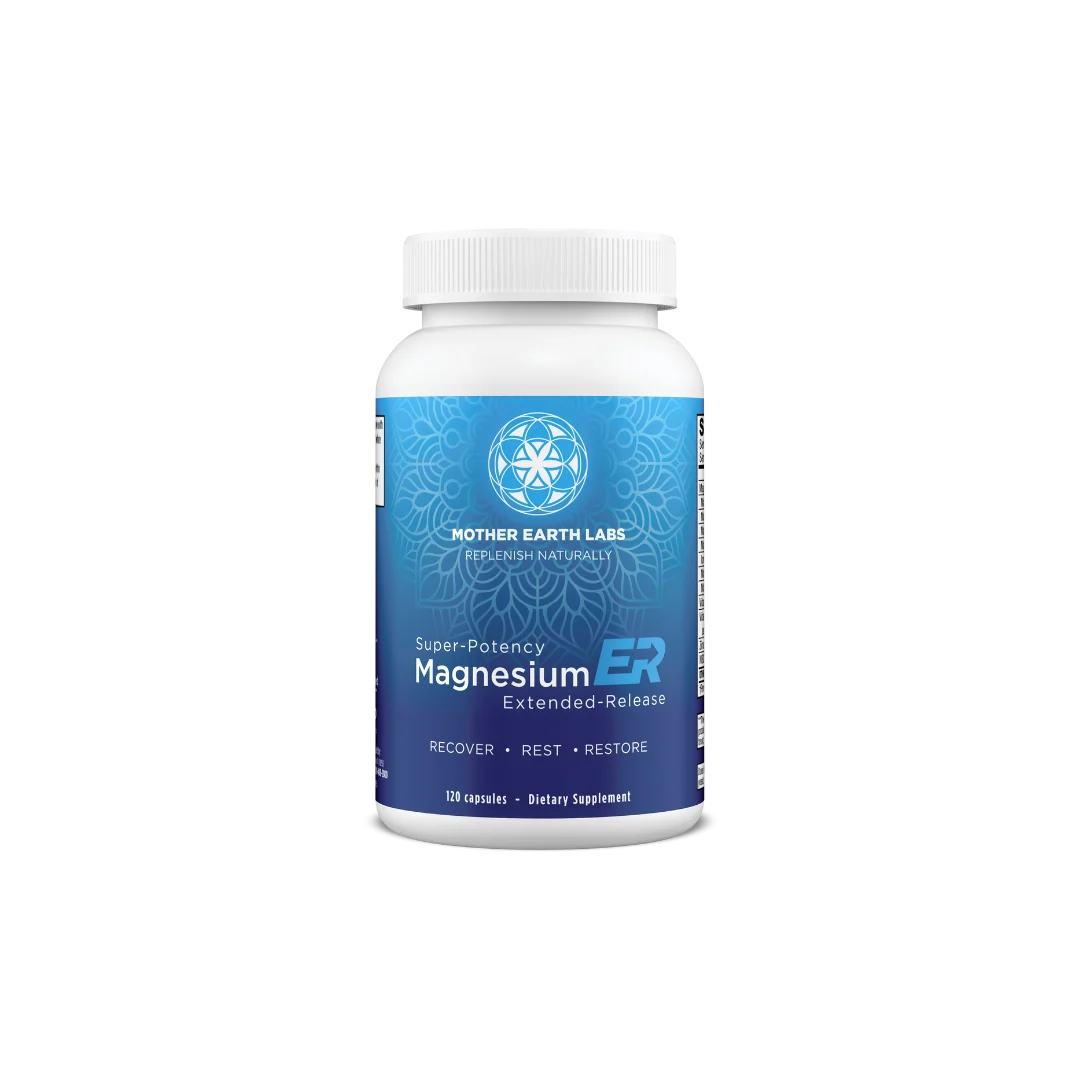
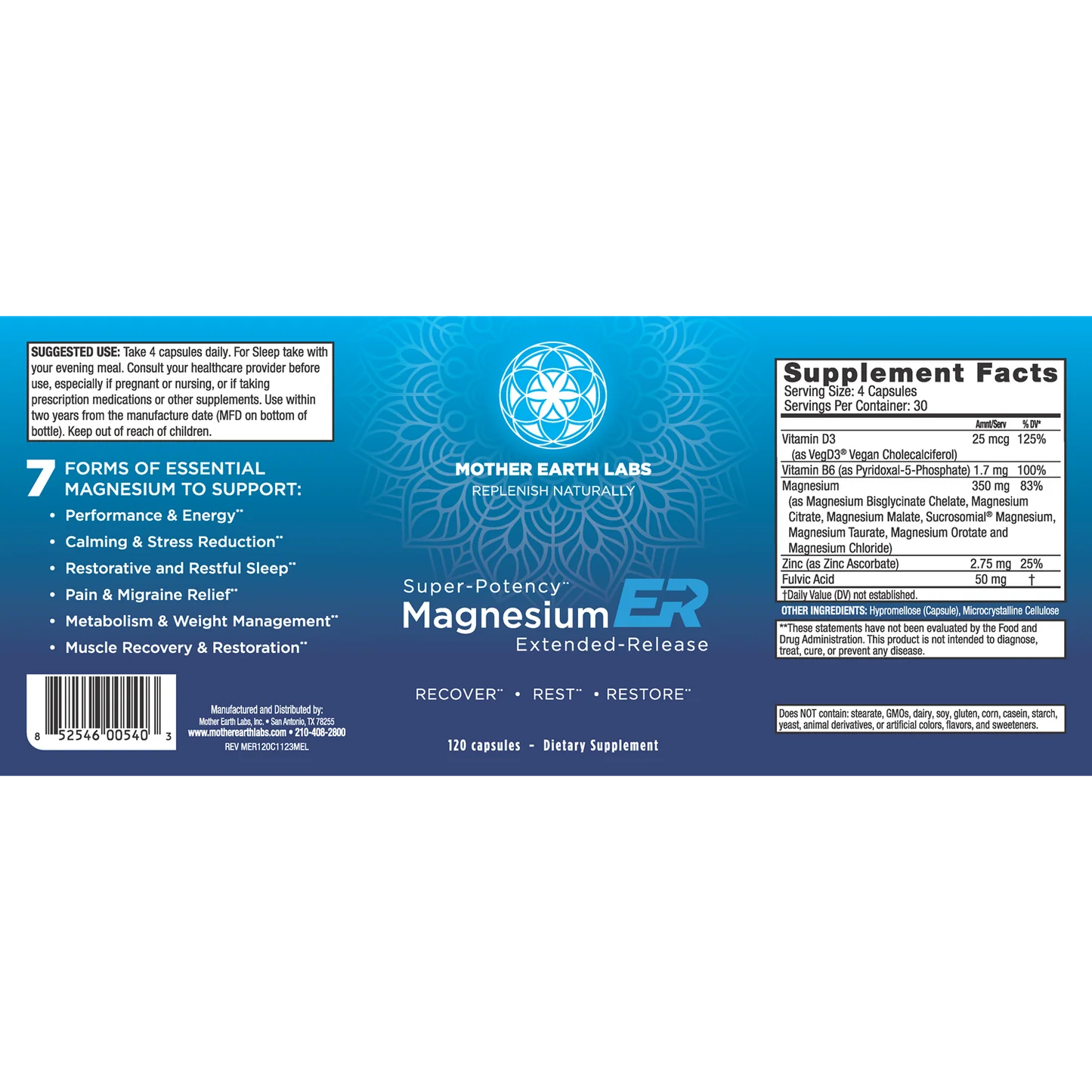
Mother Earth Labs Magnesium ER combines seven magnesium forms, including glycinate, citrate and malate. The labeled four-capsule serving supplies 350 mg combined elemental magnesium; a 120-capsule bottle contains 30 servings. Explore the complete formula and directions when comparing options.
Label details and formulation context
If you would like to explore a product that includes both bisglycinate and malate, Mother Earth Labs Magnesium ER is one option. Its seven-form blend gives you a real label to compare with the serving-size questions above.
The reviewed label lists 350 mg combined elemental magnesium per four capsules, from bisglycinate chelate, citrate, malate, Sucrosomial® magnesium, taurate, orotate and chloride. A 120-capsule bottle contains 30 full servings. Individual amounts from each form are not disclosed.
The same serving includes vitamin D3 25 mcg, vitamin B6 as P5P 1.7 mg, zinc 2.75 mg and fulvic acid 50 mg. “Extended-release” describes the manufacturer’s formulation. The studies above did not test this seven-form product; use its complete label and directions when considering how it fits your routine.
You can review the formula and purchasing details in our Core & Balancer shop listing whenever you are ready to compare options.
Choose a routine you can assess
A useful starting note is more specific than “I want the best magnesium.” For example: “I want to review my magnesium intake, and I wake several times each night.” That gives a clinician or pharmacist both a nutrition question and a symptom to consider.
Keep the rest of the routine steady when assessing an agreed change. Switching the form, amount, timing and several other supplements together makes it difficult to know what changed. A comfortable, sustainable routine can be a better practical fit than a complicated schedule built around online rankings.
Digestive effects vary. Supplemental magnesium can cause diarrhea, nausea or cramping. Kidney disease and interacting medicines deserve individualized advice; certain antibiotics and osteoporosis medicines may need spacing. The adult upper limit of 350 mg daily applies to magnesium from supplements and medicines, not naturally occurring food magnesium, unless a clinician directs otherwise. It is a safety boundary, not an intake target.
Do you need both?
There is no general requirement to combine glycinate and malate. Consider the total magnesium across the routine and the purpose of each product before adding another. A multi-form blend is also a different comparison from two single-form preparations.
Choose with three questions in front of you: What is my goal? What does this complete serving contain? What evidence applies to that goal? That approach respects both magnesium’s value and the limits of what the form name alone can tell you.
Sources and further reading
- NIH Office of Dietary Supplements: Magnesium — nutrient roles, elemental labeling, intake limits and interactions.
- Schuster et al., 2025: Magnesium bisglycinate and self-reported poor sleep — randomized placebo-controlled trial.
- Russell et al., 1995: Magnesium and malic acid in fibromyalgia — pilot with distinct blinded and open-label phases.