

Product and label review: October 24, 2026. By Dr. Rich Prather, D.C.
Bone Armor brings algae-derived calcium, magnesium, vitamins D3 and K2, and supporting nutrients into a daily bone-nutrition formula. The full serving is six capsules, split between breakfast and the evening meal in the label directions. This guide explains the major minerals, the two K2 forms and how to fit the serving into your food and supplement routine.
In this guide
Put food and supplements on the same page
Before comparing two calcium bottles, list the calcium-containing foods you commonly eat and any current calcium product. Then bring that list and the new label to the professional advising your bone-health plan. Choosing a broad formula also means checking the accompanying vitamins and minerals, rather than counting only calcium.
For adults comparing bone supplements, the most useful questions are how much calcium the formula supplies, which accompanying nutrients it includes and how those amounts fit with food and existing supplements. This guide follows the current 180-capsule Mother Earth Labs label.
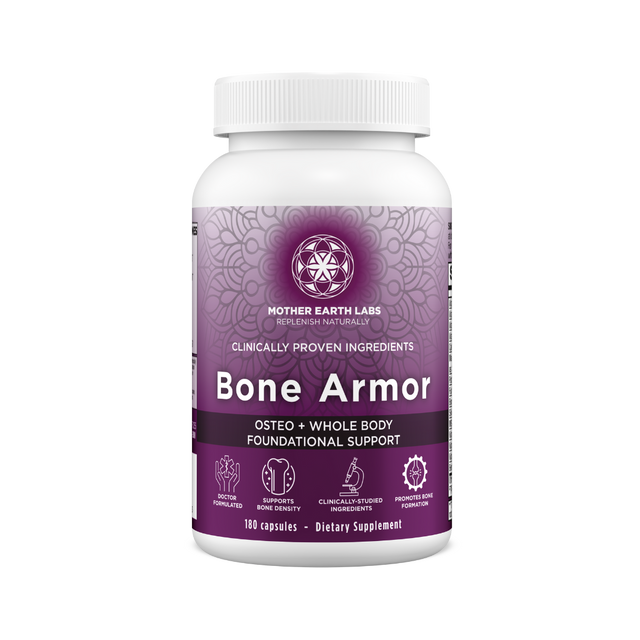
Affiliate DisclosureBuy Now — Bone Armor Plant-Based Calcium Capsules – Bone Strength Support Affiliate Disclosure. Check the current label, availability and purchase options before ordering.
The daily serving at a glance
The label lists six capsules per serving and 30 servings per bottle. The calcium entry is 720 mg from Aquamin red algae, and magnesium is 350 mg from Sucrosomial magnesium and Aquamin. Vitamin D3 is 40 mcg, or 1,600 IU.
Two K2 forms appear separately: 10 mg MK-4 and 180 mcg MK-7. Milligrams and micrograms differ by a factor of 1,000, so keeping those units visible is essential. The panel also includes vitamin C, potassium, a fulvic trace-mineral complex, boron, silica, MSM, B12, folate, B6 and betaine HCl.
| Label entry | Amount per serving |
|---|---|
| Calcium, Aquamin red algae | 720 mg |
| Magnesium | 350 mg |
| Vitamin D3 | 40 mcg / 1,600 IU |
| Vitamin K2, MK-4 | 10 mg |
| Vitamin K2, MK-7 | 180 mcg |
| Vitamin C | 100 mg |
| Potassium | 100 mg |
| Fulvic trace-mineral complex | 100 mg |
| Boron | 1.5 mg |
| Silica | 15 mg |
| MSM | 100 mg |
| B12 | 60 mcg |
| Folate | 680 mcg DFE |
| B6 | 20 mg |
| Betaine HCl | 100 mg |
Calcium is the structural starting point
Most calcium in the body is stored in bones and teeth. Dietary intake helps maintain this mineral supply, while bone remodeling continuously renews skeletal tissue. The NIH calcium reference describes calcium’s role and the importance of considering total intake.
Aquamin is a marine mineral ingredient derived from red algae. For readers who prefer an algae-derived calcium source, that is a defining feature of this formula. Compare its declared calcium amount alongside the accompanying magnesium, D3 and K2 to understand the whole serving.
The full serving supplies 720 mg calcium. Your food intake helps determine how that amount fits: calcium-rich meals and a lower-calcium diet create different starting points. Listing your usual food sources beside the label gives you and your clinician a practical basis for planning total intake.
D3, magnesium and K2 add complementary roles
Vitamin D supports calcium absorption and normal bone mineralization. Magnesium participates in many enzyme reactions and contributes to skeletal structure. Vitamin K is needed for the activation of proteins involved in normal blood clotting and bone metabolism. These established nutrient functions explain the combination.
These complementary roles explain why the nutrients appear together in a bone-nutrition formula. When exploring research, keep the outcome in view: nutrient uptake, bone-turnover markers, bone density and fractures are distinct measurements. The study below looks at short-term physiology after an algae-mineral preparation.
Bone Armor’s two K2 forms also illustrate why an ingredient name alone is insufficient for comparison. A study using MK-7 at one amount cannot automatically substantiate a claim about MK-4 at another amount, or the complete blend.
What an Aquamin study can tell us
A 2024 human study of a marine mineral plus plant protein examined short-term changes in ionized calcium, parathyroid hormone and bone-metabolism measures after an Aquamin-containing preparation. The intervention supplied 800 mg calcium with a protein isolate, rather than this capsule formula.
The study provides a human research connection for an Aquamin-containing mineral preparation, using measurable changes after intake. It tested a marine mineral plus protein intervention, rather than Bone Armor capsules. Its short-term measurements help explain mineral physiology; they do not establish long-term fracture outcomes for this product.
How the smaller entries fit
Vitamin C contributes to normal collagen formation; collagen is part of the bone matrix. The formula also provides B6, B12 and folate, along with boron and silica. These entries broaden the nutritional profile, while their declared amounts remain important.
The smaller entries are easiest to read individually: 100 mg MSM, 100 mg fulvic trace-mineral complex and 100 mg betaine HCl, for example. A complex’s weight describes that ingredient mixture, while the calcium and magnesium lines declare those minerals separately. Betaine HCl is also a distinct ingredient from TMG.
These details make a complex label manageable: identify the major minerals first, then the vitamins, then the additional ingredients. Each category answers a different part of the purchase question.
A practical schedule
The label advises three capsules with breakfast and three with the evening meal, or practitioner guidance. That divides the six-capsule serving equally across two meals. Based on the 720 mg daily calcium entry, each half-serving represents 360 mg calcium. The 180-capsule bottle supplies 30 days at the labeled routine.
If also using Bone Armor Boost under professional guidance, the manufacturer instructs keeping Bone Armor at least two hours apart from Boost. The two products have different active profiles and should not be treated as interchangeable bottles.
Vitamin K can interfere with warfarin management, and calcium or magnesium can affect the absorption of certain medicines. Review the actual product and timing with the prescribing clinician or pharmacist. This is particularly helpful with thyroid medicine, some antibiotics or osteoporosis medicines.
Choosing the formula for the right reason
Is Bone Armor the same as Bone Armor Boost? No. Bone Armor is the calcium/mineral/vitamin formula; Boost is the separately labeled strontium citrate product.
Does plant-based calcium make the entire formula automatically vegan? The manufacturer markets this product as vegan-friendly. If strict sourcing requirements matter, confirm current D3 and capsule sourcing directly with MEL.
What is the clearest reason to consider it? A reader may prefer a combined bone-nutrition formula with algae calcium, a substantial magnesium entry and D3/K2 in one routine. Compare the full serving with food intake, medication timing and other supplements so its broad profile serves a defined purpose.
Related reading
Continue with our guide: Choosing a Daily Multivitamin: 7 Questions to Ask Before You Buy.
Explore our nutrient dictionary: Aquamin, Magnesium.
Sources and further reading
Human study: marine mineral plus protein and short-term bone markers
Educational information about nutrition and product use. Supplements are not intended to diagnose, treat, cure or prevent disease; individual needs and responses vary.