
By Dr. Rich Prather, D.C. • Updated October 25, 2026
An immune formula may be useful alongside a multivitamin when it adds ingredients that serve a clear purpose in your routine. Advanced Immune Support combines familiar nutrients with elderberry, quercetin, reishi and other specialty ingredients. Comparing both full servings shows what it adds and helps you plan the combined vitamin and mineral amounts.
In this guide
Use a short overlap worksheet
Make one row each for vitamin C, vitamin D, zinc and any other shared ingredient. Enter the amounts from the multivitamin and the proposed immune formula, using the servings you would actually take. Add matching nutrients in matching units, then review that total alongside the reason for adding the second product.
Use two columns when comparing the products: one for shared nutrients and one for additional ingredients. Total the shared vitamin and mineral amounts, then look at the botanicals and other compounds that make the immune formula distinct.
Start with the purpose of the extra product
Vitamins and minerals help the immune system carry out its normal work. A multivitamin can contribute to everyday nutrient intake, while a focused immune formula brings a different combination of nutrients and specialty ingredients. Your food intake and existing supplements help determine how those two roles fit together.
Begin with what you want the additional product to contribute. You might be reviewing a particular nutrient with your clinician or exploring ingredients such as elderberry and reishi. Naming that purpose makes the label comparison more useful.
What Advanced Immune Support adds
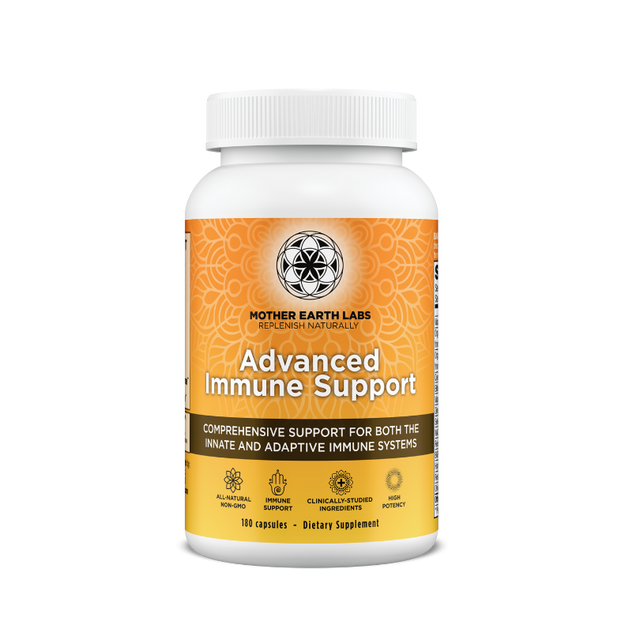
The reviewed Mother Earth Labs formula includes vitamin C, vitamin D3, zinc, and selenium, together with ingredients such as elderberry, quercetin, NAC, reishi, and beta-glucan. Each ingredient has its own purpose and research background; evidence for one ingredient does not automatically describe the complete blend.
The reviewed 180-capsule label uses a six-capsule serving. Read amounts for that full serving rather than assuming each capsule supplies the whole table. Also check your current bottle, since older product descriptions may show a different formula.
One specific amount deserves attention before combining products: the reviewed full serving declares 125 micrograms (5,000 IU) of vitamin D3. That is above the usual adult upper intake level of 100 micrograms (4,000 IU) a day. Review ongoing use and your total intake with a clinician, especially if your multivitamin or a separate vitamin D product also supplies it.
Make a four-line overlap check
| Nutrient | What to total |
|---|---|
| Vitamin C | Declared vitamin C from each product. |
| Vitamin D | Amounts in a common unit, including separate vitamin D products. |
| Zinc | Your multivitamin, immune formula, and any occasional lozenges. |
| Selenium | Every supplement supplying a declared amount. |
For illustration, 10 mg of zinc from one product plus 15 mg from another totals 25 mg before other sources. That is arithmetic, not a recommended daily combination or a claim about these products’ amounts.
For vitamin D, 1 microgram equals 40 IU. If one label uses micrograms and another uses IU, convert before adding. A pharmacist can help review the finished list against your needs and medicines.
A whole-food blend’s weight is a different number
An ingredient described as a whole-food vitamin C blend can have a stated blend weight. Do not add the whole blend’s weight to the vitamin C line as though every milligram of the mixture were vitamin C.
For the overlap worksheet, use the amount explicitly declared as vitamin C. Keep the separate whole-food blend on its own line. That way, both the vitamin amount and the plant blend remain visible without counting the same label category twice.
Keep your immune routine connected to daily life
Meals, sleep, and the care recommended for your health remain part of the picture. A supplement decision works best when it addresses a defined need within that routine.
If you take prescriptions, are pregnant, or manage an immune-related condition, have the complete formula reviewed before adding it. A multi-ingredient product needs more than a check of its vitamin C number.
Your next step: put the multivitamin and immune label beside each other, total the overlapping nutrients, and identify what the additional ingredients are meant to contribute. That gives you a clear reason for keeping, changing, or simplifying the combination.
A closer look at the label
The formula includes vitamin C as ascorbic acid, a separate whole-food vitamin C blend, citrus bioflavonoids, quercetin, BerryShield elderberry, vitamin D3, zinc, selenium, NAC, reishi, beta-glucan, humic and fulvic extracts, ResistAid larch arabinogalactan and olive leaf. The table reports label amounts without treating a botanical blend’s weight as an additional quantified vitamin dose.
An older search-indexed manufacturer description mentioned Setria glutathione. The current label reviewed for this guide does not list it. NAC and glutathione are related biologically, but are different ingredients; NAC’s presence is not a reason to add glutathione to the product’s ingredient list.
| Label entry | Amount per serving |
|---|---|
| Vitamin C, ascorbic acid | 900 mg |
| Organic whole-food vitamin C blend | 300 mg |
| Citrus bioflavonoids | 100 mg |
| Quercetin | 500 mg |
| Elderberry concentrate, BerryShield | 500 mg |
| Vitamin D3 | 125 mcg / 5,000 IU |
| Zinc, zinc ascorbate | 22 mg |
| Selenium, L-selenomethionine | 110 mcg |
| NAC | 500 mg |
| Reishi fruiting-body extract | 300 mg |
| BGF-Immune 1,3 beta-glucan | 100 mg |
| Humic and fulvic extracts | 100 mg |
| ResistAid larch arabinogalactan | 200 mg |
| Olive leaf extract | 100 mg |
Elderberry: a positive research connection with clear boundaries
Elderberry provides plant polyphenols and is widely used in seasonal wellness products. A 2021 systematic review evaluated five randomized trials addressing respiratory illness. Some findings suggested shorter or milder symptoms, but the evidence remained uncertain and the products varied.
Elderberry has a human research history as well as a place in seasonal wellness formulas. The reviewed product declares 500 mg of BerryShield elderberry concentrate. When reading a trial, compare its extract or syrup, serving amount and measured outcome with that label entry; the studies reviewed here used varied preparations.
Quercetin, reishi and beta-glucan
Quercetin is a flavonoid; reishi is a mushroom; and beta-glucans are polysaccharides whose structures and sources matter. This label identifies reishi fruiting-body extract and a separate high-purity 1,3 beta-glucan ingredient. Those details help distinguish the formula from products that list only a generic mushroom or unspecified blend.
The reishi entry specifies more than 35% beta-glucans, adding useful detail about the extract. The separate 1,3 beta-glucan entry identifies another part of the formula. Source, structure and preparation help explain how these ingredients differ, so keep those details with the milligram amounts when comparing products.
Why studied amounts deserve attention
Larch arabinogalactan illustrates the value of checking amounts. A 12-week randomized study involving 199 adults evaluated 4.5 grams daily of a proprietary preparation. The current product declares 200 mg, or 0.2 grams, per full serving. That is a meaningful difference when explaining the research.
NAC contributes to the formula’s antioxidant-related ingredient group, while humic/fulvic extracts and olive leaf broaden the combination. Reading each amount beside its ingredient name gives you a clear picture of what a full serving provides. Use the individual research as context for those ingredients, with the complete formula and your routine in view.
Research and original labels
NIH: nutrients and immune function
Wieland et al.: elderberry systematic review
Larch arabinogalactan randomized trial
Educational information about nutrition and product use. Supplements are not intended to diagnose, treat, cure or prevent disease; individual needs and responses vary.
See the products discussed here
Sources and further reading
- Mother Earth Labs: Advanced Immune Support and current label
- Core & Balancer: Reviewed Advanced Immune Support label and ingredient table
- NIH: Dietary supplements for immune function
- NIH: Vitamin D
General educational information. For individual needs, medicines, and product directions, use your own label and appropriate professional guidance.