
A zero-sugar protein shake can still be intensely sweet because ingredients such as sucralose, stevia extracts or monk fruit extracts can supply sweetness with little or no sugar. Read the ingredient list alongside the sugar line. If your goal is a less-sweet taste, zero sugar and unsweetened are different shopping questions. [2]
Before buying another full tub
Check whether the product is described as unsweetened, then look for named sweeteners in the ingredients. Taste still depends on the full recipe and your preferences. A sample size can answer that question more directly than a sugar claim, while your usual mixer may add sweetness of its own.
If you chose a shake to avoid an intensely sweet taste, the sugar number answered a different question from the one you meant to ask. You need the ingredient list as well as the sugar information—and even those cannot tell you exactly how sweet it will taste to you.
Four terms that answer different questions
This comparison concerns US labeling. It is a reading guide, not a determination that any particular brand meets every applicable requirement. [1]
| Term | What to understand | What it cannot promise |
|---|---|---|
| Sugar-free / zero sugar | Regulated claim: under 0.5 g sugars per reference amount customarily consumed and per labeled serving, with ingredient and calorie-related conditions. | No sweet taste or no calories. |
| No added sugar | Separate regulated claim about processing and ingredients, with additional conditions; naturally present sugars can remain. | No non-sugar sweeteners. |
| Unsweetened | Describes no added sweeteners; naturally present sugars can remain. It is not a numerical sugar-free synonym. | No naturally present sugar or no taste. |
| Unflavored | Descriptive flavor wording, not a sugar threshold defined in this section. Inspect ingredients. | Unsweetened, sugar-free or tasteless. |
Section 101.60(c)(3) specifically addresses factual unsweetened statements for foods with substantial inherent sugars. The sugar-free rule also addresses sugar-containing ingredients and accompanying calorie wording. The no-added-sugar rule has processing, comparator and disclosure conditions. The linked regulation supplies the full requirements; the terms are not interchangeable. [1]
Why a small ingredient can make a big taste difference
FDA explains that high-intensity sweeteners are much sweeter than table sugar, so small amounts can provide substantial sweetness. Their names appear in ingredient lists. A sweetener appearing near the end of a list can still matter to taste; its position does not supply a reliable sweetness score. [2]
“No artificial sweeteners” also is not the same statement as “no sweeteners.” Read which ingredients the product actually uses rather than trying to predict taste from that phrase alone.
Three real examples of the distinction
These examples were checked against US manufacturer information on October 20, 2026. They were selected to explain the wording, not to rank quality or recommend a purchase. Different formats and serving sizes are shown; this is not a comparison per equal volume or a taste test.
| Exact example | Published sugar information | Relevant ingredient information |
|---|---|---|
| OWYN Pro Elite Smooth Vanilla — 355 mL bottle [3] | 0 g total sugars; 0 g added sugars per bottle. Marketed as Zero Sugar, with a not-low-calorie statement. | Lists monk fruit extract and stevia leaf extract. Zero sugar does not mean no sweetening ingredients. |
| Premier Protein Vanilla — 11.5 fl oz shake [4] | 1 g total sugars; 0 g added sugars per shake. Marketed as No Added Sugar. | Lists sucralose and acesulfame potassium. No added sugar does not mean unsweetened. |
| Naked Whey — Unflavored [5] | Manufacturer publishes 2 g sugar per unflavored serving. | One listed ingredient: grass-fed whey protein. No separate sweetener appears in that formula. Unflavored need not mean zero sugar. |
The distinction is visible without assuming how any of these products will taste. The first two have identifiable sweetening ingredients despite little or no listed sugar. The third provides a contrasting one-ingredient, unflavored formula with sugar reported by its maker.
Use the exact flavor and package when checking. OWYN’s page also shows a smaller carton, Premier lists another container size, and Naked’s flavored products are different formulas. The Naked example uses the manufacturer’s published per-serving facts, not an independently transcribed scoop measurement. Your current package is the place to confirm its serving line and ingredients.
A better way to read the next label
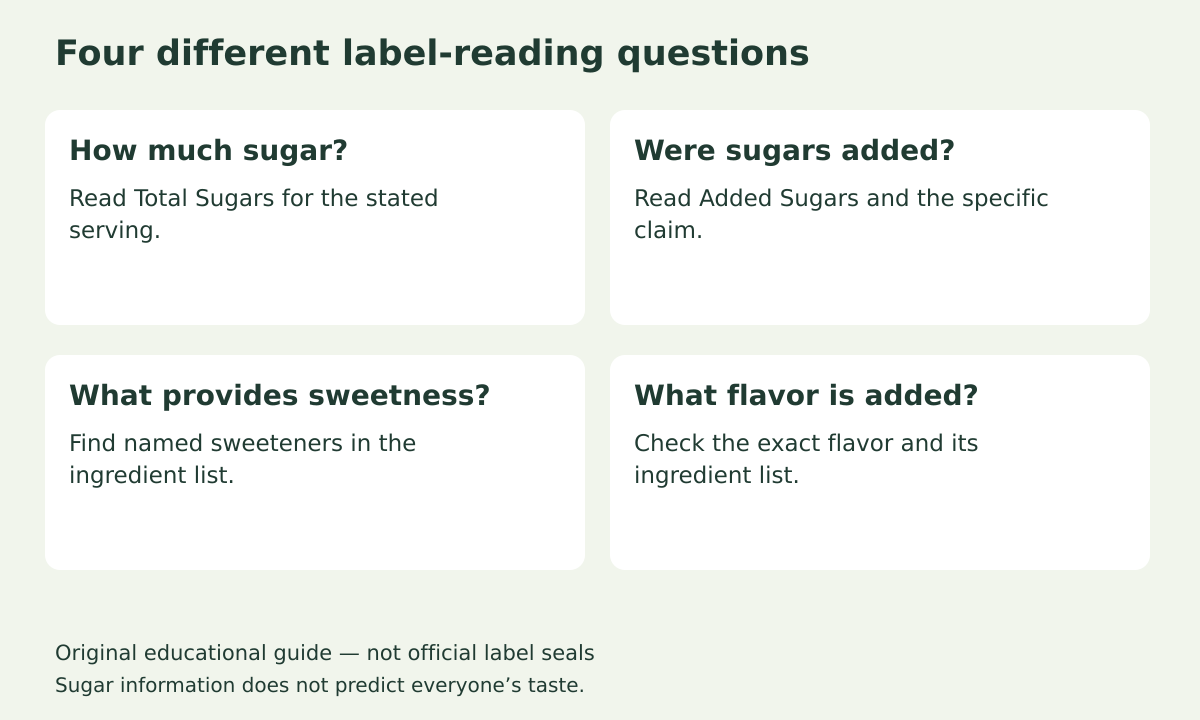
Read Total Sugars for the stated serving.
Read Added Sugars and the specific claim.
Find named sweeteners in the ingredient list.
Check the exact flavor and its ingredient list.
Before choosing another shake, identify what bothered you: the intensity of sweetness, a particular aftertaste, or the flavor itself. Then check whether the next product actually differs on that point. “Zero sugar” alone does not resolve any of those taste preferences.
If your goal is to avoid added sweetening ingredients, an explicitly unsweetened product with a matching ingredient list is a more relevant starting point than a zero-sugar claim alone. Check the whole list rather than excluding just one sweetener name. An unflavored product still needs that check.
Why the label cannot promise your preferred taste
The ingredient list tells you what is present, but generally does not disclose the exact amount of each sweetener or how the finished formulation will taste to you. Another person’s “barely sweet” may still be too sweet for your preference. Reviews are descriptions of someone else’s experience, not a standardized measurement of yours.
A powder’s preparation matters to what you are comparing, too: note the product’s directions and the liquid you plan to use. Milk, a sweetened beverage or added fruit makes a different drink from powder and water. Follow the labeled serving directions; do not infer a nutrient serving from how mild or strong the drink tastes.
For the separate question of scoop weight versus protein amount, see our protein powder scoop guide. Our Facts-panel guide explains why products use different panel types.
A low sugar number can be useful information. To understand unexpected sweetness, pair it with the ingredient list and the exact product version, while leaving room for your own taste preference.
Sources and example details
- 21 CFR 101.60(c), sugar-content claims. Current displayed text through October 16, 2026; full conditions apply.
- FDA: High-Intensity Sweeteners. Used for sweetening function and ingredient identification, not individualized health advice.
- OWYN: Smooth Vanilla Pro Elite. Bottle panel and ingredients.
- Premier Protein: Vanilla Protein Shake, US. 11.5 fl oz panel and ingredients.
- Naked Whey: Unflavored product information and manufacturer’s unflavored serving facts. Other flavors differ.