
In this guide
Read potassium and iodine as separate entries
Potassium iodide is listed as an iodine source in these examples. That does not make the formula a quantified potassium supplement. If you need an actual potassium amount for your nutrition or medication plan, ask the manufacturer for the current specification rather than treating the ingredient name as a dose.
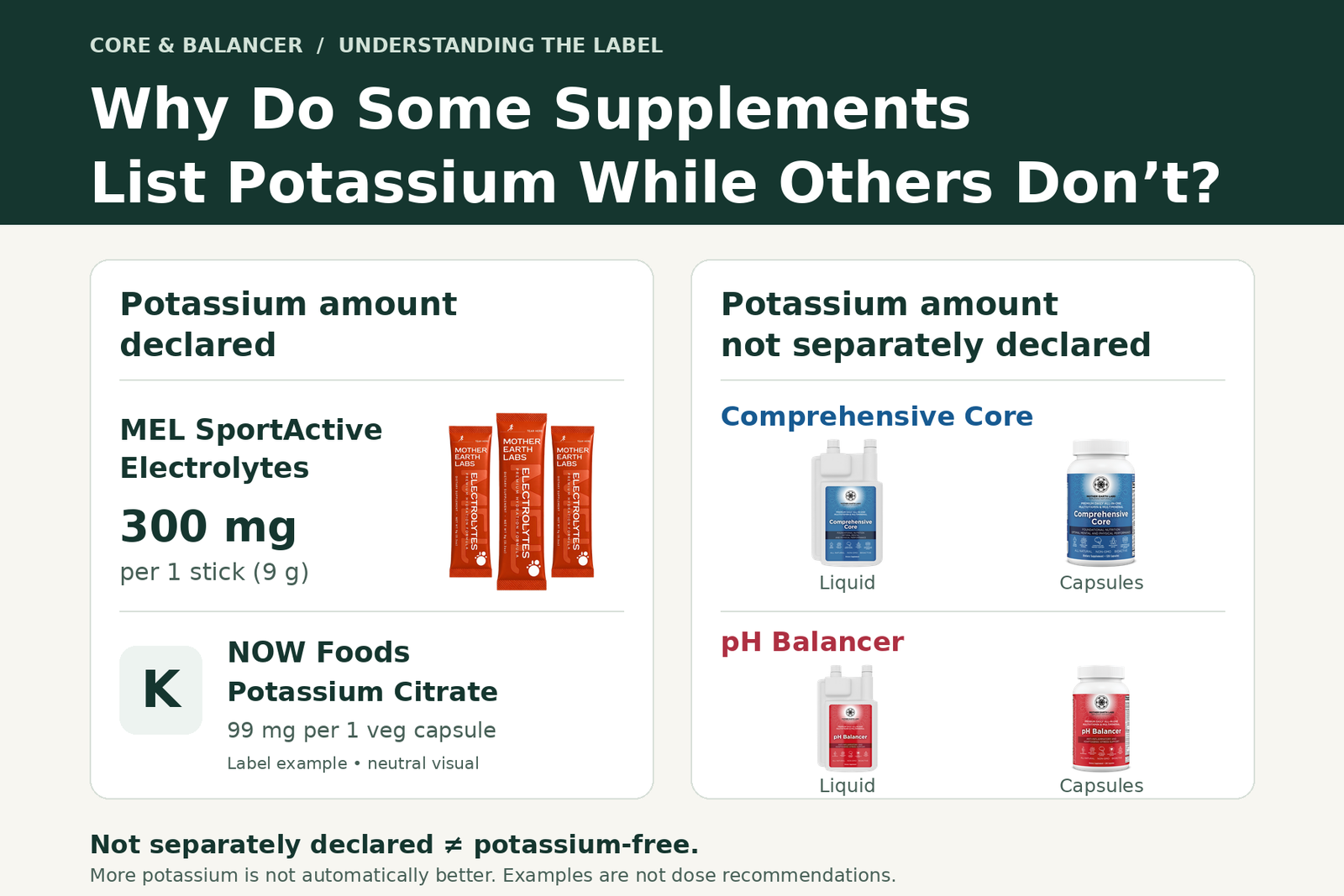
This guide separates three useful questions: potassium’s nutritional role, the amount a panel declares and the ingredients named as nutrient sources. The four reviewed labels below provide format-specific examples, including potassium iodide listed as an iodine source. [6] [7] [8] [9]
What does potassium do in the body?
Potassium is an essential mineral involved in fluid balance and normal heart, muscle, and nervous-system function. Its importance does not mean that every supplement must supply a substantial amount, or that everyone needs an additional potassium product. [1]
How much potassium do I need?
How much potassium do adults generally need? The Adequate Intakes (AIs) for healthy adults age 19+ are 3,400 mg per day for men and 2,600 mg for women who are not pregnant or breastfeeding. The National Academies provides separate pregnancy and breastfeeding values, shown below. These refer to total daily intake; they are not amounts to add as supplements. An AI is used when evidence is insufficient to establish a Recommended Dietary Allowance (RDA). [2]
| Life stage | Potassium per day |
|---|---|
| Men, age 19+ | 3,400 mg |
| Women, age 19+, not pregnant or breastfeeding | 2,600 mg |
| Pregnancy, age 19–50 | 2,900 mg |
| Breastfeeding, age 19–50 | 2,800 mg |
The FDA’s potassium Daily Value (DV) is 4,700 mg, the reference used to calculate label percentages. That labeling reference differs from the age-, sex-, and life-stage-specific AIs above. Do not treat the two measures as interchangeable or turn either into a personal supplement prescription. [2], [3]
Why isn’t potassium in my multivitamin?
First check whether it is absent, present in a small declared amount, or simply not quantified separately. Multivitamin/mineral formulas vary widely: NIH notes that the name has no standard composition, and that many formulas provide relatively small quantities of potassium, calcium, or magnesium. Read the specific product and serving size rather than assuming “multivitamin” means a full day’s intake of every mineral. [4]
Look at both the Supplement Facts panel and ingredient names. Potassium iodide is a potassium-containing compound, but NIH identifies its use in microgram quantities as an iodine source. An iodine quantity is not a potassium quantity. [5]
How Much Potassium Is in Comprehensive Core and pH Balancer?
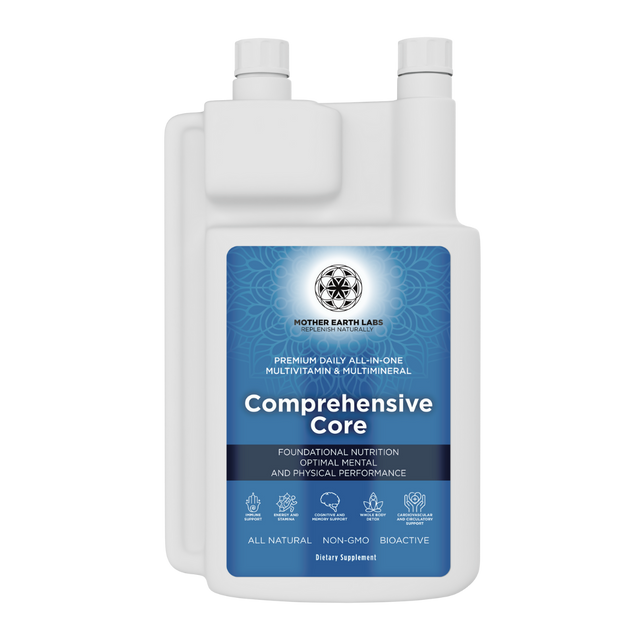
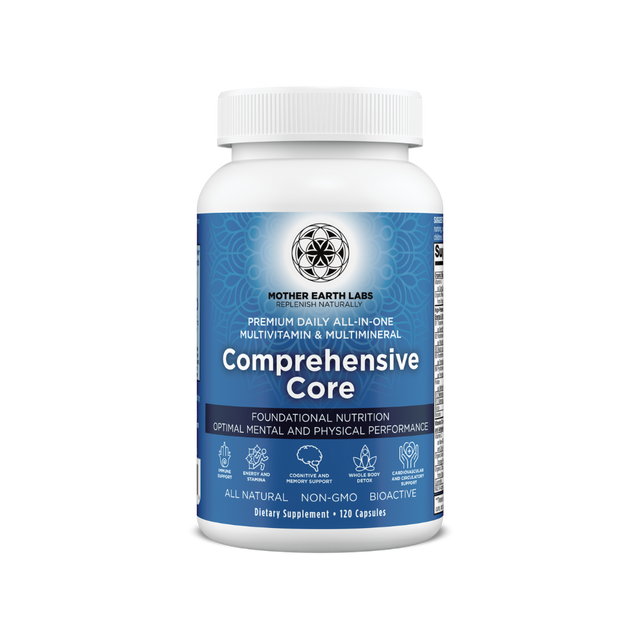
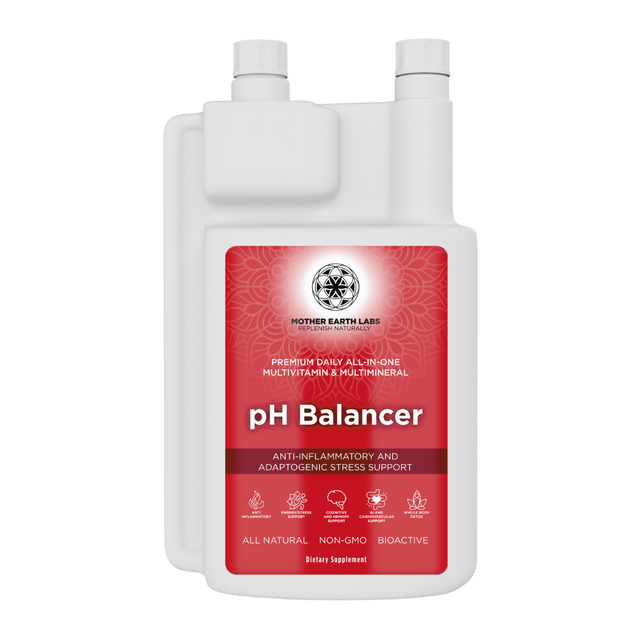
Total potassium is not quantified on any of the four reviewed labels. We examined each complete displayed panel, including blend ingredients, nutrient sources, and “Other Ingredients,” rather than checking only for a potassium row. The liquid evidence below is the 32 oz dispensing-quart label for each product; other packages or later revisions should be checked directly. [6], [7], [8], [9]
| Formulation | Full labeled serving | Potassium amount | Iodine declaration—not potassium |
|---|---|---|---|
| Comprehensive Core liquid | 1 fl oz (2 tablespoons) | Not separately declared | 75 mcg iodine; dulse sea algae and potassium iodide |
| Comprehensive Core capsules | 4 capsules | Not separately declared | 75 mcg iodine; dulse sea algae and potassium iodide |
| pH Balancer liquid | 1 fl oz (2 tablespoons) | Not separately declared | 88 mcg iodine; dulse sea algae and potassium iodide |
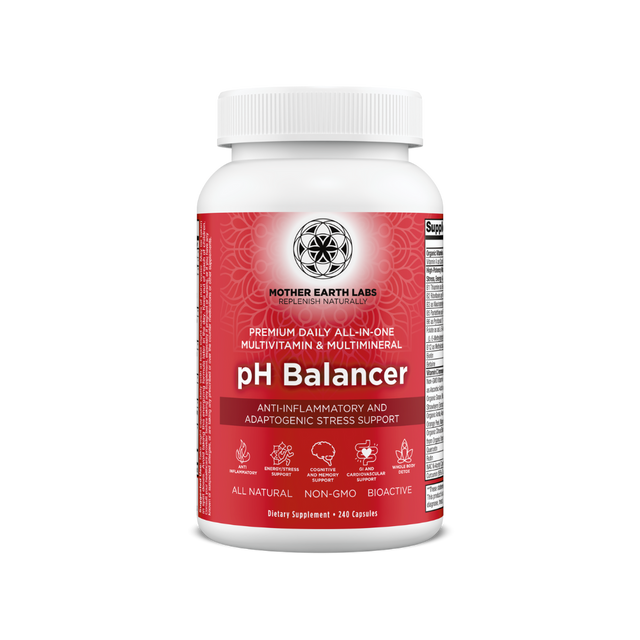
| pH Balancer capsules | 8 capsules | Not separately declared | 90 mcg iodine; organic dulse algae extract and potassium iodide |
The microgram (mcg) values in the last column measure iodine. They must not be reported as milligrams (mg) of potassium. Because each label names more than one iodine source without giving their individual contributions, the iodine total cannot establish the potassium supplied by potassium iodide. The total potassium from the complete formula remains unknown.
Does Comprehensive Core contain potassium?
Both the liquid and capsule labels name potassium iodide. Neither declares a total potassium quantity. The liquid lists fruit-juice concentrates among its other ingredients; the capsule lists a DR capsule. These ingredient differences do not provide an analyzed potassium total. Reviewed revisions: CC32B0923MEL (liquid) and CC120C1023MEL (capsules). [6], [7]
Does pH Balancer contain potassium?
Both the liquid and capsule labels name potassium iodide. Neither declares a total potassium quantity. Their iodine amounts and serving sizes differ, as shown above. The liquid’s other ingredients include fruit-juice concentrates; the capsule lists DR capsules. Reviewed revisions: PB32B1023MEL (liquid) and PB240C1023MEL (capsules). [8], [9]
All four labels also name plant ingredients and humic/fulvic ingredients, but their names or blend weights do not establish their potassium content. We found no other explicitly named potassium salt on these four displayed labels. Some liquid ingredients are described collectively as flavors, acids, or natural preservatives; the labels do not identify every constituent of those groups. A manufacturer specification or analysis would be needed to quantify total potassium.
Where can I find formulation-specific details?
Use Mother Earth Labs’ product pages, public FAQ and formulation articles as starting points for its own product descriptions. For a potassium quantity that is not separately declared on these four reviewed panels, request a current specification for the exact formula and serving you use. [6] [7] [8] [9] [10] [11]
A useful product-specific specification identifies the formula, serving basis and reported potassium amount. The general references below explain nutrient quantities and formulation considerations; they provide context rather than assigning a private formulation rationale to the manufacturer.
Why do some supplements have potassium—and what makes larger quantities challenging?
Supplements serve different nutritional purposes and contain different combinations and amounts of nutrients. A formula may include a measured potassium contribution, while another may emphasize other ingredients. Its complete label is the basis for comparison; the product category alone does not establish its potassium dose. [4]
A general formulation consideration: adult intake references are measured in thousands of milligrams. Even 1,000 mg of elemental potassium weighs one gram before allowing for the rest of a potassium compound, other nutrients, or capsule materials. Including more mineral material means accommodating more material in a serving. That arithmetic helps explain why serving volume or pill burden can matter; it does not establish a specific manufacturer’s decision, a required capsule count, or a reason these four formulas lack a declared potassium amount.
“Elemental potassium” means the potassium portion of a compound. A declared potassium amount is not the weight of the entire potassium salt. Comparing compound weights with daily potassium targets would overstate the amount supplied. [5]
Why do potassium supplements often contain small amounts?
NIH reports that multivitamins containing potassium typically supply about 80 mg, and most potassium-only supplements supply up to 99 mg. Historical concerns about intestinal injury from certain oral potassium drugs help explain the common 99 mg amount. This is not a universal legal 99 mg ceiling for all dietary supplements. Nor is 99 mg a daily requirement or a dose everyone should take. [5]
For scale, 99 mg is approximately 2% of the FDA’s 4,700 mg Daily Value (99 ÷ 4,700 × 100). A small supplement amount should not be mistaken for a full day’s potassium intake. [3]
Why is potassium sold as a standalone supplement?
A separate product allows potassium to be supplied without adding every other ingredient in a multivitamin. Its existence does not establish that you need it. Whether a dietary gap, a medication effect, or a medical condition calls for additional potassium requires individual assessment. Do not increase servings of a broad multinutrient formula to chase a potassium target; doing so also increases its other nutrients. [4], [13]
Can I get enough potassium from food?
A varied diet can provide potassium from vegetables, fruit, beans, dairy or suitable alternatives, and other foods. You do not have to rely on a banana or a supplement alone. The NIH DASH resource gives the following examples; amounts vary with food, portion, and preparation. [12]
| Food and portion | Potassium |
|---|---|
| Potato, 1 small | 738 mg |
| Plain nonfat or low-fat yogurt, 8 ounces | 530–570 mg |
| Lima beans, ½ cup | 478 mg |
| Banana, 1 medium | 422 mg |
These examples illustrate meaningful food contributions, not a meal prescription or a recommendation for someone on a potassium-restricted diet. Review your overall eating pattern rather than judging it from one food or one supplement.
Is taking extra potassium safe?
Extra potassium is not automatically safe. Kidney disease or medicines that reduce potassium excretion—including ACE inhibitors, angiotensin receptor blockers (ARBs), and potassium-sparing diuretics—can raise the risk of high blood potassium (hyperkalemia). Some people can develop this problem even at usual food intakes. Excessive supplements or potassium-containing salt substitutes can also overwhelm potassium elimination in otherwise healthy people. [13]
Other diuretics, including loop and thiazide medicines, can increase potassium losses. That does not justify self-prescribing: a clinician can assess kidney function, medicines, blood results, and total intake. Ask a clinician or pharmacist before adding potassium if you have a relevant condition or take medicines affecting potassium. Do not stop prescribed treatment on the basis of a supplement article. [13]
A formal Tolerable Upper Intake Level has not been established for potassium because the evidence is insufficient. The absence of that limit does not mean unlimited supplemental potassium is safe. [5]
What should I check before choosing a supplement?
- Read the exact format’s full serving size, not just its front label.
- Look for a declared potassium amount and check the ingredient sources too.
- Keep iodine micrograms separate from potassium milligrams.
- If total potassium matters to your care, request manufacturer data rather than estimating it from blends.
- Discuss your overall diet, supplements, and medicines with a qualified professional when individual potassium guidance is needed.
Continue with the Comprehensive Core ingredient guide and pH Balancer ingredient guide for the wider formulation comparisons. This article explains the available labels; it does not establish the effectiveness or suitability of either finished product.
Sources and label scope
Sources and manufacturer label images were reviewed October 22, 2026. Current packaging takes precedence. Manufacturer images document label content; they are not independent laboratory measurements. Core & Balancer is an independent educational affiliate website.
- FDA: Using the Nutrition Facts Label — For Older Adults
- National Academies (2019): Potassium Dietary Reference Intakes for Adequacy, Chapter 4
- FDA: Daily Value on the Nutrition and Supplement Facts Labels
- NIH Office of Dietary Supplements: Multivitamin/mineral Supplements — Health Professional
- NIH Office of Dietary Supplements: Potassium — Health Professional, Dietary Supplements
- Mother Earth Labs: Comprehensive Core liquid dispensing quart and current label
- Mother Earth Labs: Comprehensive Core capsules and current label
- Mother Earth Labs: pH Balancer liquid dispensing quart and current label
- Mother Earth Labs: pH Balancer capsules and current label
- Mother Earth Labs: Help & FAQs
- Mother Earth Labs: Feel your best QUICK with Comprehensive Core!
- NIH National Heart, Lung, and Blood Institute: Living with DASH, food potassium examples
- NIH Office of Dietary Supplements: Potassium — Consumer, Safety and Medications