

By Dr. Rich Prather, D.C. · Product and label review: October 25, 2026.
Lugol’s Iodine Capsules are a concentrated iodine product: the reviewed label lists 12.5 mg, or 12,500 micrograms, per capsule. That is very different from a typical nutritional microgram amount. Review this exact product and your thyroid history with a healthcare professional before choosing the capsule as part of an iodine plan.
Keep the unit visible in the conversation
Write 12.5 mg = 12,500 micrograms beside the product name. Bring the current bottle, other iodine-containing products and any thyroid medicines to the review. The nutritional importance of iodine does not establish that this concentrated amount is the right response to fatigue or a suspected dietary gap.
Why would you take Lugol’s Iodine Capsules?
Iodine is a building material for thyroid hormones. Those hormones help coordinate how the body uses energy and supports normal tissue function. Someone considering iodine may be looking to address an identified dietary gap or follow an individualized thyroid-nutrition plan. The goal is an appropriate iodine intake for that person.
Food choices affect iodine intake. Seafood, dairy foods, eggs and iodized salt can contribute different amounts. Someone eating few of these foods may want a closer look at dietary iodine. A clinician can assess the overall pattern, existing multivitamins and thyroid history before deciding whether a concentrated supplement belongs in the plan.
The capsule format may appeal to someone who has already established a suitable amount with a healthcare professional and prefers a consistent capsule to counting liquid drops. Mother Earth Labs uses both elemental iodine and potassium iodide in this formula. The full ingredient entry and its units are important when comparing it with the liquid.
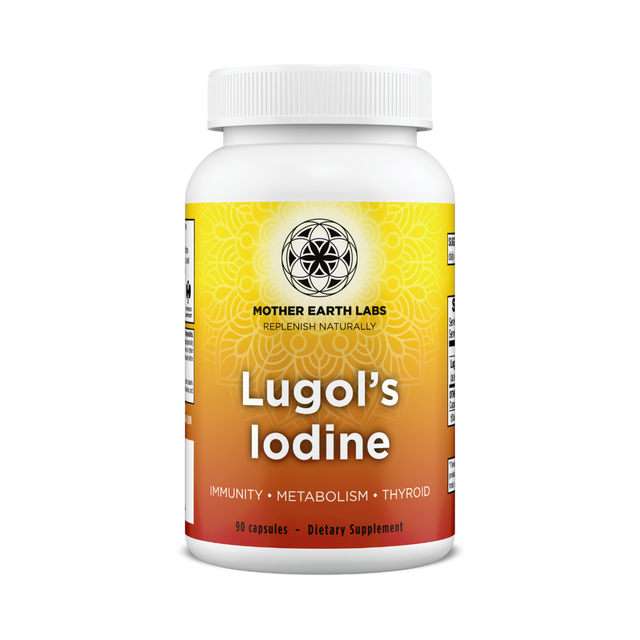
Affiliate DisclosureBuy Now — Lugol’s Iodine Capsules. Affiliate Disclosure.
Current label at a glance
| Entry | Reviewed information |
|---|---|
| Serving | 1 capsule |
| Servings per bottle | 90 |
| Lugol’s Iodine label entry | 12.5 mg, as elemental iodine and potassium iodide |
| Label Daily Value | 8,333% |
| Other ingredients | Green chlorophyll vegetable capsule; microcrystalline cellulose |
Source: official product information and posted manufacturer label. Confirm the current package when ordering or changing a routine.
Understanding the amount before choosing the capsule
The reviewed panel lists 12.5 mg per capsule. That equals 12,500 micrograms. For context, the adult recommended dietary allowance is 150 micrograms daily, and the adult tolerable upper intake level is 1,100 micrograms daily. Those nutrition reference values make clear that this capsule belongs in a clinician-directed plan rather than serving as a general first step for everyone.
A practical consultation starts with the exact bottle, the reason for use, other sources of iodine and an agreed follow-up plan. This lets the nutritional goal guide the amount. Ask whether a lower-amount product, food changes or a different format better matches your situation.
Elemental iodine and potassium iodide in plain language
Elemental iodine and potassium iodide are two chemical forms used in Lugol’s-type preparations. Potassium iodide supplies iodide. Iodide is the form taken up by the thyroid for hormone production. Keeping the two names together preserves what the product label actually declares.
The word Lugol’s describes this iodine-and-iodide combination. It does not replace the amount per serving. For shopping comparisons, put the milligram entry and capsule serving beside the other product’s exact label entry before discussing a change in format.
How this format fits a daily routine
The manufacturer’s capsule directions state one capsule daily or as directed by a healthcare professional. Because the amount is concentrated, establish suitability and dose before adopting that direction. A 90-capsule bottle represents 90 labeled capsule servings, while your own supply depends on the professionally directed schedule.
The advantage of the capsule is convenience: it has a defined count, travels compactly and requires no liquid measuring. Keep it in its original identified container and store it according to the delivered label. The reviewed label gives a two-year-from-manufacture statement; check the actual date rather than counting from the purchase day.
Coordinate iodine with thyroid care
The product label specifically says not to take it with Hashimoto’s thyroiditis. It also calls for healthcare-practitioner review during pregnancy or nursing and when using medicines or other supplements. Share thyroid medicines, iodine-containing multis and any planned thyroid testing with the professional guiding your care.
This coordination helps keep the focus on the intended benefit: meeting an appropriate nutritional need while respecting how closely the thyroid regulates hormone production. Fatigue alone is not enough information to choose an iodine dose; a broader review gives the supplement a clear purpose.
Questions readers ask
Why would someone take iodine? To support an appropriate iodine supply for thyroid-hormone production, particularly when a dietary assessment or healthcare plan identifies a reason to supplement.
Is 12.5 mg the same as 12.5 micrograms? No. One milligram is 1,000 micrograms, so 12.5 mg equals 12,500 micrograms. Keep the units visible when discussing this product.
Can I replace a drop with a capsule? Use the two current labels and your clinician’s directions to plan a switch. Capsule count and drop count are different serving systems.
Does a prenatal iodine recommendation mean this capsule is the right choice? Pregnancy has its own iodine requirements and professional guidance. Select the amount and product with the maternity-care clinician rather than substituting this concentrated capsule.
Related guides
Understand drops and measured liquid volumes
Explore Lugol’s Iodine Liquid Drops
Explore nutrient terms in our Nutrient Dictionary.
Sources and further reading
Mother Earth Labs: current product information and directions
Manufacturer label or package image
NIH: iodine, thyroid hormones, dietary requirements and upper limits
Educational nutrition information. Individual needs vary. Supplements are not intended to diagnose, treat, cure or prevent disease.