
By Dr. Rich Prather, D.C. • Updated October 25, 2026
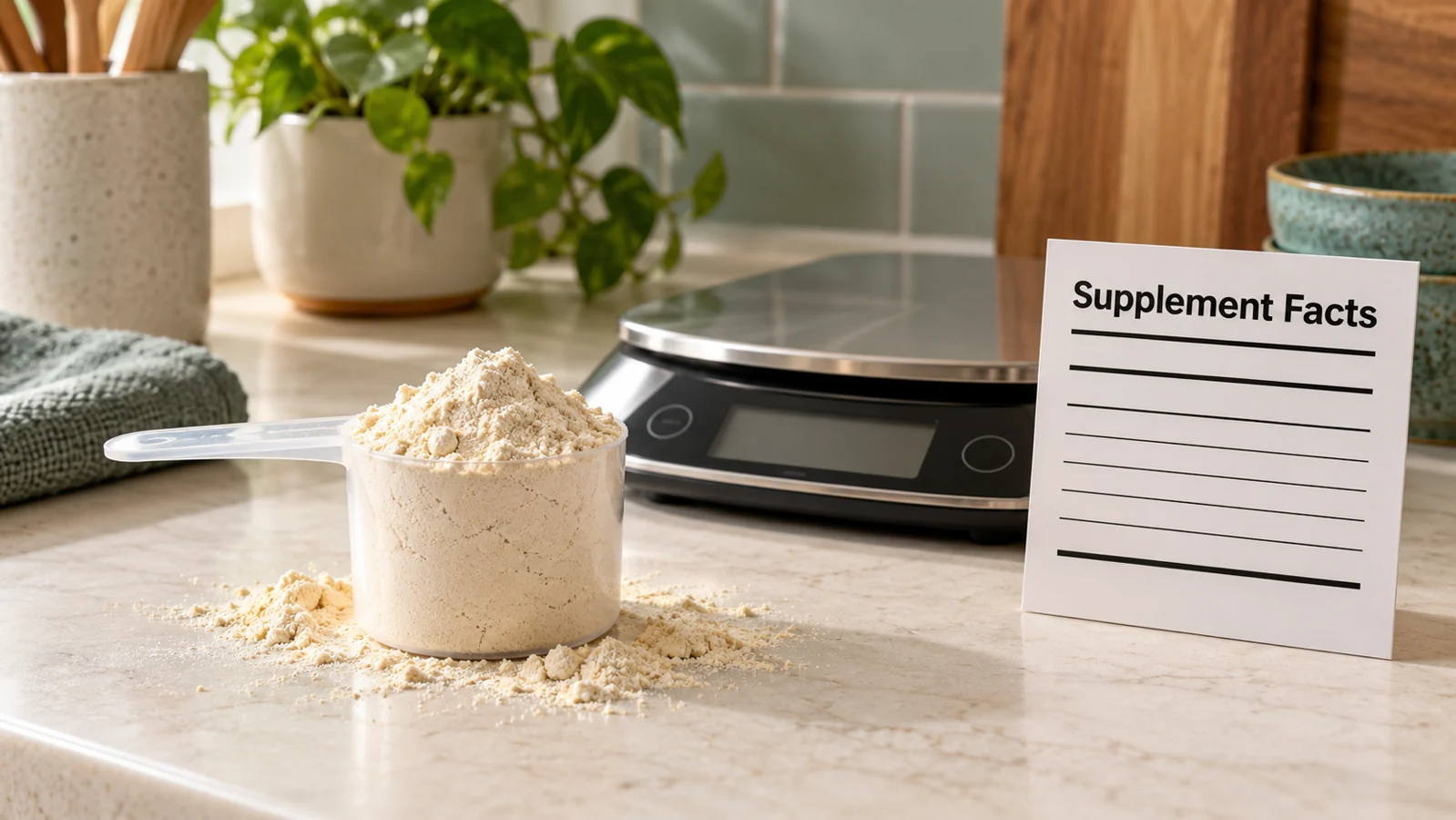
One scoop’s powder weight is not the same as its protein content. If a hypothetical label lists 30 g of powder and 22 g of protein, a weighed 15 g portion supplies 11 g of protein on a proportional calculation. Use your own label’s numbers; scoops are not a universal size.
Use your own label instead of an average scoop
Protein in your portion = weighed powder used ÷ labeled powder serving × protein per labeled serving. For example, 15 ÷ 30 × 22 = 11 g. Weigh the powder when accuracy matters. A scoop from another tub, or a heaped scoop, can hold a different weight even when it looks similar.
Calculate protein from your label
Example: 15 g powder ÷ 30 g labeled powder × 22 g protein = 11 g protein.
Result:
Uses the numbers you enter from your exact label. It scales label amounts and does not choose a protein target or serving for you.
The scoop contains the whole powder. The protein number tells you how much protein that powder supplies. Both numbers can be correct, and the difference does not mean your serving is missing protein.
Read these two lines together
Find “Serving size” first. It might describe one scoop, two scoops, or a specific weight of powder. Next, find “Protein” on the nutrition panel. Keep those two entries together whenever you compare products.
For example, imagine a label that says one scoop is 30 grams of powder and provides 22 grams of protein. The remaining weight can include carbohydrate, fat, flavoring, and other ingredients. The complete panel tells you more about that particular mixture.
Use the powder weight printed on your own container when weighing a serving. The 30-gram powder serving and 22-gram protein amount above are an example, not a universal rule for protein powders.
How to work out a half serving
Suppose the example label really does state 30 grams of powder and 22 grams of protein per serving. Half the powder weight is 15 grams, which supplies approximately 11 grams of protein.
| Amount of this example powder | Approximate protein |
|---|---|
| 30 g powder: one labeled serving | 22 g |
| 15 g powder: half a serving | 11 g |
| 45 g powder: one and a half servings | 33 g |
The general calculation is: powder weight used ÷ powder weight per serving × protein per serving. These are label-based estimates, not laboratory measurements of your individual shake.
Why the scoop from another tub may confuse things
A scoop measures volume. Grams measure weight. Powders can have different densities, so an old scoop that looks identical may hold a different weight of a new product. Packing the powder down or adding a generous mound can also change what you put in the shaker.
Keep the scoop that belongs with the product. If you want a more consistent serving, place the empty shaker or bowl on a kitchen scale, reset it to zero, and weigh the powder in grams. Use the label’s powder weight as your reference.
Count the rest of your shake separately
The powder’s protein entry does not include the milk, yogurt, or other ingredients you add. Add those using their own labels. Water changes the shake’s volume without adding protein.
This also helps when you are comparing two breakfast routines. A powder with a larger scoop is not necessarily supplying more protein, and a smaller shake is not automatically supplying less.
Do you need a full scoop every time?
A full scoop is a measuring reference, not a personal protein prescription. The useful amount depends on your food intake, goals, and any medical guidance you follow. You might be adding protein to a breakfast that already includes some, rather than trying to get an entire meal from a shaker.
Your next step: look at your tub and say both numbers out loud: “This serving weighs ___ grams and supplies ___ grams of protein.” Once those are separate in your mind, the label becomes much easier to use.
Sources and further reading
General educational information. For individual needs, medicines, and product directions, use your own label and appropriate professional guidance.
Pingback: Why Zero-Sugar Protein Shakes Can Taste So Sweet
Pingback: Mother Earth Labs Grass-Fed Whey Protein Isolate — Chocolate Fudge - Core & Balancer