
Choose chia seeds when you want a mild seed that thickens a moist dish; choose ground flaxseed when you want a nuttier addition to cereal, yogurt or baking. Both supply fiber and the plant omega-3 fat ALA. Preparation and the amount you actually eat usually make a more useful comparison than declaring one seed the healthiest.
If you already enjoy one, you do not need to replace it simply because the other appears in a headline. Start with the meal you want to make, then choose the form that works in it.
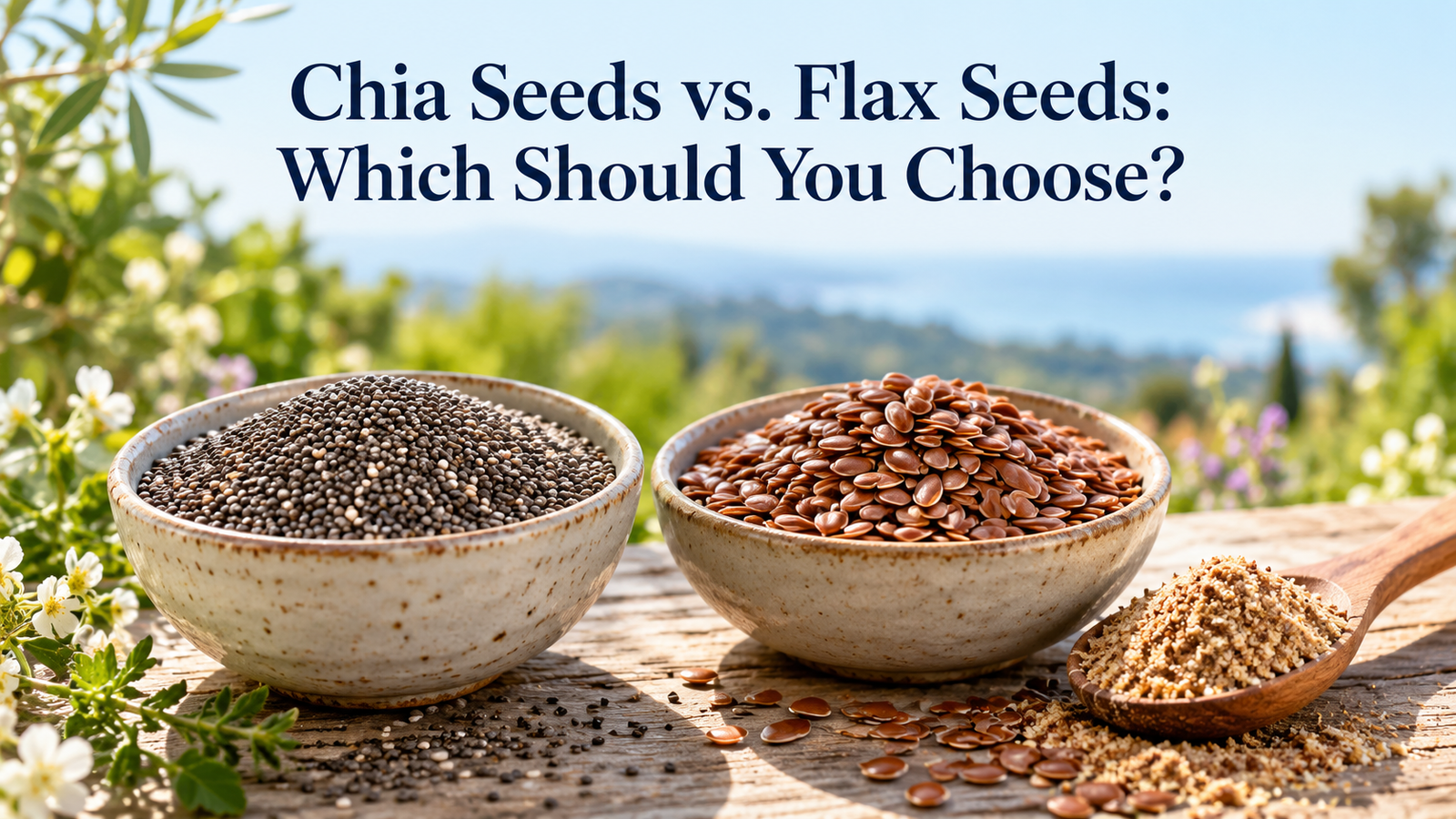
Make the choice by what you want the seed to do
| Your aim | Chia seeds | Flaxseed |
|---|---|---|
| A soft, spoonable pudding | Whole seeds form a noticeable gel when mixed with liquid. | Ground flax thickens mixtures too, but gives a different texture; follow a recipe designed for it. |
| A mild addition to a moist breakfast | Whole chia works in foods such as soaked oats or yogurt. | Ground flax adds a nuttier flavor and a finer texture. |
| Easy access to the seed’s nutrients | Usually does not need grinding when prepared with moisture. | Ground or milled is generally preferable to whole. |
| An egg substitute in baking | Can work in recipes designed for a chia mixture. | A ground-flax mixture is another option; neither replaces every function of an egg in every recipe. |
| A nutrient comparison | Check the amount in grams and the actual label. | Use the same gram amount and distinguish whole seed, ground seed and oil. |
For example, a person who likes a smooth breakfast might prefer ground flax stirred into porridge over the more noticeable gel texture of chia. Someone making a chilled pudding may want exactly that chia texture. Those are useful differences, even before looking at a nutrition panel.
Why ground flax and whole chia are different choices
Whole flaxseed has a tough outer covering and may pass through the digestive tract without being fully broken down. Mayo Clinic recommends ground flaxseed as the easier-to-digest form. Buying flaxseed meal or grinding a small amount gives you a different preparation from simply scattering intact seeds over food.
Chia behaves differently in moist foods. Its surface takes up liquid and develops a gel, and it can commonly be used whole. Harvard’s chia guide explains preparation and uses. Stir chia into a suitable moist food or let it hydrate according to your recipe; do not swallow a spoonful of dry chia seeds on its own.
Flaxseed oil is another distinct food. It can supply ALA, but it does not provide the whole seed’s fiber. A comparison that puts oil in one column and whole chia in the other is answering a different question.
How their nutrients differ
Chia’s nutritional strengths include fiber and calcium; flaxseed is especially notable for lignans, naturally occurring plant compounds. Both also contribute protein, magnesium and ALA. Northwestern Medicine’s comparison highlights chia’s fiber and flaxseed’s somewhat higher omega-3 content. These are different strengths, not a reason to treat either seed as a complete diet. Check the actual products on the same weight basis before comparing numbers.
Compare the same amount—not just the same spoon
A tablespoon of whole seeds and a tablespoon of ground meal need not weigh the same. Check the serving weight before deciding that one product provides more fiber, fat or protein. If you want a close comparison, use the same gram weight from each label or food-composition entry.
Here is a hypothetical label-reading example: one bag lists a serving as 12 grams and another lists 20 grams. Their printed nutrient amounts describe different portions. You cannot rank the foods from those two lines alone. First put them on the same weight basis, then consider the portion that fits your meal.
For everyday shopping, you may simply decide that either seed contributes something useful. The purpose of a fair comparison is to understand the labels, not to turn breakfast into an examination.
What about their omega-3 fats?
Both seeds provide alpha-linolenic acid, or ALA—an essential fat the body needs from food. ALA is a different omega-3 from EPA and DHA. The body can make some EPA and DHA from ALA, but conversion is limited, as explained in the NIH omega-3 fact sheet.
That makes seeds useful sources of ALA without making a spoonful interchangeable with a specified amount of EPA or DHA. It also explains why a comparison should name the omega-3 being measured rather than putting every omega-3 number into one category.
Fiber, fats and minerals can all contribute to a varied diet. Those contributions do not establish that choosing one seed over the other will treat a condition, produce a particular weight change or replace a prescribed treatment.
Buy the form you will use and store it well
Ground flax is convenient if you do not want to grind seeds yourself. Follow the package’s storage instructions; Northwestern Medicine’s dietitian guide recommends an airtight container in the refrigerator for ground flax. Keep dry chia as directed on its package, and refrigerate prepared mixtures when their ingredients require it.
Compare unit prices and consider waste. A large bag is less economical if you dislike the texture or cannot finish it in good condition. A small package can be a useful way to learn which preparation suits you.
Can you use chia and flax together?
Yes, if you enjoy both and tolerate them. There is no requirement to combine them, and adding a large amount of both at once is not necessary. Introduce additional fiber gradually and drink fluids normally. If you have swallowing difficulties or need advice about flaxseed alongside oral medicines, ask your clinician or pharmacist about your own situation.
For the next meal, choose one change: hydrated chia in a recipe designed for pudding, or a little ground flax in a familiar moist breakfast. Notice flavor, texture and comfort before adding more. For the broader nutritional picture, see what makes a food nutrient-dense.