
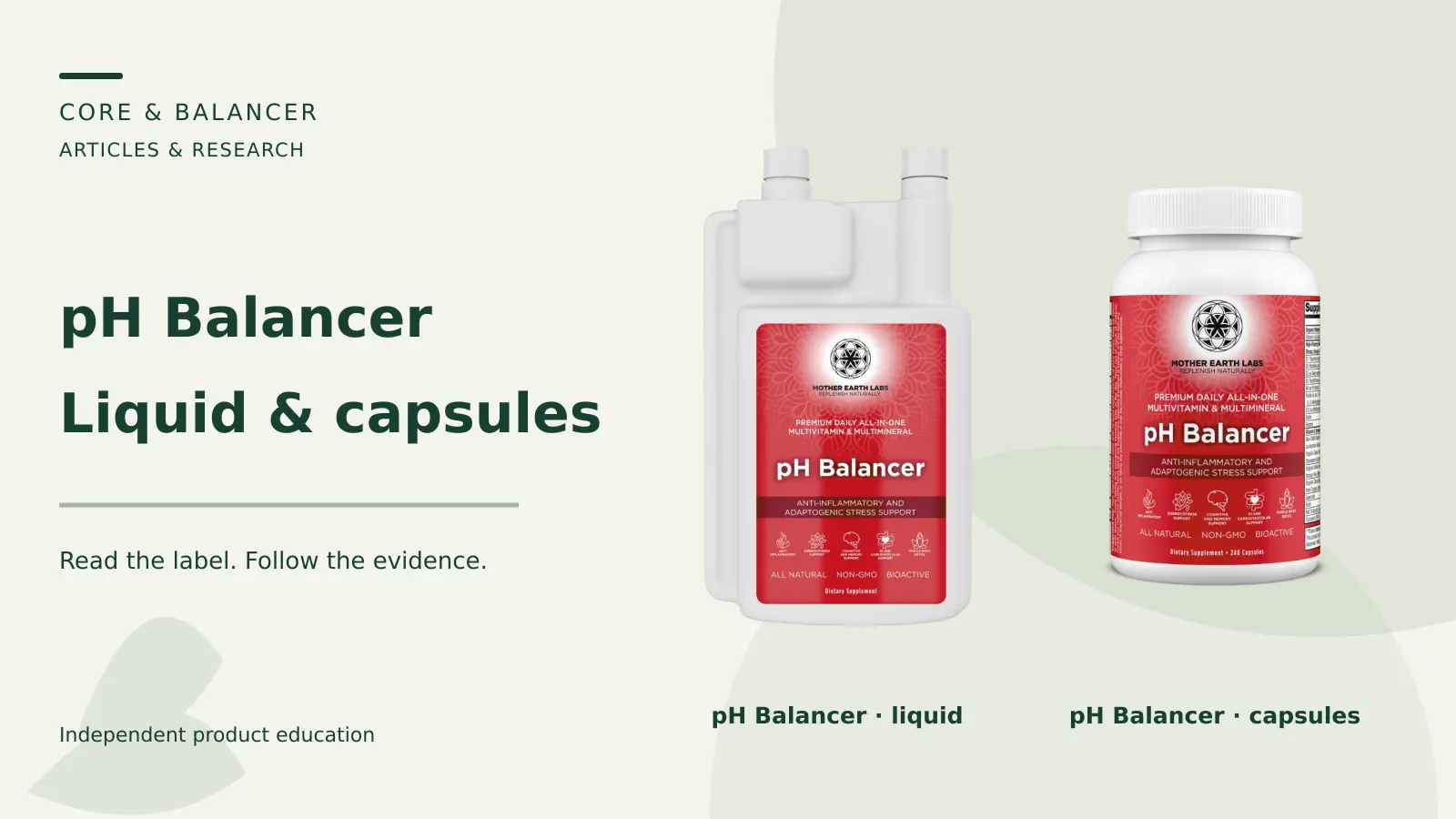
The pH Balancer ingredient list becomes easier to read when you separate vitamins and minerals from plant blends, enzymes and other compounds. Start with the full serving: one fluid ounce for liquid or eight capsules. Some entries differ between those formats, and a blend total does not reveal the amount of every ingredient inside it.
In this guide
Read one ingredient in three steps
Take magnesium as an example. Find the full serving size, read the magnesium amount for that serving, and then note its named source. Use the same sequence for the other format. For a botanical inside a blend, add one more question: is its own amount declared, or only the combined blend weight?
This introduction walks through the essentials. For the full nutrient tables, original label photographs, and ingredient research, keep our detailed pH Balancer ingredient guide alongside it.
You can explore the manufacturer’s Affiliate DisclosurepH Balancer capsules Affiliate Disclosure or pH Balancer liquid quart Affiliate Disclosure while comparing the options below. Each link opens the named format.
 Affiliate Disclosure
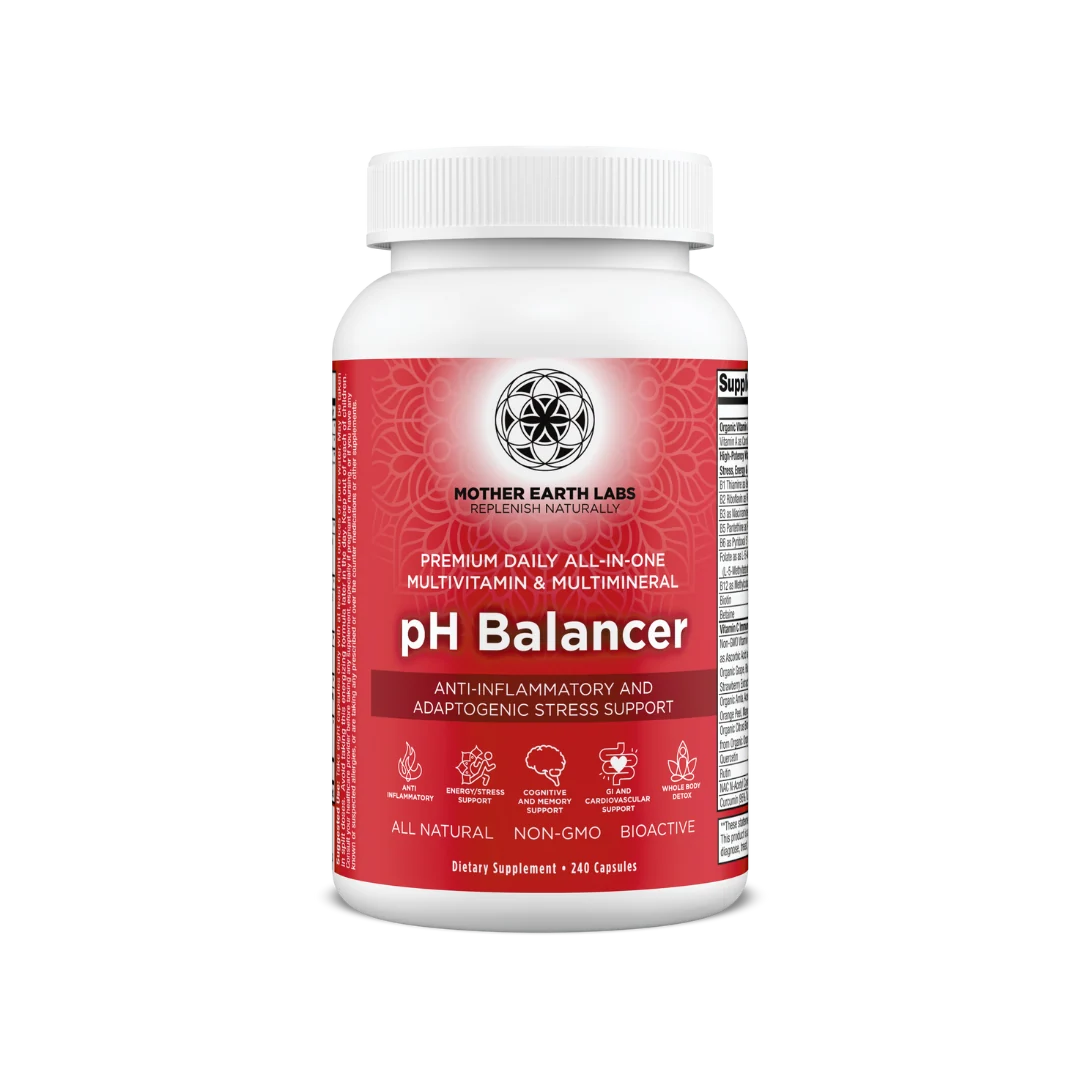
Original product photograph. Explore the capsule product at Mother Earth Labs.
 Affiliate Disclosure
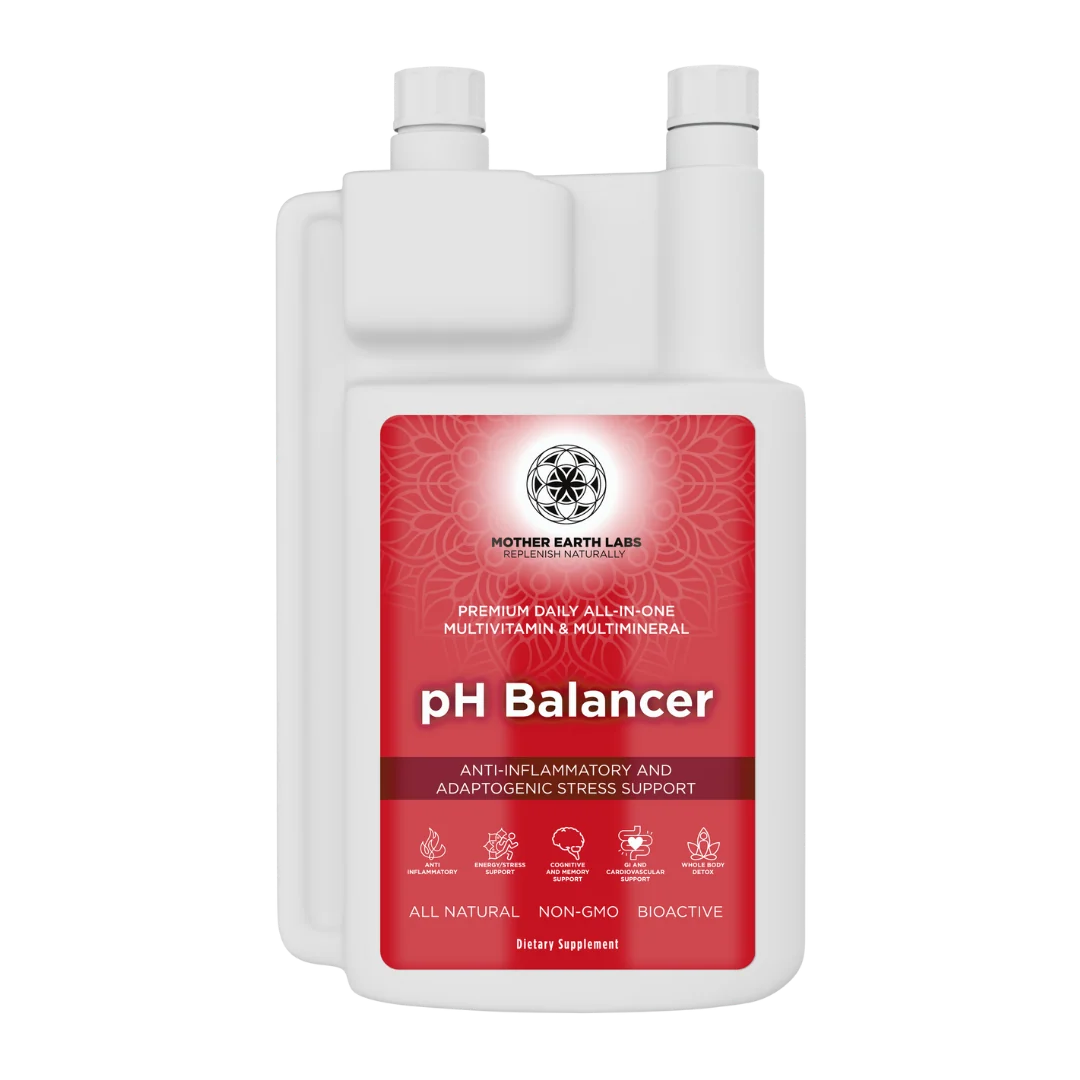
Original product photograph. Explore the liquid quart dispensing product at Mother Earth Labs. Packaging presentation may vary.
What is pH Balancer designed to bring together?
The formula takes a broad approach to daily nutritional supplementation. Alongside familiar vitamins and minerals, it includes plant ingredients and specialty compounds. Mother Earth Labs describes the product in terms of daily multivitamin and adaptogen support. Its Supplement Facts panel shows how those ingredient categories come together.
Think of the formula in four groups:
- Foundational nutrients: vitamins such as C, D3, K2, and the B vitamins, together with minerals including calcium, magnesium, zinc, and selenium.
- Fruits and greens: ingredients such as blueberry, pomegranate, broccoli, kale, spirulina, and chlorella bring different plant constituents into the formulation.
- Herbs and specialty compounds: the labels include botanicals such as ashwagandha and bacopa, plus compounds including CoQ10, quercetin, and curcumin.
- Digestive ingredients: enzyme activities are listed for proteins, starches, and fats. The liquid and capsule ingredient lists have some differences, so compare the actual panels.
This combination is what makes pH Balancer interesting to explore beyond the familiar multivitamin category. Use it to complement a varied diet that includes fruits, vegetables, and other whole foods.
How the nutritional foundation supports everyday health
Calcium contributes to the structure of bones and teeth. Magnesium helps normal muscle and nerve function and participates in energy production. These established nutrient roles explain why minerals belong in a daily nutrition discussion. The practical question is how the amounts in a full serving fit alongside your food and other supplements. NIH: calcium; NIH: magnesium.
A few ingredients worth recognizing on the label
B12 and folate: look for the complete names
Both manufacturer label images reviewed for this article list methylcobalamin for vitamin B12 and L-5-methyltetrahydrofolate calcium for folate. You may see the latter shortened to L-5-MTHF. Recognizing the complete ingredient name helps you compare products more precisely than looking for “B12” or “folate” alone.
Folate is reported in micrograms of dietary folate equivalents, abbreviated mcg DFE. That labeling unit should not be read as the same weight of the isolated ingredient. Our full guide explains these forms and their nutrient context in more detail.
Calcium and magnesium: compare amounts as well as forms
The reviewed liquid panel lists 300 mg each of calcium and magnesium per 1 fl oz serving. The capsule panel lists 200 mg each per eight capsules. Their named sources differ too: the liquid identifies chelated forms, while the capsules name calcium ascorbate and citrate, and magnesium malate and ascorbate.
A chelate is a mineral bound to another molecule; citrate, malate, and ascorbate identify particular source forms. These details help describe the formulation. Choosing a format also involves your total nutrient intake and practical preferences.
Botanicals and enzymes: read the kind of information provided
Ashwagandha, rhodiola, bacopa, and other herbs appear within the stress-and-brain blend. A blend total describes the combined ingredients, not the amount of each herb. When exploring ingredient research, compare the extract and amount studied with the information provided on the product label.
Enzymes are different again: labels use activity units to describe their ability to act on a substance. Compare the same enzyme in the same activity unit rather than treating an activity number as milligrams. For a complete ingredient-by-ingredient reference, use the pH Balancer label and research guide.
Liquid vs. capsules: which format fits your day?
Both formats offer a way to explore this nutritional approach, with distinct Supplement Facts panels. Format preference is a useful first question, followed by a check of the ingredient details.
| What to compare | Liquid quart | Capsules |
|---|---|---|
| Labeled serving | 1 fl oz (2 tablespoons) | 8 capsules |
| Container shown | 32 fl oz; 32 servings | 240 capsules; 30 servings |
| Calcium / magnesium per serving | 300 mg / 300 mg | 200 mg / 200 mg |
| Everyday convenience | A measured liquid serving for someone who prefers this format; follow shaking and refrigeration directions. | A capsule format that can be convenient for travel or a portable routine; account for the full labeled serving. |
| Manufacturer product page | Explore pH Balancer liquid quart Affiliate Disclosure | Explore pH Balancer capsules Affiliate Disclosure |
The liquid label instructs users to shake well and refrigerate after opening. Always follow the handling directions on the container you receive. Compare the two labels alongside the format you prefer. Nutrient absorption depends on the ingredient, amount, formulation, and individual circumstances, so delivery format alone does not establish which is better absorbed.
How to read the Supplement Facts before choosing
- Start with the serving size. The capsule amounts above are for eight capsules, not one. Compare a full labeled serving with a full labeled serving.
- Read the amount and source together. A nutrient name, its chemical form, and its quantity answer different questions.
- Check your other supplements. Add together overlapping nutrients before combining products. The Comprehensive Core and pH Balancer comparison helps you see where the formulas overlap.
- Use the current package as your reference. Website images are useful for research, but formulations and packaging can change.
One important label detail: both reviewed panels list vitamin D3 at 125 mcg (5,000 IU) per full serving. The NIH lists the general adult upper intake level at 100 mcg (4,000 IU) daily from food, beverages, and supplements. A clinician may recommend higher amounts for a specific reason. Discuss total intake and suitability with your healthcare professional, especially if you take medications, use other supplements, are pregnant or nursing, or have a medical condition. This article does not recommend a personal dose. Read the NIH vitamin D reference.
Common questions about pH Balancer
Is pH Balancer only a greens supplement?
No. Greens are one part of a wider formula that also includes vitamins, minerals, fruits, herbs, specialty compounds, and digestive enzymes. Start with the full Supplement Facts rather than relying on a single ingredient category.
Does the name mean it changes blood pH?
The body carefully regulates blood pH. The name reflects the manufacturer’s greens-and-minerals positioning. Explore it as a broad nutritional formula; the name does not establish a change in normal blood pH or correction of an acid–base disorder.
Are the liquid and capsule ingredients identical?
They share many ingredients, but some amounts, mineral sources, and blend components differ. The selected comparison above is a starting point. The detailed guide contains the complete tables and original labels.
How does it compare with Comprehensive Core?
Both are broad nutritional formulations. To investigate their different ingredient profiles, read the detailed formula comparison and our Comprehensive Core ingredient guide. The labels help you explore the ingredient profile and format that interest you.
Explore the format, then take a closer look
If pH Balancer matches what you want to research, choose the format you would find practical and review that product’s current label. Use our detailed guide for deeper ingredient questions, then visit Mother Earth Labs for current product options and purchasing information.
Continue exploring in Articles & Research, or send an educational inquiry to AskDrRich@coreandbalancer.com.
Sources and educational scope
Product composition was checked against the Supplement Facts images displayed on the manufacturer’s capsule and quart dispensing product pages on October 18, 2026, alongside Core & Balancer’s existing detailed guide. The images identify revisions PB240C1023MEL and PB32B1023MEL. Check the current package for the formulation you receive.
- Mother Earth Labs: capsule Supplement Facts image.
- Mother Earth Labs: liquid quart Supplement Facts image.
- NIH Office of Dietary Supplements: Vitamin D.
- NIH Office of Dietary Supplements: Daily Values.
By Dr. Rich Prather, D.C. · Published by Grateful Lab Services. Educational information does not replace individualized medical advice. This product is not intended to diagnose, treat, cure, or prevent disease. Ingredient research and manufacturer descriptions do not establish specific results from the complete formula. Privacy Policy.