

Product and label review: October 24, 2026. By Dr. Rich Prather, D.C.
Essential MultiVitamins Capsules offer a broad vitamin-and-mineral formula in a portable, counted serving. Four capsules make the full serving, and the 120-capsule bottle provides 30 servings. This guide walks through the named nutrient forms, the additional plant ingredients and the details to compare with the Essential liquid formats.
In this guide
Plan the four-capsule routine
For a straightforward supply example, a seven-day routine at the full labeled amount uses 28 capsules. The bottle contains 30 such daily servings. Use the four-capsule ingredient amounts when comparing it with a multivitamin you already take, then review overlapping nutrients and your preferred schedule.
The capsule formula has its own mineral forms and supporting ingredients. The Essential liquid quarts provide another way to build a daily routine, with one-ounce servings and liquid-specific ingredients. Comparing the two panels shows which profile and format fit your preferences.
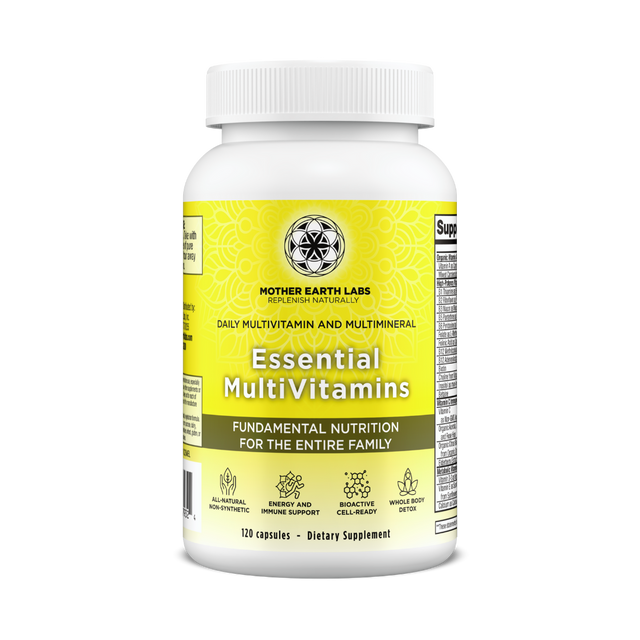
Affiliate DisclosureBuy Now — Essential MultiVitamins Capsules – Daily Multivitamin & Multimineral Affiliate Disclosure. Check the current label, availability and purchase options before ordering.
Four capsules make one labeled serving
The current label lists four capsules per serving and 30 servings per bottle. The selected entries below show the formula’s structure; the linked original panel supplies the full detail. Folate and B12 are represented by more than one form, with their amounts separately declared.
The vitamin D entry illustrates why both units and the exact label matter: it prints 50 mcg but also includes a parenthetical 5,000 IU. Those do not agree; 50 mcg corresponds to 2,000 IU. This guide retains the declared microgram amount and flags the inconsistency for manufacturer confirmation rather than silently presenting the two figures as equivalent.
| Label entry | Amount per serving |
|---|---|
| Vitamin A | 900 mcg RAE |
| Vitamin C | 225 mg |
| Vitamin D3, declared mcg entry | 50 mcg; inconsistent IU text on label |
| Vitamin E | 15 mg |
| Calcium, citrate | 260 mg |
| Magnesium, ascorbate and citrate | 84 mg |
| Zinc | 2.2 mg |
| L-5-MTHF folate | 680 mcg DFE |
| Folinic acid | 680 mcg DFE |
| B12, methylcobalamin | 60 mcg |
| B12, adenosylcobalamin | 60 mcg |
| Greens blend | 140 mg |
| Botanical support blend | 225 mg |
| Essential amino-acid blend | 100 mg |
| Flax ALA entry | 100 mg |
| Sunflower lecithin phospholipids | 100 mg |
A nutritional foundation, with defined amounts
A multivitamin can help cover specific gaps between dietary intake and nutritional needs. It works best alongside food that supplies protein, fiber and a broad variety of nutrients. The NIH multivitamin/mineral reference emphasizes that formulas vary widely and that the ingredient amounts determine what a product contributes.
This formula supplies vitamins A, C, D and E, the eight B vitamins, and several minerals. Calcium is 260 mg, magnesium 84 mg and zinc 2.2 mg per serving. These are useful contributions, but their presence does not mean that a day’s full mineral needs are covered.
For example, a shopper mainly seeking magnesium would compare 84 mg here with the amount and form in a focused magnesium product, while also considering food. A broad multivitamin and a targeted mineral supplement serve different purposes.
Understanding the B-vitamin profile
The panel includes benfotiamine, riboflavin-5-phosphate and pyridoxal-5-phosphate, along with niacinamide, pantethine and biotin. Its folate entries are L-methylfolate calcium and folinic acid. B12 appears as methylcobalamin and adenosylcobalamin.
The named B-vitamin forms help explain the formula’s design. B vitamins participate in food metabolism and normal cellular functions; the full-serving amounts show what this product contributes. Compare those amounts with your diet and any separate B-complex.
The NIH folate reference explains folate’s nutritional role and the DFE system. Retain DFE units when comparing labels; a DFE amount and an ingredient’s physical mass are not automatically the same number.
The greens, botanical and amino-acid entries
Milk thistle, spirulina, moringa, kale and broccoli appear in a 140 mg greens blend. Another 225 mg blend includes resveratrol, curcumin, beet, pomegranate, blueberry, acai, olive leaf and grape seed. These ingredients add variety to the formulation.
The greens and botanical blends broaden the ingredient profile within the four-capsule serving. Read their combined weights alongside the named components, then keep vegetables and other fiber-containing foods in your regular meals. The label gives you a clear basis for understanding the supplement’s contribution.
The essential amino-acid blend is 100 mg total, not 100 mg of each listed amino acid. It is therefore different from a gram-level protein serving. The flax ALA and sunflower-lecithin entries are also distinct from EPA/DHA fish or algal oils.
Capsules versus the Essential liquids
The capsules list calcium citrate and magnesium ascorbate/citrate, while the reviewed liquid labels list calcium lactate and magnesium chelate. Liquids also declare juice concentrates and other liquid-formulation ingredients, with nutrition entries such as sugars and calories.
Choose capsules for a counted, portable routine or explore the liquids if you prefer measuring a serving. The mineral forms and supporting ingredients differ, so use the panel for the format you intend to buy. That makes the comparison specific to the product you will use.
The capsule panel’s other-ingredient entry is a vegetable capsule. If detailed sourcing or allergy requirements matter, confirm the complete current bottle and manufacturing information with MEL.
Directions and a repeatable routine
The manufacturer directs four capsules daily with at least eight ounces of pure water, half an hour away from medicines. This is the manufacturer’s general instruction; a pharmacist may recommend a different interval for a particular prescription. Follow the longer or otherwise individualized interval when advised.
At the full labeled amount, 120 capsules make 30 days. Keep the bottle in its original packaging, follow storage instructions supplied with it and check the manufacture date. The reviewed label gives a two-year-from-manufacture use instruction.
Before combining it with a B-complex, immune formula or separate D3, review the overlapping nutrients. This helps avoid taking several products for the same purpose without recognizing their combined amounts.
What makes the capsule choice useful?
Is this one capsule daily? The labeled serving is four capsules. Does it replace food? No; it is a broad supplement to a dietary pattern. Is it interchangeable with the liquid? The current labels show formulation differences, so compare the specific format.
Its practical appeal is a wide range of declared nutrients and forms in a portable capsule routine. The best decision comes from matching that profile to an actual dietary gap and preference, while resolving the printed D3 unit inconsistency with MEL before relying on that entry.
Related reading
Continue with our guide: Choosing a Daily Multivitamin: 7 Questions to Ask Before You Buy.
Explore our nutrient dictionary: Calcium L-methylfolate, Methylcobalamin.
Sources and further reading
NIH: multivitamin/mineral supplements
Educational information about nutrition and product use. Supplements are not intended to diagnose, treat, cure or prevent disease; individual needs and responses vary.