
Human studies give fulvic acid a research foundation worth examining, but they do not establish every benefit promoted for fulvic supplements. Small studies have tested a defined preparation for short-term oral tolerance and topical eczema care. A larger trial in a different clinical population ended early without demonstrating a difference in its main time-to-event outcome. The form, route and actual result matter more than the ingredient name alone.

Start with what “fulvic acid” describes
Fulvic acid is a name used for a complex fraction of humic substances, rather than one standardized molecule with a universal supplement dose. Humic acid, fulvic preparations and finished liquid blends need to be distinguished. Our introductory fulvic acid guide covers formation and background; this article focuses on the human research.
In the trials below, researchers used carbohydrate-derived fulvic acid, often abbreviated CHD-FA. A study of that defined material is not automatically a study of every mined extract, shilajit product or Mother Earth Labs formula. The research gives us specific questions to investigate, not permission to treat every product as interchangeable.
Three human studies, three different questions
| Study | What was tested? | What can we reasonably take from it? |
|---|---|---|
| 2012 oral safety study | A defined CHD-FA preparation in adult men with an allergic tendency | A short-term tolerance signal and an exploratory skin-prick finding; not proof of broad daily wellness benefits |
| 2011 eczema trial | A 3.5% CHD-FA emollient applied to skin for four weeks | A topical result that cannot be transferred directly to swallowed drops |
| 2018 wellness-drink trial | A CHD-FA-containing drink in adults with HIV | An early-ended trial that did not demonstrate a difference in its primary time-to-event outcome |
1. The oral study was small and short
The 2012 trial enrolled 30 men with atopy; 21 completed it. Researchers examined a 3.8% preparation through several stages, including a one-week comparison using 40 mL twice daily. They reported no severe adverse events and a smaller allergen skin-prick response with the active preparation. Mild symptoms, including diarrhea, headache or throat burning, were reported during the study.
This is useful early evidence about that preparation under those conditions. It does not establish long-term safety, an everyday dose for other products, or clinical relief of every allergic condition. The study also did not measure improved iodine absorption. Its authors lacked a method for detecting the preparation in plasma and discussed systemic exposure indirectly. Read the oral study.
2. The eczema result concerned a skin product
The 2011 randomized study involved 36 participants using an emollient for four weeks. Some measures improved in both the active and comparison groups. The investigators’ overall response assessment favored the CHD-FA emollient, and transient burning was reported.
The promising part is a reason to investigate that topical preparation further. The boundary is just as clear: putting an emollient on skin and swallowing a mineral blend are different interventions. This trial does not show that oral fulvic drops treat eczema. Read the topical trial.
3. The larger trial did not establish its intended clinical benefit
The 2018 report describes 332 adults randomized to a CHD-FA-containing wellness drink or placebo. It took place in a historical HIV-care setting before participants started antiretroviral therapy. Regulatory changes ended the trial early, leaving too few clinical events to answer the planned question reliably. The investigators did not find a difference in time to the specified treatment/CD4 endpoint; gastrointestinal intolerance was more common with the active drink.
This trial does not support replacing or delaying HIV treatment. It also should not be presented as evidence that a general fulvic supplement “boosts immunity” in healthy adults. The population, product and endpoint were specific. Read the trial report.
Which claims remain open questions?
Laboratory findings can suggest antioxidant, inflammatory or mineral-binding mechanisms. Human benefits still need to be demonstrated with the relevant product and outcome. These three trials do not establish that an ordinary fulvic supplement improves energy, repairs a gut microbiome, removes toxins from the body or makes every nutrient more absorbable.
That distinction helps you read promising research fairly. “A mechanism has been observed” and “people taking this product experienced a meaningful benefit” answer different questions. Stronger studies would specify the material, compare it with an appropriate control, measure a useful outcome and follow participants long enough to assess both benefit and tolerability.
How to connect a study to the bottle you are considering
- Match the material. Ask whether the product contains the same kind of preparation that was studied.
- Match the route. A topical study supports a question about topical use; it does not establish an oral benefit.
- Match the amount correctly. Milligrams of a solution and milligrams of a defined ingredient are not necessarily the same thing.
- Match the outcome. A laboratory marker or skin-prick measurement is not automatically better sleep, energy or day-to-day health.
- Check the finished batch. A laboratory report is most useful when it identifies the product and lot, the tests performed and the results.
For two practical label checks, see what “1,000 mg of solution” means and whether a supplement lab report matches your bottle.
A useful conversation before adding a product
Bring the exact label, your medication list and the reason you are considering the supplement to your clinician or pharmacist. Ask what result would make its use worthwhile, how you would measure that result, and when you would stop or reassess. The studies above do not establish safety for every age, pregnancy, breastfeeding, medical condition or drug combination.
For Mother Earth Labs readers, keep the finished formulas separate: a fulvic ingredient in Lugol’s liquid does not turn a CHD-FA trial into a Lugol’s iodine trial. Likewise, findings cannot simply be transferred between Comprehensive Core, pH Balancer and a concentrated humic/fulvic product.
The constructive next step is a better match between the question, the evidence and the label. Our humic and fulvic format guide can help organize the product differences, while the original studies above show exactly what has been tested in people.
Mother Earth Labs Fulvic 400X: view the product
If you are comparing concentrated liquid options, use the manufacturer’s current label and directions. The human trials discussed above did not test this finished Mother Earth Labs product.
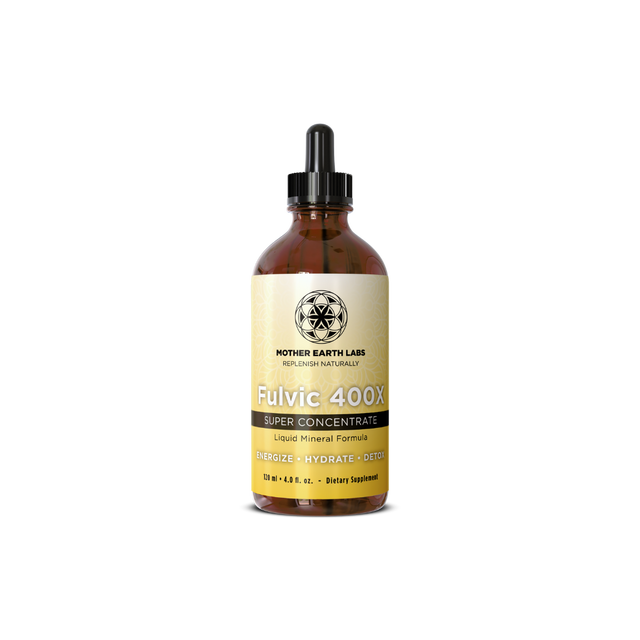
Fulvic 400X Liquid Dropper
Review the full product description, ingredients and serving information directly with Mother Earth Labs.
Buy Now — Fulvic 400XWe may earn a commission from purchases. Affiliate Disclosure